Rogers Stadium is touting a $388-million economic impact from its inaugural season but a city councillor says it’s unclear if the venue’s early problems have been meaningfully addressed ahead of 2026.
The 50,000-seat, open-air venue at the former Downsview Airport Lands drew more than 700,000 fans across 14 concerts last summer, supporting thousands of jobs and generating significant tax revenue, according to Live Nation, which operates the concert space.
But the stadium’s debut was also marked by complaints over crowd control, traffic congestion and noise — issues that Coun. James Pasternak says still require careful oversight as the venue prepares to reopen next month.
In a media release earlier this week, Live Nation claims the stadium supported 3,270 full-time jobs, generated $218 million in labour income and produced $115 million in federal and provincial tax revenue during its first season.
In an interview with CP24 on Friday, Pasternak acknowledged the scale of that impact.
“As an economic generator, there’s little doubt that it had an enormous impact,” he said.
But he noted much of that revenue doesn’t even stay in the city.
“The only unfortunate part about the dollars is that most of it goes to the provincial and federal government, and very little of it stays in Toronto.”
He added that some local businesses in the Wilson Village area have seen benefits, alongside more than 1,000 local hires each season.
What are the issues?
The stadium’s opening month was marred by complaints from concertgoers who reported long security lines, limited access to water and exit delays of up to two hours.
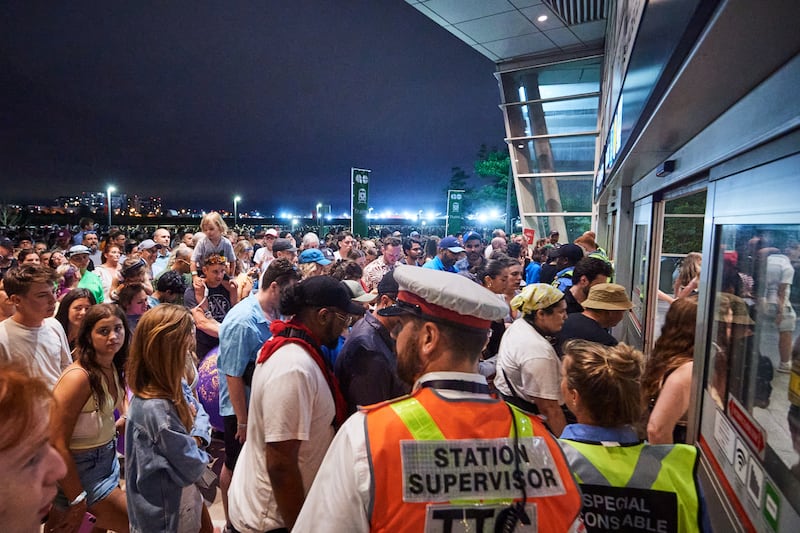
Pasternak said those concerns extended beyond the venue itself.
“The two main issues that came to our office were sound mitigation and traffic management… Even if you’ve got 90 per cent of the people coming by public transit, that means you’ve got tens of thousands of cars or other vehicles coming into the area on concert nights,” he said.
He pointed to particular strain on nearby neighbourhoods.
“Traffic congestion was very hard, particularly on the Ancaster community, and we’re working very hard to mitigate that with a new drop off and road system.”
Noise complaints also proved to be far-reaching.
“The sounds went as far as Vaughan, well into Willowdale… It was a factor. It moved northeast depending on cloud cover, wind direction, wind velocity and the type of music that was being played," he added.
The venue even drew criticism from performers, with Coldplay’s Chris Martin describing it as a “weird stadium in the middle of nowhere” while acknowledging the effort fans made to attend.
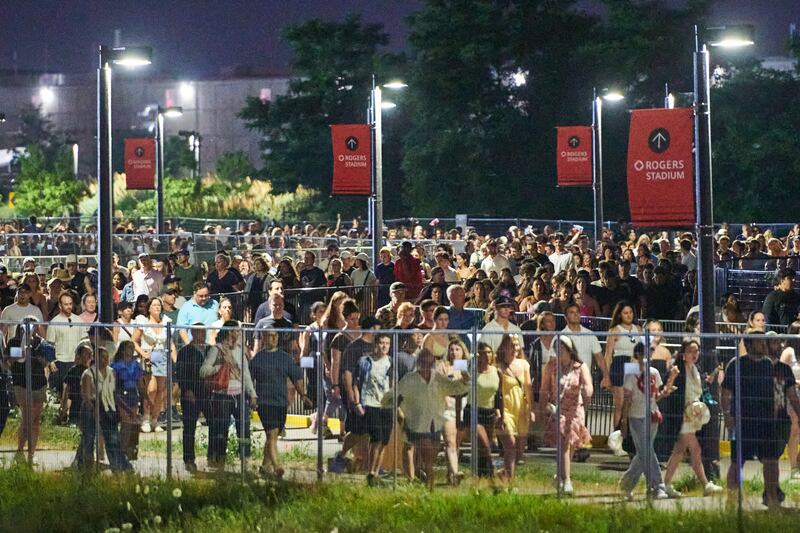
What’s changing for 2026?
Live Nation has said it is “making adjustments” in response to feedback, including working with city agencies and transit partners to improve operations.
Pasternak said discussions are ongoing with both the operator and the landowner.
“We deal with two main parties. One is Live Nation, the other one is Northcrest, which is the actual property owner… Live Nation is using a new sound absorption system within the stadium to help keep the music within the stadium and have a reduced impact on local residents.”
With the 2026 season set to begin May 23 with Bruno Mars, Pasternak said the focus now is balance.
“We have to make sure that the residents who have been there long before the stadium, that their quiet and enjoyment of their property is respected, and that we do everything we can to balance the two needs,” he said.
Whether those adjustments will be enough, he suggested, will become clear once crowds return.
It should be noted that the venue is temporary and will eventually be demolished to make way for a new mixed-use development coming to the grounds.

