FREDERICTON, NB - Strumming a guitar while perched on a picnic table, Matthew – or Matty to those around him - has found himself without a permanent place to call home.
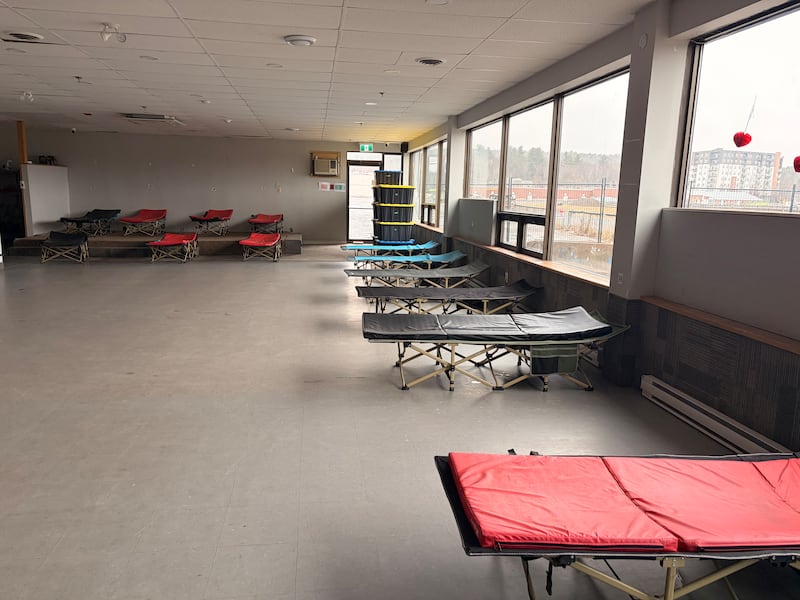
In recent months, Matthew has had to depend on a low-barrier shelter located on the city of Fredericton’s exhibition grounds for a bed, food, and warmth.

The shelter opened in December 2024, as a temporary measure to bring people off the streets in the coldest months, when they couldn’t find housing elsewhere and other shelters were at capacity. But the need proved to go beyond the winter months, as the shelter has been consistently full, with an average of 33 people a night.
Last month, the city announced it will not be extending the temporary shelter’s lease beyond April 30, and Matthew isn’t sure what he’ll do.
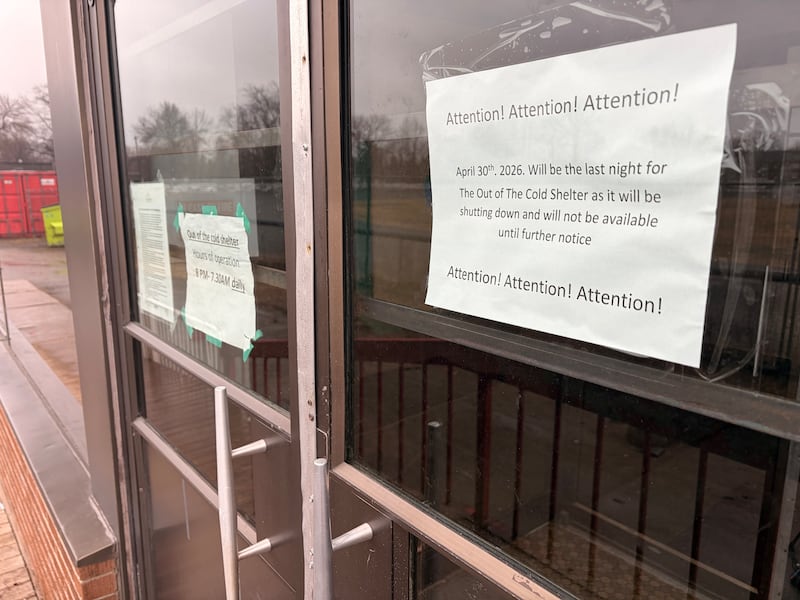
“It’s a big loss for the community I think, it’s a good place to go, a good environment…hopefully we get another one like that, it would be nice to get another one somewhere in the city,” he said, not wanting to use his full name in hopes to land more permanent housing and work soon.
The low-barrier aspect of the temporary shelter is a different model than many others in the city.
Most other shelters require a level of sobriety. But this shelter welcomes people with active addictions and has helped many demographics, including veterans and Indigenous people, said the director of Fredericton Homeless Shelters, Warren Maddox.
It has 24-hour security, and staff are trained to administer naloxone, de-escalate situations, and connect clients with other resources or supports.
The temporary shelter has helped 343 individuals in 2025 and 182 individuals so far this year.
“Well over half are now going to be out in rough. That’ll be sort of what their existence will be from here on in. So, couch surfing, tents, whatever they can find,” Maddox said.
He’s run Fredericton Homeless Shelters, including its seven shelter and transitional housing spaces, for 13 years and has seen the need for shelter and housing only increase.
Increase in homelessness
It’s challenging to get a full picture of homelessness in N.B., but the Human Development Council has been trying to keep track with the help of shelter and transitional housing organizations.
The city of Moncton is experiencing the highest number of homeless individuals, with 782 reportedly homeless for at least one day in March.
Saint John was next with 463, followed by Fredericton with 300 people.
Maddox says the closure of the low-barrier shelter will have an impact on those numbers. He is trying to work with the city on finding a new place, but zoning by-laws have made it difficult to find the right location.
There has been a move toward “transitional housing” in N.B., that some people would describe as “sheds with beds” – small structures that provide a bed and electricity to individuals.
But Marcel Lebrun, founder of 12 Neighbours Inc – an organization that helps transition homeless individuals into more permanent housing – has also worked with the province on building “micro-suites,” units to help people discover some independence.
“These are fully equipped units with kitchens and bathrooms and more similar to what is a regular housing experience,” he said. “Yet still staffed 24/7 and still supportive. There’s still staff there to help people get stabilized.”
Fourteen people are moving into these newly-built suites at a Saint John location in mid-April.
Despite the province moving toward these transitional options, Maddox warns shelters are still critical to the system.
“Don’t think of it as a shelter space. I think it is a triage space. We’re taking somebody who’s very traumatized. We’re bringing them in and providing them stability,” he said. “We’re cleaning up a lot of the baggage, documentation, legal issues, financial issues. Whatever the case is, it’s a triage is what it is.”
New Brunswick’s department of social development states that, in total, there are 15 permanent emergency shelters across the province, which provide about 500 beds.
Last winter, they even added another 160 beds. Those were meant to be temporary but the department said the majority have remained open despite the change of season.
Matthew still hopes there’s some sort of replacement for the shelter – and soon.
“When you think about it, there’s a lot of people on the streets right now and the more help the better,” he said.

