Toronto police have announced the largest seizure of counterfeit soccer jerseys in Canadian history, with more than $3.5 million worth of goods recovered.
At a news conference on Monday, investigators revealed that they received information on May 12 about a warehouse in Mississauga which contained suspected stolen goods.
Police executed a search warrant at that property two weeks later and seized more than 16,000 fake jerseys with FIFA, Nike, Adidas, and Puma branding, as well as flags and two counterfeit FIFA World Cup trophies.
Some of the seized items were displayed by police at Monday’s news conference. They include fake Team Canada, Argentina, Portugal and Croatia jerseys. Some fraudulent NFL jerseys were also seized.
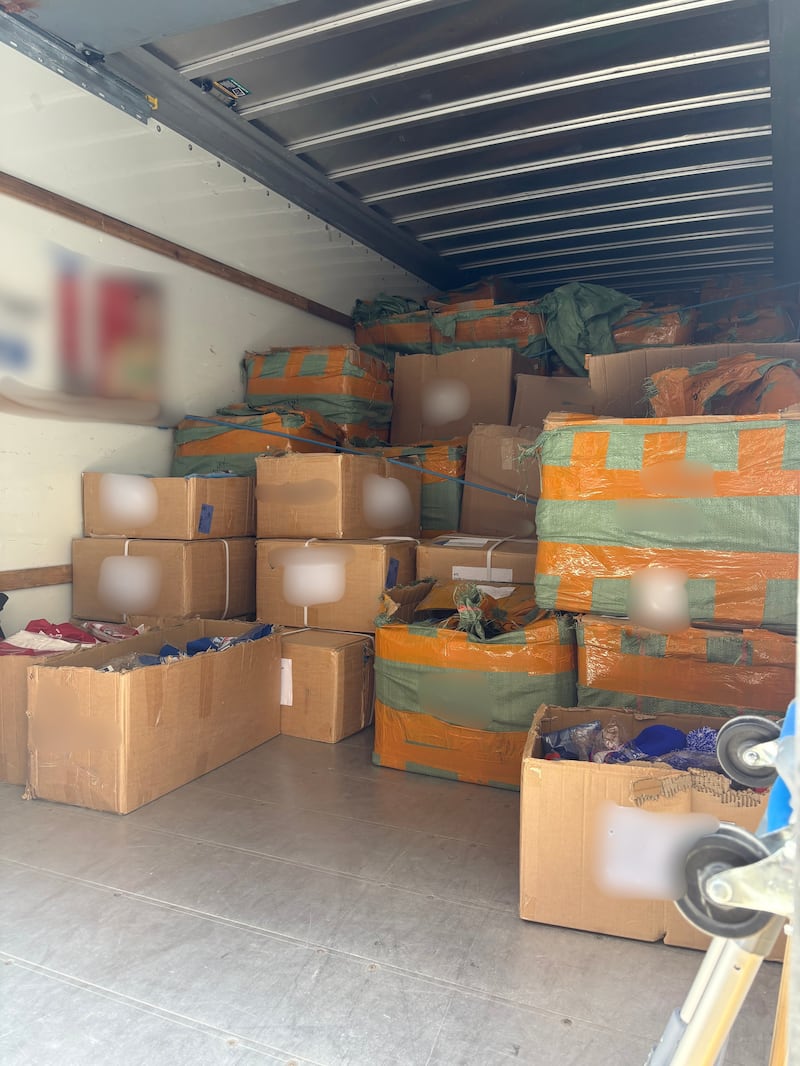
Police said two suspects, 41-year-old Milton resident Ramy Jaber and 62-year-old Mississauga resident Walid Sarhan, supplied retail stores with the fraudulent merchandise through a legitimate trading company. Customers of those retailers were then charged full price, thinking the products were legitimate.
“So folks are walking into retail stores thinking that they’re buying an authentic piece of, say, a jersey or sporting equipment. They’re paying full price as they would if it was authentic, but they’re getting a fake counterfeit,“ Supt. David Ecklund said, pointing out that the jerseys appear to have been made ”overseas."
Both suspects were charged with fraud over $5,000, possession of property obtained by crime over $5,000, pass off wares or services with intent to deceive or defraud, and sell, offer for sale, distributes on a commercial scale Goods Trademarks Act.
It’s unclear if the illegitimate merchandise was sold to retailers for less than market price. Ecklund couldn’t say how many of the fake jerseys have already been distributed or sold in the Toronto market.
The news comes less than two weeks before Canada hosts the 2026 FIFA World Cup for the first-time ever, starting with Team’s Canada June 12 match in Toronto.
Ecklund said that counterfeit merchandise is a “known concern” during major sporting events.
“For criminals, it’s a crime of opportunity because they know people want to support their favorite team and will prey on that excitement. Often, proceeds of this crime fuels organized crime, including human trafficking,” he said.
FIFA was not involved the investigation, police said.
‘A bargain basement price isn’t a discount. It’s a red flag’
Toronto law firm Lipkus LLP first reported the warehouse where the fake merchandize was found to Toronto police. The law firm specializes in brand protection investigations and is a member of the Canadian Anti-Counterfeiting Network.
Speaking at Monday’s news conference, David Lipkus warned soccer fans to be wary of jersey deals that seem too good to be true.
“If you are shopping online at third-party marketplaces or through social media, then start by looking at the price. A premium brand at a bargain basement price isn’t a discount, it’s a red flag,” he said.
Lipkus said he couldn’t comment on the specifics of the investigation, specifically how his firm became aware of the warehouse, but revealed that one of the victims is his client.
How to avoid buying a fake jersey
Lipkus advised fans to do their research before purchasing a jersey, and encouraged them to visit a brand’s website to learn where they can buy their products locally.
“Look for spelling and grammar mistakes on all interior and exterior care and content tags and labelling,” he said.
“There are spelling mistakes on some of these tags. If you look and feel the products, it doesn’t have the same quality. I will tell you that there are retailers that do not know they are purchasing these counterfeit goods and selling them to the public.”
Anyone who unknowingly purchased a counterfeit product is asked to contact police and the Canadian Anti-Fraud Centre. Lipkus said the latter may be able to assist customers with what’s known as a “charge back,” to make them whole and ensure that fraudulent goods are not purchased unsuspectingly.

