For the first time ever, FIFA World Cup soccer will be played on Canadian soil, kicking off with a match at Toronto Stadium. It’s a big moment for the city — but the venue itself is the smallest in the tournament.
The stadium (which will revert to its BMO Field moniker after it hosts its six matches) underwent a $146-million renovation and added 17,000 temporary seats to accommodate FIFA’s 45,000-seat requirement.
Maple Leaf Sports & Entertainment (MLSE) spearheaded the renovations as a host partner, and despite its small footprint compared to its U.S. and Mexican counterparts, it’s confident the pitch will appear “spectacularly” on the world stage.
“Most other matches are being played in NFL stadiums, they’re typically twice the size. So, we know we’re a smaller stadium, but we’re the fourth-largest city in North America,” MLSE chief operating officer Nick Eaves told reporters when the upgrades were unveiled in March.

Some of the matches being played in the other 15 cities across the three host nations include the massive Dallas Stadium (aka AT&T Stadium), a 94,000-seat venue that is home to the Dallas Cowboys and the biggest in the tournament by seating capacity, and the Mexico City Stadium (Estadio Azteca), which can hold 83,000.
But is bigger always better? Or is there something to be said about a smaller-scale pitch for the most-watched sporting event on the planet?
Smaller is better?
Paul Cohen is a professor at the University of Toronto and teaches a course on the history of soccer.
In an interview with CTV News, he likened Toronto Stadium — which he called one of the best-soccer specific stadiums in North America — to that of a “classic” British-style pitch, pointing out its rectangular shape and how its stands are “right up on the field.”
“It’s a great stadium. I think it’s one of the best soccer-specific stadiums in North America,” highlighting Toronto FC’s energetic fanbase and their proximity to the pitch, just feet away from the payers on the south end.
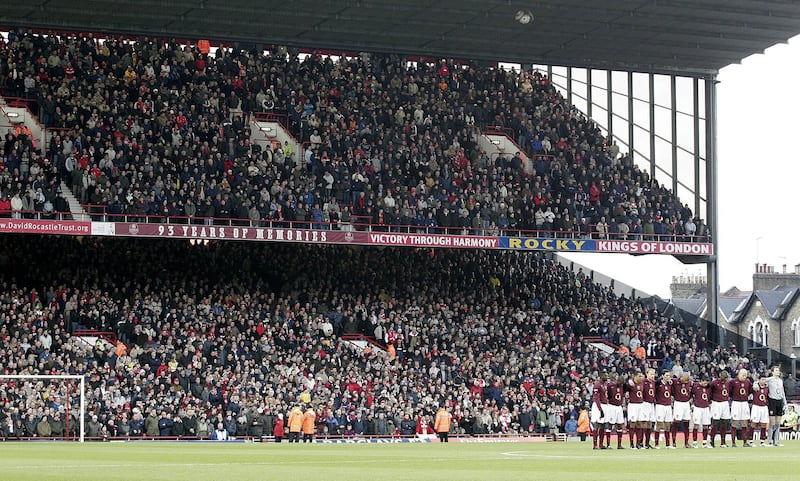
He said the current layout is reminiscent of the former Arsenal Stadium in Highbury, London, an open-air venue with a similar seating style which was demolished in 2006 after the club moved to Emirates Stadium.
“It was a beautiful stadium, completely integrated, as so many of the English stadiums are…There really was not a bad seat in the stadium. In terms of the spectator experience, it was great,” he said of his visit to the pitch in the ‘90s, calling it “the most beautiful stadium” of any sport he’s ever been to.
It should be noted that although Toronto Stadium is on the smaller side of modern-era World Cup stadiums, the smallest venue to ever host a match for the tournament was Estadio Pocitos, a 1,000-seat stadium in Uruguay where the first World Cup goal was scored in 1930.
Cohen said he’s seen matches at the other end of the stadium size spectrum too, including at the former New York Giants Stadium in New Jersey during the 1994 FIFA World Cup, and 80,000-seat space which he called an “inappropriate” venue for the match at the time.
“It was an NFL stadium, so (the space around the pitch) was a little bit smaller. The corner kicks were right (at the edge) so players had very little room to kind of run up and take their corner kicks,” he said.
In terms of atmosphere, he said that as you left the stadium, you likely “wouldn’t have known there was a World Cup going on.”
The Giants’ new stadium (which opened in 2010 and is shared with the New York Jets) will play host to the FIFA World Cup’s final this tournament as the New York New Jersey Stadium on July 19.
Temporary stands: a ‘cheap out’ or ‘sustainable’ choice?
Much has been said about the temporary seats at Toronto Stadium, which made headlines when images of their scaffolding foundation surfaced online.
Some people on social media called the stands unsafe, while others wondered how much of the game you’ll actually be able to see from the last row.
Addressing the criticism earlier this year, Toronto FC’s vice president of business operations Chris Shewfelt, said it’s also not the first time temporary seats have been brought in for an event at the field, noting the enhanced capacity of the 2016 Grey Cup, MLS Cup and NHL Centennial Classic.
“I’ll remind everybody, this is not the first time we’ve constructed temporary stands at BMO field. I think back to great memories like the 2016 Grey Cup, MLS Cup and the centennial classic that happened had similar temporary seats,” he said.
When the stands were unveiled at a media preview, Eaves said the stands are “perfectly safe” and that fans will be able to see the matches “perfectly.”
Asked about the stands, Cohen said what you do with a World Cup bid shows how much significance you place on the event and on the sport in general and that the temporary seating arrangement suggest that Canada “low-balled it.” The federal government, as well as the province, is chipping in to pay for the $380 million it’s expected to cost the city to host the event.
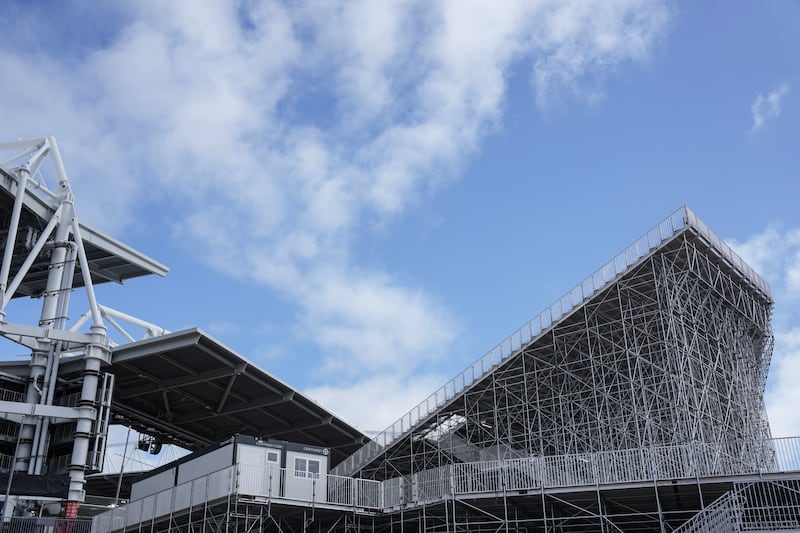
“They kind of took the cheap out, kind of nickeled-and-dimed it,” he said, noting that the opportunity to host comes at a time when soccer enthusiasm in the country is “exploding.”
“So this is kind of a compromise situation. I think it would not be a solution that a South American or a European country would have adopted.”
However, Cohen said that he also sees the argument against building stadiums from scratch, as was done in Qatar for the 2022 World Cup and in Brazil in 2016, most notably the US$290 million Arena Amazônia in Manaus which has struggled to justify the expense in the wake of the tournament.
“Maybe we shouldn’t be thinking about ‘white elephants’ like Manaus or Qatar’s in the desert,” he said.
“Maybe this is a good model. A much more sustainable, a much more modest model moving forward?”
Toronto Stadium will host six matches, including Team Canada’s first against Bosnia and Herzegovina on June 12 and a Round of 32 contest on July 2.

