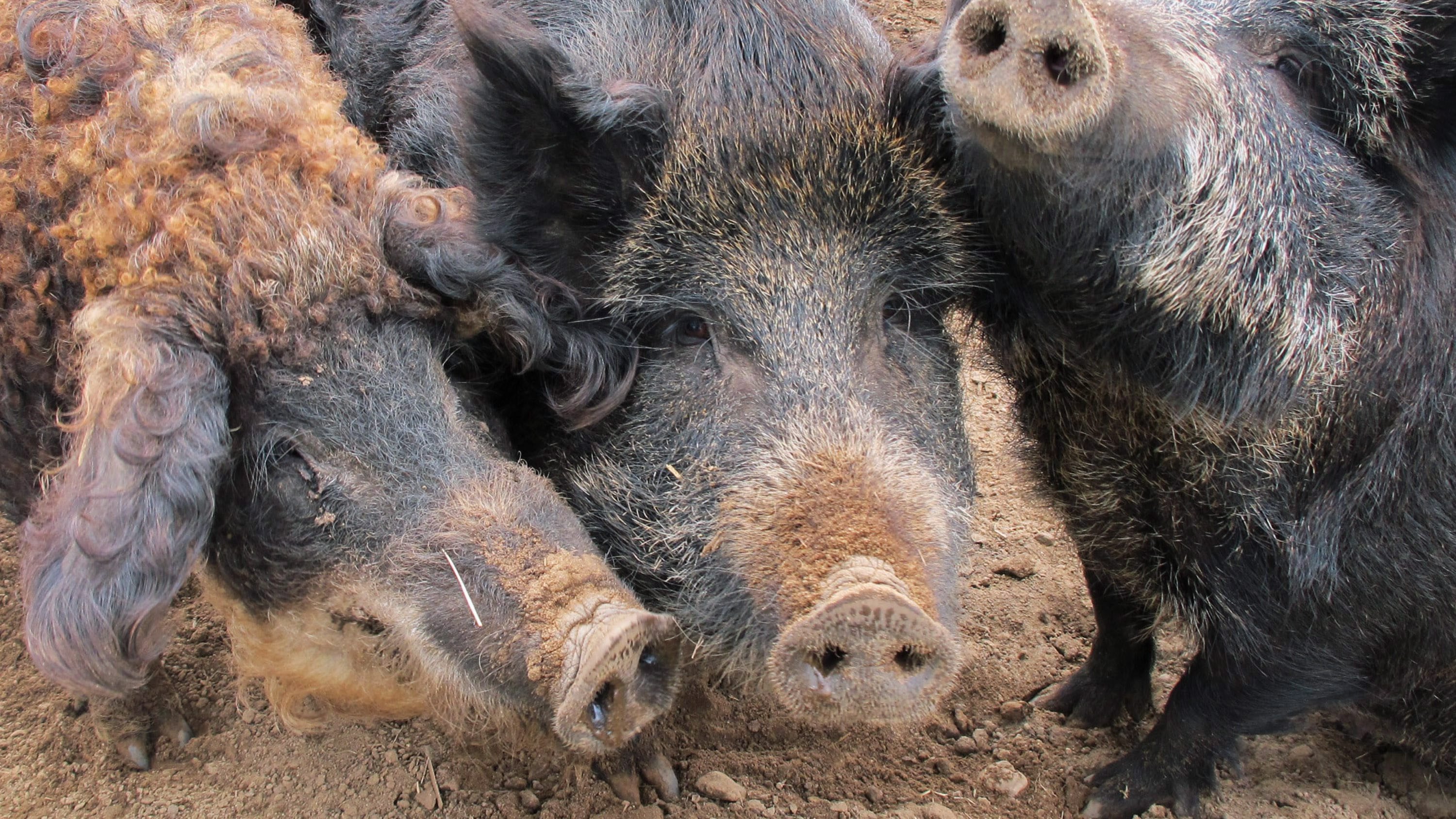
Ontario is bringing home the bacon, or at least trying to by deploying drones with thermal cameras to track down invasive wild pigs before they wreak havoc to the local ecosystem.
The province uses Remotely Piloted Aircrafts Systems (RPAS) equipped with thermal imaging to ease their search on reported wild pig sightings, as these drones can detect feral hogs in thick brush.
Travis McGee, a senior wildlife technician for the ministry of natural resource’s Wild Pig team, tells CTV News Toronto they purchased their own fleet of drones in 2024. But the first time they used this technology to locate wild pigs was in 2021, McGee says, when more than a dozen wild boars were spotted roaming around Pickering.
At that time, McGee says they borrowed the equipment from Ontario Hydro.
“They supplied drones for us and helped us to find out where the pigs were and where they were moving in order to come up with a plan to trap them and remove them off the landscape,” McGee said.
As of 2024, the province uses its own drones to conduct these searches. So far, McGee says they have primarily used this technology to search for escaped domesticated pigs from small farms.
“We don’t have a population of Eurasian wild boar on the landscape,” McGee said. “We’re not in that position yet where we have a breeding population. But, in Ontario, we consider any pig that’s outside of human containment to be a wild pig.”
Of the 64 reports they received about escaped animals last year, McGee says 40 of those sightings were likely wild pigs.
The lore behind wild hogs
In Ontario, wild pigs are considered to be any free roaming domesticated pigs—like pot-bellied pigs, for example—or Eurasian wild boars, or a combination of the two.
“There are no pigs that are native to Canada,” Dr. Ryan Brook, professor at the University of Saskatchewan in the department of animal and poultry science, said in an interview.
Brook says Canada did not have Eurasian wild boars until the 1980s, when there was a push to diversify agriculture. Outside of the introduction of emu ranches and ostrich farms, Brook says wild boars were also being brought in from the United Kingdom.
“They were raised on farms, primarily for meat production originally,” Brook said. Some farmers would crossbreed wild boars with domestic pigs, Brook said, as they would become much larger and would have a higher reproductive capacity.
“But the market never really took off, and they didn’t build the infrastructure to really support it.”
After this point, Brook says some wild boar farmers would cut their fences and let these animals out into the wild, because the pigs were considered “essentially worthless.”
“In some cases, as many as 300 go at once, and that happened pretty broadly,” Brook said. He adds that because of their origins and being bred for cold winters, these wild pigs were quite adaptive to the Canadian environment.
“They were kind of set up to be successful invasive species,” Brook said.
Why are wild pigs a concern?
In short, Brook said wild pigs are an “ecological train wreck” to Canada.
Their ability to eat nearly anything causes massive damage to agricultural crops, Brook said, and they can “destroy” ecosystems unlike other animals due to their habit of “rooting,” which is when they use their snout to rip up the ground.
“They rip up the ground to get at insect larvae and roots to eat, and so when they leave the area, it looks like it’s been ripped apart by a rototiller, the ground is torn apart,” Brook said. “That can help invasive plants take hold, and it takes years to recover.”
Wild pigs can also spread disease to livestock and other animals because they tend to wallow in water as a way of cooling off.
“They (pigs) can carry many different diseases, they can deposit that material into the water sources that they wallow in,” McGee said. “Our native wildlife comes and drink from those water sources, and then they get sick.”
Wild hogs can also carry African Swine Fever, which has not been detected to North America yet. It is a viral disease that only impacts pigs and is spread between these animals either directly or indirectly with other infected pigs or pig products, like farm equipment and feed.
“I think many would agree with me that they’re the worst invasive large mammal on the planet,” Brook said.
Why hunting does not work
For one, hunting pigs in the province is illegal. But secondly, McGee says hunting these animals encourages them to scatter and hide.
“Wild pigs that are exposed to hunting pressure flee into new areas, they learn to avoid humans, and while hunting can remove a few individuals from the population each year, they’re quick to reproduce and the populations rebound quickly,” McGee explained.
Brook says pigs can have a couple of litters per year, averaging at about six young, echoing McGee’s sentiments that hunting this animal would not keep up with how quickly they reproduce.
While hunting wild pigs is banned, McGee says the province does rely on hunters to report any sightings.

