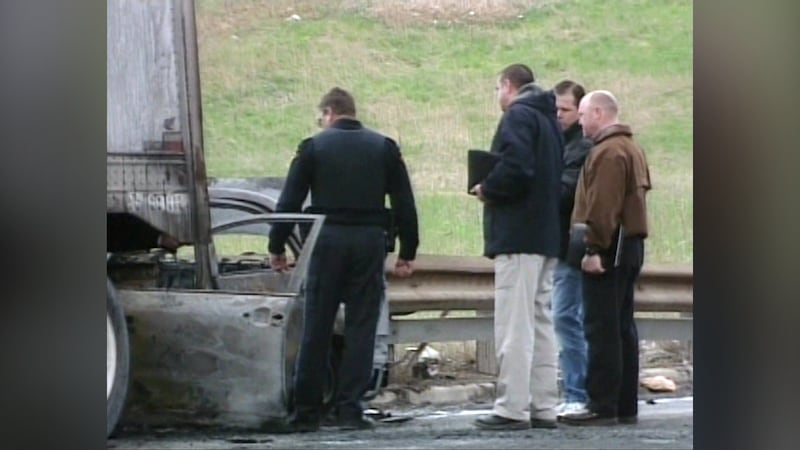
Toronto police say they have now identified the victims of two separate cold cases, including a woman who was murdered 90 years ago and buried underneath a building in the city’s east end.
According to police, the first cold case is related to the skeletal remains of a woman found under a former auto dealership in the area of Danforth and Coxwell avenues in 1995.
On May 18, 1995, police said officers were called to the area after demolition workers discovered the skeletal remains of an unknown woman.
“A forensic examination determined the victim had been intentionally buried after suffering at least six blunt force injuries to the head from a hammer-like weapon,” police said in a news release issued Monday.
“The investigation was classified as a homicide.”
“We were unable to identify her at that time. We created a composite image of her, released it to the public in 1995,” Det. -Const. Michael Kelly told CTV News Toronto.
“We got a lot of tips come forward, a lot of people saying, ‘My mom, my aunt, my sister went missing in the 40s. This could be her.’ None of those ultimately panned out.”
He said the case was recommended for IGG in 2022, but investigators initially had issues developing a DNA profile.
“Because of the nature of how long the remains had been in the ground, some other bacterial issues and contamination, it made very difficult for us to get a good DNA sample to work with,” he said.
Kelly noted that it was just in the last three months that investigators were able to make significant progress in that area.
“There is different parts of our anatomy which are more resistant to forms of bacterial contamination or degradation, so we were able to obtain a segment of bone from her that was actually able to yield a perfect, nice, clean, fully robust DNA profile for her,” Kelly said.
The victim has now been identified as Mary McLeod Moffat, police said.
Moffat was born in Scotland in 1905 and immigrated to Canada with her family 1913. They believe she was likely murdered 90 years ago.
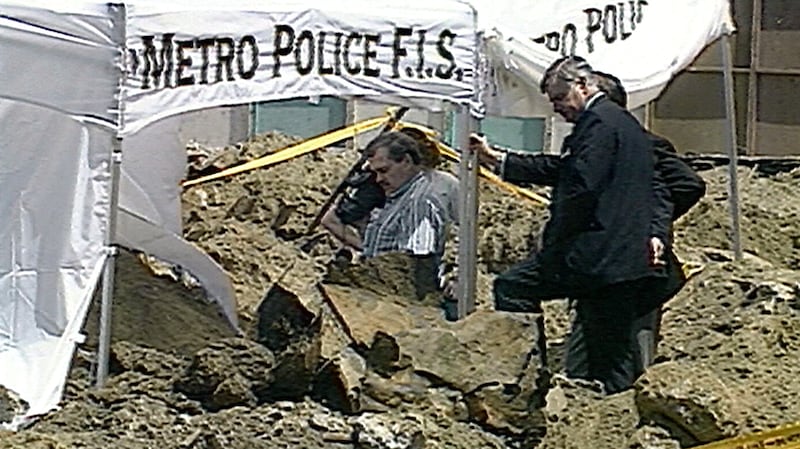
“Historical records, family interviews, and evidence recovered from the burial site established that she was likely murdered in approximately April 1936,” police said.
According to police, the victim’s husband, Andrew Lloyd Moffat, who died 10 years before his wife’s body was discovered, is believed to be responsible for her murder.
Through their investigation, Kelly said officers learned that Moffat and her husband had one child before he left and married a woman in the Toronto area, unbeknownst to his first wife.
“She obviously came to Toronto. We surmised that some form of confrontation occurred, which resulted in her death and burial.”
Her body, he said, was found at a property that was adjacent to a tire business that her husband operated.
He at one point assumed the alias Drake Lloyd Cummings and lived in the United States and Vancouver before his death in 1985.
Kelly said the suspect ultimately married four women, having children with three of them.
“We have been able to have discussions with those family members as well,” the detective said.
“Obviously this begins and ends with a very sad, difficult tale to hear about, but for some family members it answers a few questions.”
He called Moffat’s murder “one of Toronto’s oldest mysteries.”
“This never would have been solved without IGG,” Kelly said.
Hwy. 401 arson victim identified
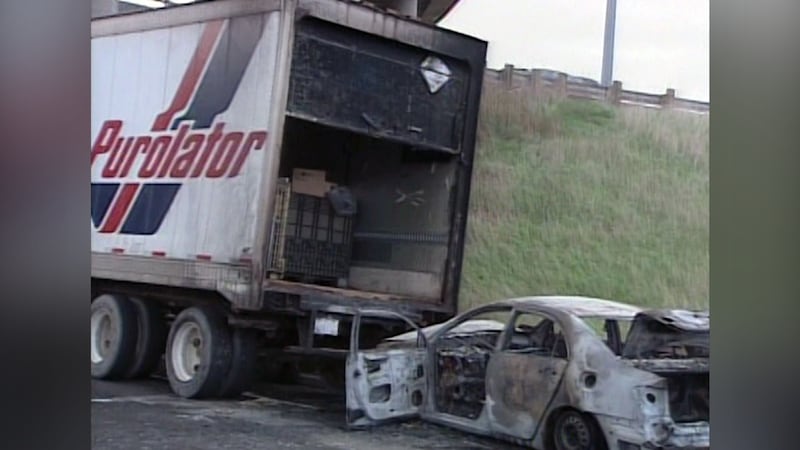
Toronto police say the second person recently identified through the use of IGG is a woman whose badly burned body was found in the passenger seat of a vehicle operated by a driver who investigators believe intentionally collided with a tractor-trailer on Hwy. 401 on April 22, 2004.
“The Office of the Fire Marshal determined the fire had been deliberately set using gasoline and that the woman had died before the fire was ignited, confirming it had been used to conceal the cause of death,” police said in the news release issued Monday.
“Due to the extent of the injuries from the fire, the cause of death was never determined.”
Police said in 2006, the driver of the vehicle, 38-year-old Siumi Kilflu, of Toronto, was convicted of a number of charges, including arson to property, arson endangering life, indignity to a dead body, and dangerous operation of a vehicle.
He was handed an eight-year prison sentence and was deported from Canada in 2012.
“He never wound up telling us the true identity of this woman or how he came across her,” Kelly said.
The victim, police said, remained unidentified for more than 20 years despite public appeals, police said.
The case was selected for IGG investigation in 2022.
Police said DNA analysis determined that she possessed Indigenous ancestry connected to Cree communities along James Bay and the Fisher River Cree Nation in Manitoba.
She was ultimately identified as Patsy Flora Lagarde, who was born in Ontario in 1962. Her parents, police noted, were from the Berens River First Nation and the Long Lake #58 First Nation. She had two biological children, including one living in Alberta, according to police.
“These investigations represent two of the most significant unidentified human remains identifications completed by the Toronto Police Service through IGG,” police said in the news release.
“These identifications represent the significant impact that investigative genetic genealogy can have on long-term unidentified human remains investigations,” said Det. Sgt. Stephen Smith of the Homicide and Missing Persons Cold Case unit.
“After decades without answers, we have been able to restore the identities of Mary (Moffatt) and Patsy Lagarde, provide information to their families, and uncover important facts about the circumstances surrounding their deaths. This work reflects the dedication of our investigators and the value of Project 31 in advancing cold case investigations.”