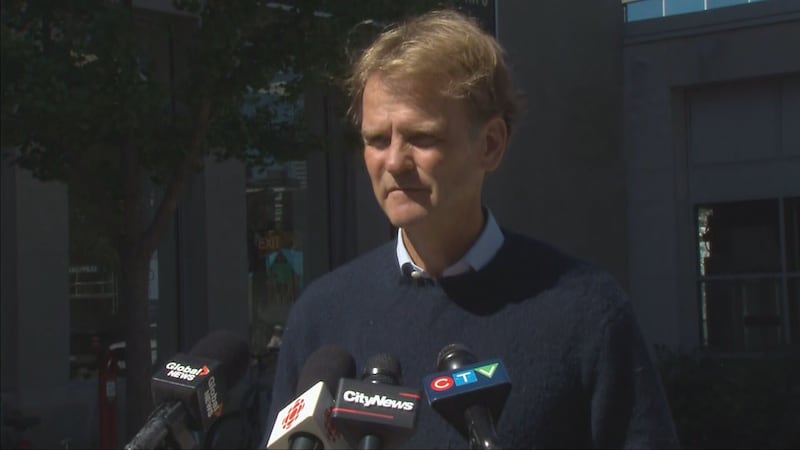
Toronto mayoral candidate Brad Bradford says if elected, he plans to cut residential water bills by an average of about $300 a year.
Speaking at a news conference in Scarborough on Monday, Bradford vowed to cut water bills by 25 per cent on the first $1,500 by reducing the amount of money that is collected for city reserves.
“In your water bill right now, 67 per cent of that is not actually paying for the water, it is putting money into a reserve account. So we are over-collecting, we’re over-taxing, we’re over-billing,” he said.
“This is your money and I’m giving it back because we didn’t need to take it from you in the first place.”
He added that he will work with the province to make sure the savings are passed on to renters.
“Landlords are required to reduce your rent when property taxes are cut,” Bradford said, noting that he has written to Municipal Affairs and Housing Minister Rob Flack to request that the “same mechanism” be applied to municipal water rate reductions.
Toronto Water would become public utility: Bradford
Bradford added that he plans to take steps to set up Toronto Water as a public utility, similar to Toronto Hydro.
“If we set this up as a public utility, we can do a better job borrowing from major capital infrastructure investments and we will finance major capital infrastructure projects that way. Right now, we are collecting money in a bank account and effectively paying for all of these things up front with cash,” he said.
“That is not how you finance infrastructure. That’s not how the electric utility Toronto Hydro does it. Nobody is paying for a transformer that’s not going to be delivered until 2040 up front with cash.”
Bradford said other big cities across the country have adopted a similar model, including Edmonton, Windsor, and Kingston.
He said the utility would be “100 per cent owned by Toronto taxpayers” and bylaws would be written in such a way that would “permanently ban private investment.”
When asked why he didn’t pitch this when he served as the vice-chair of the budget committee from 2018 to 2022, Bradford said it only became an option in 2025.
“This became an opportunity for us here in Ontario is 2025. The province created changes that allow us to do this. You see other jurisdictions that are moving forward with this,” he said.
“And I am running for mayor today and I’m standing here in front of all of you and I’m saying this is one way I can deliver real immediate affordability, real relief for Torontonians today and it is a smart model.”
Bradford’s announcement comes with four weeks left to go in the municipal election campaign.
Chow says plan privatizes drinking water
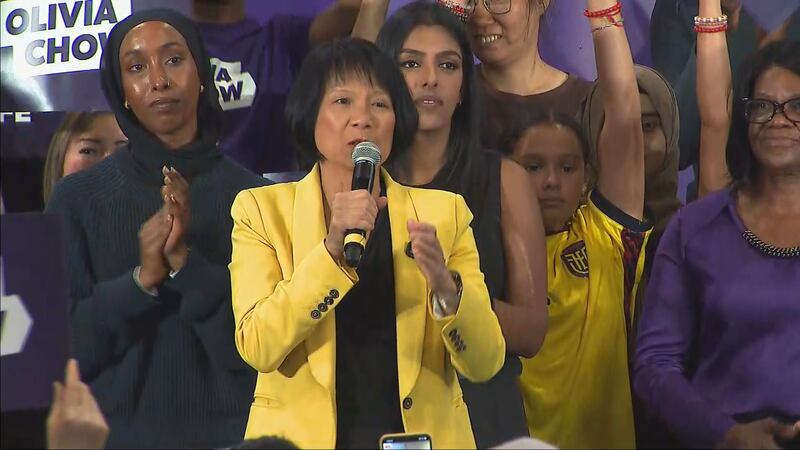
In response to the policy proposal, mayoral opponent Olivia Chow said despite his claims, Bradford’s move would in fact open the door to “privatizing” drinking water.
She noted that Water and Wastewater Public Corporations Act would give the province the power to set water rates.
“Bradford will say anything to get elected. His water scheme will open the door to privatization and cost people a lot more in the long run. By giving up control of Toronto water’s system, he wouldn’t even be able to set the rate he claims he would,” she wrote in a statement.
“Toronto has one of the safest, purest water systems in the world. Bradford’s scheme puts that at risk.”
Mayoral candidate Chris Alexander also commented on Bradford’s plan in a news release, saying that it would essentially drain the reserve account that fixes Toronto’s pipes.
“Toronto Water’s reserve is not over-collection. It is the money that fixes our pipes and treatment plants,” he said.
“Bradford wants to spend it on a discount, and leave us with no funding for capital renewal. The pipes still need fixing. Torontonians just pay for them later, with huge interest, and with our clean water put at risk.”
Alexander went on to accuse Bradford of wanting to “imperil our water system by blowing up its capital budget.”
Alexander pointed to the city’s own budget papers, noting that the reserve on track to fall below two per cent of what the capital plan needs.
“This is a $300 discount today. No published cost. No timeline for the transition. A danger sign for Toronto’s best-in-class water system,” he said.
Union responds to Bradford’s plan
The union whose members operate and maintain the city’s water system has since chimed in, saying that Bradford’s “water scheme would make Toronto’s drinking water less safe and less reliable for the people of Toronto.”
Toronto Civic Employees Union, Local 416 says it “cuts money for pipes, treatment and repairs and opens the door to privatization which will make service worse for people” and is calling on Bradford to withdraw his plan and commit to keeping Toronto Water inside the city, and accountable to both council and to people.
“Our members test and treat every drop of water the people of Toronto drink, and we repair the city infrastructure that brings it to your tap,” said President Domenic Maugeri said in a news release.
“Toronto Water is the watermain under your street and the plant that cleans your drinking water. If you put private interests ahead of public delivery of services, repairs get put off and people suffer. Put them off long enough and your water stops being safe.”
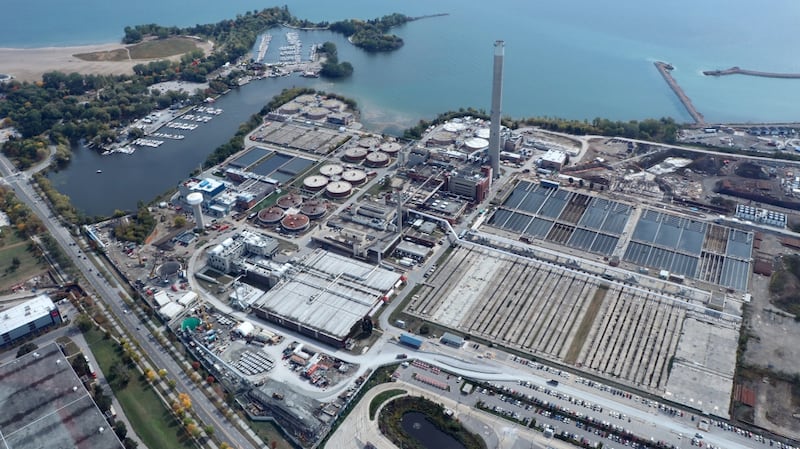
Local 416, which represents more than 6,000 City of Toronto outside workers and paramedics, including the operators, mechanics and technicians who run Toronto’s water and wastewater system, added that Bradford’s plan “opens the door to the process of privatization of Toronto’s water system by turning Toronto Water into a corporation.”
“Under that plan, Toronto’s water would be run by an unelected corporate board, not by city council. The province sets the rules for that board, which means the City of Toronto and Torontonians would have no say over who runs their water and no way to hold them to account or to budget,” it said.
“Bradford says a city bylaw would ban private investment, but a city bylaw cannot overrule the province – and the city has seen that play out before to the benefit of those private companies, and to the harm of the people of Toronto.”
Safe water ‘takes strong oversight and steady investment’
Maugeri went on to say that the Walkerton disaster taught Ontario that safe water “takes strong oversight and steady investment,” and this plan weakens both.
“Toronto’s water is safe because it answers to council and to the people of Toronto. Bradford wants to move it out of reach into a system Torontonians don’t control,” he said.
“We know what happens when we privatize services: the companies increase their profits and cut service. Toronto deserves better.”

