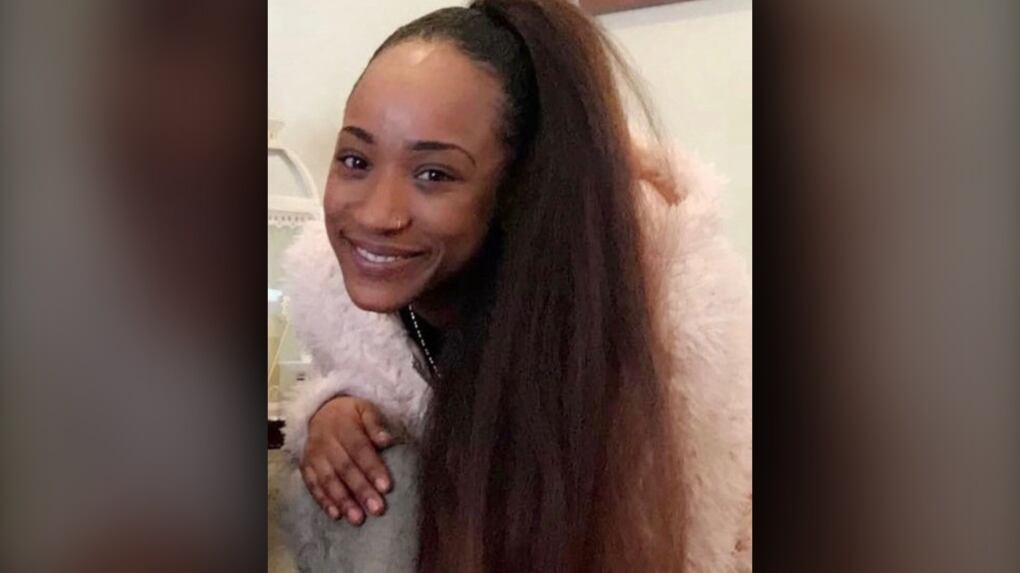
A coroner’s inquest into the death of a Toronto woman who fell from a 24th-floor balcony while police were in her home was put on hold indefinitely Thursday just as it reached the final stretch of the proceedings.
“I know everyone has been working extremely hard during this inquest. Unfortunately, I will be adjourning the inquest until further notice,” said Dr. David Cameron, the coroner presiding over the inquest into the death of Regis Korchinski-Paquet.
“The reason for this is that we have some quite unanticipated investigation that needs to be done before we can continue.”
The coroner gave no details on the nature or focus of the investigation but said jurors and the public would be informed when the inquest was ready to resume.
The inquest finished hearing evidence on Wednesday and was set to reconvene Thursday afternoon so that lawyers for about a dozen parties could make their closing remarks and suggest recommendations to the jury.
Korchinski-Paquet, a 29-year-old woman of Afro-Indigenous and Ukrainian descent, died on May 27, 2020 after police were called to the west-end apartment she shared with relatives.
Her death closely followed the police killing of George Floyd, a Black man from Minneapolis, fuelling protests as well as calls to defund the police. It was also one of several cases to draw scrutiny on how police interact with people in crisis.
One of Ontario’s police watchdogs, the Special Investigations Unit, cleared police of wrongdoing in her death, finding that Korchinski-Paquet fell while trying to move from her apartment’s balcony to the one next door. Her family disputed the findings.
The SIU did not participate in the inquest, and its investigation is outside the scope of the proceedings.
Last week, Korchinski-Paquet’s mother directed a new allegation at police as she testified about her memories of that day, throwing the inquest temporarily off course.
Claudette Beals alleged officers pushed her daughter toward the balcony, drawing concerns from several lawyers and causing the inquest to go on an extended break so they could figure out a way forward.
Two officers who were in the apartment, Const. Shane Beaudoin and then-Const. Adam Vandenbrink, had previously testified that Korchinski-Paquet was allowed into the apartment to use the bathroom, then introduced to a paramedic.
Korchinski-Paquet moved quickly to the balcony, knocking over an air conditioning unit in the process, they said. When she disappeared from view, they believed she had stepped onto the adjacent balcony, and did not realize she had fallen, the officers testified.
The inquest has focused largely on Korchinski-Paquet’s history of seizures from epilepsy as well as education and training around epilepsy and postictal delirium or psychosis, mental states that can occur after seizures and lead to uncharacteristic behaviour.
Korchinski-Paquet had experienced two seizures earlier in the day, hours before police were called over a fight involving knives. Korchinski-Paquet, her mother and her brother each called 911 and mentioned her diagnosis and seizures to the call taker, jurors heard.
The jury watched a compilation video combining the recordings of the five calls and two police microphones with CCTV footage from the hallway outside Korchinski-Paquet’s apartment and video from a police cruiser.
Korchinski-Paquet made three of the 911 calls, telling the call taker she was having difficulty breathing after being attacked by her mother and brother. She said she had lost control and thrown two bottles at them in the hallway.
She mentioned her epilepsy after being asked if anyone involved had mental health issues.
In their calls, Korchinski-Paquet’s mother and brother mentioned that she was often agitated after her seizures. Her brother, Reece Korchinski, said she assaulted him with knives after a dispute over the TV volume.
Beals testified she called 911 because she wanted police to take her daughter to Toronto’s Centre for Addiction and Mental Health.
Six police officers and two paramedics responded to the calls, the inquest heard.
Korchinski told the inquest police assumed an “aggressive” tone toward his sister, treating her like a suspect rather than a citizen. He also felt threatened by what appeared to be a shotgun in one of the officers’ hands, not knowing at the time it was a less-lethal weapon used by police, he said.
Under cross-examination Wednesday, Korchinski said that while he understood police had been called for an assault involving knives, the officers had the chance to assess the situation directly after they arrived at the scene and could see that neither he, his sister or their mother were dangerous.
The officers should have let his sister enter the apartment alone instead of going with her, he said.
“If the police never showed up that day, Regis would still be alive,” Korchinski said.
Beaudoin and Vandenbrink were the first to arrive, the inquest heard. They went up to talk to the family and debriefed each other once some of their colleagues showed up, the jury heard.
Vandenbrink told the inquest it was during that conversation that he first heard about Korchinski-Paquet’s seizures.
Both officers testified that they never stepped out onto the balcony, nor did they know at the time about postictal delirium or psychosis.
A neurologist who reviewed Korchinski-Paquet’s records after her death testified that she had previously shown symptoms in keeping with postictal delirium or postictal psychosis.
It would be “nearly impossible” to tell whether someone was acting aggressively due to delirium or psychosis after a seizure or for some other reason without knowing their medical history, Dr. Julien Hébert told the inquest.
Jurors in coroner’s inquests do not assign blame or legal responsibility, but they may make recommendations aimed at preventing similar deaths in the future.
This report by The Canadian Press was first published Oct. 29, 2026.
Paola Loriggio, The Canadian Press

