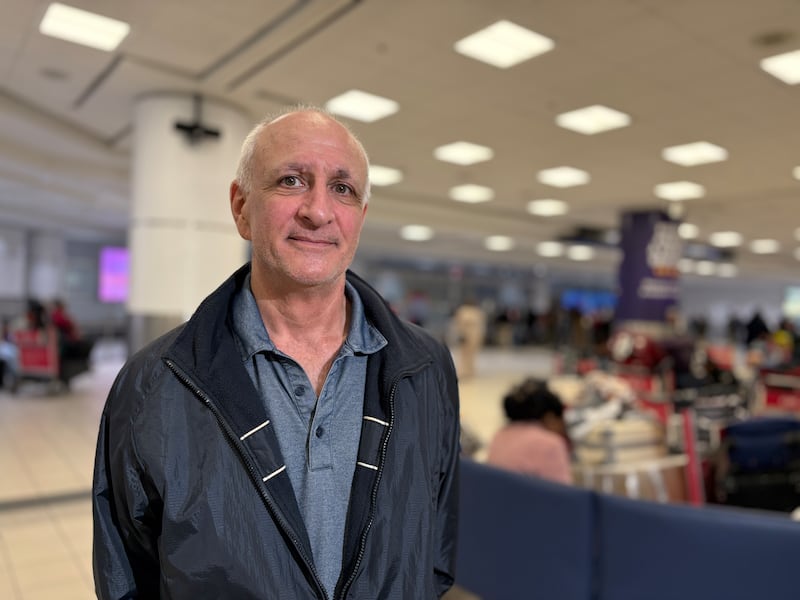
MISSISSAUGA, ONT. -- When he got off the American Airlines flight from Miami, Douglas Dixon was wearing the same clothes he had worn in February, the day he was arrested by U.S. Immigration and Customs Enforcement (ICE) agents.
In his right hand, the 61-year-old Canadian grandfather carried a black gym bag containing his toiletries and a spare set of clothes. In his left hand he held a yellow manila envelope with his passport and a deportation order signed by a judge in Florida.
According to data from U.S. Customs and Border Protection, 32 Canadians have been deported since October.
As Dixon walked through the arrival doors at Toronto Pearson International Airport on Wednesday afternoon, there was a smile of relief on his face.
“It’s good to be back in Canada,” Dixon said, grateful that his immigration detention nightmare was behind him. But his view of the U.S., where he had lived for more than two decades, had been altered.
“I did not think the United States was going to treat people inhumanely. They do not care about the human condition inside those detention centres.”
Aggravated felony
Dixon and his wife received their green card and became U.S. permanent residents in 2019.
In 2022, Dixon was forced to shut down his Tropical Smoothie Café during the COVID-19 pandemic and fell behind on tax filings. He owed more than US$30,000 with interest.
Unable to afford a lawyer, he hired a public defender who advised him to plead no contest to tax evasion. He was put on a monthly plan and had already repaid two-thirds of the amount owed when he was arrested by ICE.
He didn’t know that under U.S. federal law, defrauding the government of $10,000 or more was considered an “aggravated felony.”
In an email to CTV News, Michael Burke, one of Dixon’s close friends, described him as a private person. Burke said he didn’t know his hockey teammate was in financial trouble until Dixon was arrested by ICE.
“Had we known, his teammates and friends would have stepped in without hesitation to help cover the remaining balance and keep him here,” Burke said.
He and others are “deeply saddened” and questioning if American immigration policy “lacks discretion and humanity.”
“It seems that enforcement mechanisms like ICE, which many assume are focused elsewhere, are also impacting individuals like Doug – people who have built lives, relationships and communities,” Burke wrote.
When asked why he didn’t ask his friends for help, Dixon told CTV News he was “too proud.”
Dixon and his wife moved from Montreal to Florida’s Gulf Coast in 2005. They raised two daughters and a son in Naples. Initially, Dixon worked as a logistics manager for a cross-border trucking company based in Canada. Then he bought a Tropical Smoothie franchise in 2013.
He said for years it was doing well, until the pandemic hit.
“I didn’t want people to know I failed.”
Steel cages and bad water
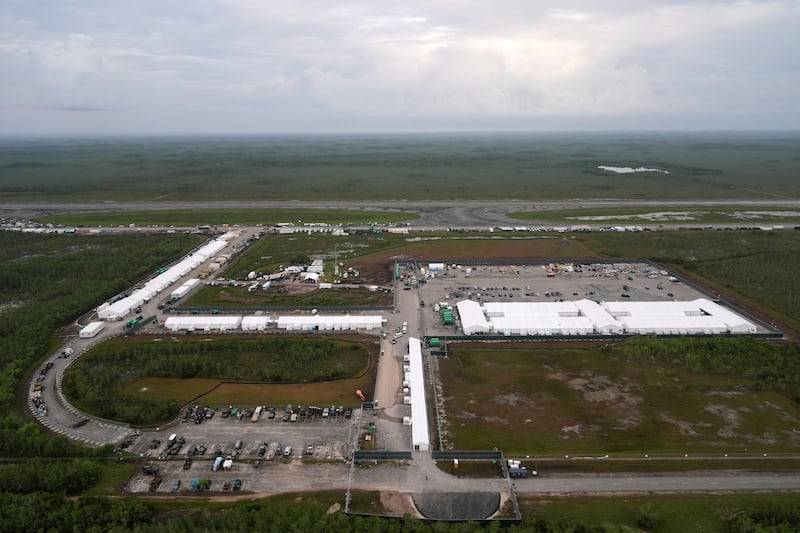
On the same day Dixon was deported, lawyer Katherine Blankenship, who represents other detainees at Alligator Alcatraz, alleged guards at the facility beat and pepper-sprayed her clients earlier in April.
Dixon said he didn’t see violence, but he saw “despair.”
“I was scared at first because I didn’t know who would be in there. We hear that its gang members, murderers and rapists but all these people they’re deporting are just normal, regular people who have jobs and families.”
Dixon said that in his “cage” of 32 people, only three spoke English. He learned that most of the people in his pod were Cubans.
He said the water inside the facility was “dirty.”
Dixon believes he got a urinary tract infection at Alligator Alcatraz. He said the pain got so bad, medical staff had to insert a catheter to help him urinate.
He didn’t understand why guards would handcuff and shackle him before taking him for a medical check.
After nine days he was moved to the Glades County Detention Center. Although it was a smaller facility and less cramped, Dixon said detainees were shaken when a 19-year-old migrant from Mexico was found hanged in the shower.
A new old life
In the 65 days he was detained, Dixon spoke to his wife and children sporadically but did not see them.
During a Zoom interview, his wife Jo Ann Collison and youngest daughter Amy Bazley expressed concern that he would have a panic attack on the flight from Miami to Toronto.
In 61 years, Dixon had never been on a plane. Collison and Bazley asked CTV News to deliver a video message to him.
“I’m proud of you. You’ll have accomplished something that (you’ve) been terrified of all your life – being on that plane with anxiety. And I love him so, so much. And miss him so, so much,” said Collison in the video.
His daughter applauded his perseverance.
“It’s been two months of you being away. I’m proud that he has continued to wake up every morning,” Bazley said.
As he watched the video, Dixon began to cry. He doesn’t know when he’ll see his children or his grandkids again, but he knows he’s luckier than many others. He’s been deported, but he has support.
Dixon will move in with his sister and her family in Montreal.
Because of his “aggravated felony” he will be barred from entering the U.S. for the rest of his life. Suddenly, the city Dixon left 21 years ago will become his home once again.

