

Although new motor vehicle sales dropped for February, according to Statistics Canada’s latest report released Thursday, zero-emission vehicles (ZEV) have taken a larger piece of the pie of all sales compared to this time last year.
There were just over 124-thousand new motor vehicles sold in Canada in February, down nearly one per cent compared to the same month last year. Sales of new passenger cars fell nearly four per cent, while sales of new trucks saw a smaller decline at half a percentage point.
In the same month, 12,626 new ZEVs were sold. That’s an increase of just over 47 per cent from February of 2025.
New ZEVs, which are categorized as battery electric or plug-in hybrid electric vehicles, also comprised just over ten per cent of total new motor vehicles sold, an increase of more than three per cent from one year earlier.
In mid-February, the federal government began the Electric Vehicle Affordability Program – which could return as much as $5,000 to consumers for purchasing battery electric vehicles.
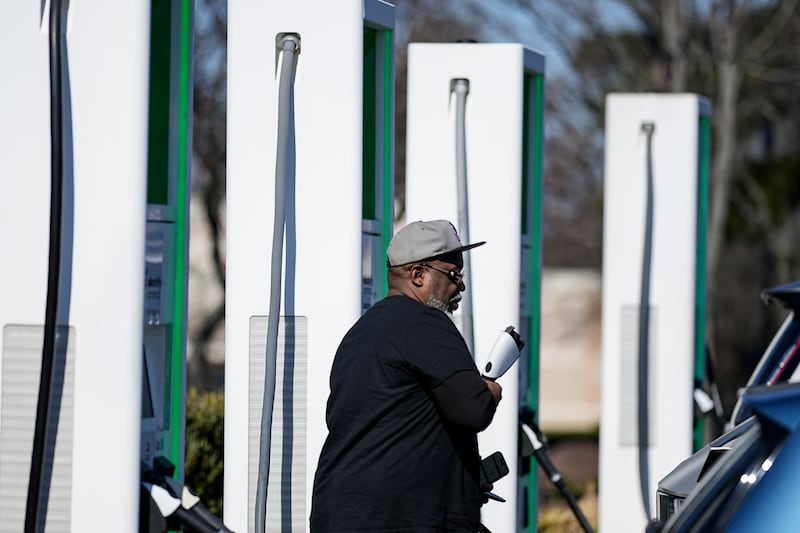
Transports Canada put out a full list of vehicles eligible under the five-year, $2.3-billion EV affordability program, with the incentives dependent on the duration of the lease. They are also designed to decrease over the five years by $1,000 each year.
The rebates are only available for vehicles imported from a country that has a pre-existing free-trade deal with Canada and cost less than $50,000.
“Late last year, the second half was kind of low sales – but now you’re seeing an uptick again,” said Devin Arthur, director of government relations with Electric Vehicle Society, in a Zoom interview with CTV News Thursday.
“I think a lot of those affordability issues, and now the incentive coming back, I think all that’s coming to play with more increased EV sales.”
Arthur added there’s a resurgence in interest for Chinese EVs potentially coming into Canada, especially with increasing fuel prices amid the Middle East conflict between the U.S., Israel and Iran.
“I think people are looking for more ways to save money,” he said. “So switching to an EV can do that.”
Is the infrastructure there?
Electric vehicles represented roughly 10 of all new car sales in February and experts predict that number will continue to grow.
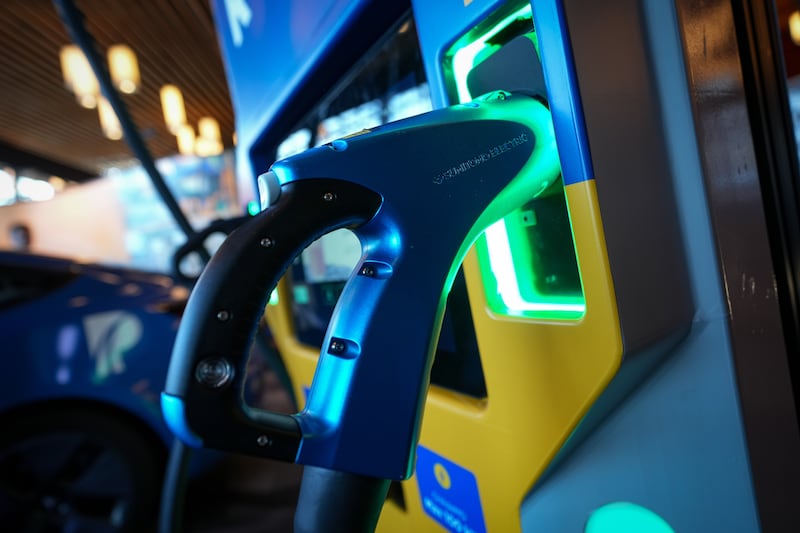
For now, experts say Canada has the infrastructure to handle a slight surge in electric vehicle purchases, but they warn that won’t last long without new investment in the energy grid and the charging network.
Western University associate professor Gal Raz says overall, Canada is not where it’s supposed to be.
“We have less than 40,000 chargers and one of the challenges is that a majority are Level 2, so they’re not even fast charging,” he said.
Level 2 chargers use 240-volt electric outlets and can typically charge an EV in approximately four to 10 hours.
The federal government says that since 2016, it has invested more than $1 billion to help make EVs more affordable and make chargers more accessible. Of the nearly 40,000 charging ports, just 8,500 are DC Fast or so-called superchargers, also known as Level 3.
Raz says Canada needs to follow the lead of major players like Norway and China, who made massive investments in superchargers. China, he points out, went from 5 million chargers in 2022 to almost 20 million today. He also says Canada could start offering incentives or other measures that make getting a charger installed at home easier and less expensive.
“Norway passed a law, “the right to charge,” in 2021 which made a big difference,” he said. “It really kind of meant that anybody who wanted to get a charger in their home could.”
How will Chinese EVs change the landscape?
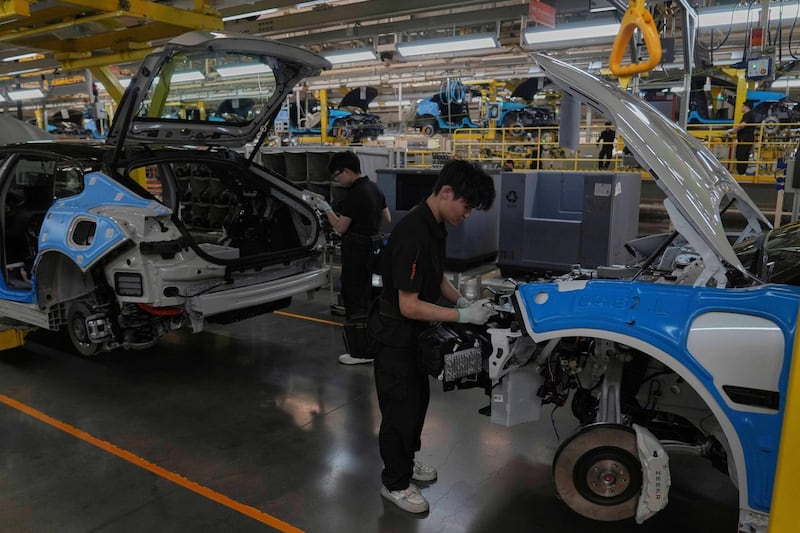
Canada will soon be allowing a limited number of Chinese EVs to be imported and sold into Canada essentially tariff-free at an import price of less than $35,000. Experts believe this change will help drum up interest in electric vehicles and that their sale could help drop EV prices.
Speaking to the standing committee on science and research, Canadian Michael Kovrig called on Canadians to think strategically. The new trade agreement with China, he warned, must be executed very carefully as the impacts on the auto sector could be large and long lasting.
“Unless this trade is tightly constrained, it’s likely to undermine Canada’s industrial base and technological development and weaken national security and policy making autonomy,” Kovrig said.
The former Canadian diplomat who was arbitrarily detained in China says the quota the government has introduced can help limit import volumes, but it will not protect against data security risks.
“A quota can limit import volumes, but it doesn’t address the risk of connected vehicles running untrusted software, or the entrenchment of imported Chinese brands that foster consumer loyalty and political pressure to expand the quota,” he said.
Arthur added there’s a resurgence in interest for Chinese EVs potentially coming into Canada, especially with increasing fuel prices amid the Middle East conflict between the U.S., Israel and Iran.
“I think people are looking for more ways to save money,” he said. “So, switching to an EV can do that.”
Some national security and privacy experts have raised concerns about the high-tech Chinese vehicles and the information they could be collecting and sharing with the Chinese government.
Speaking before the same committee, Canada’s Privacy Commissioner Philippe Dufresne said he hopes laws around private sector data sharing are strengthened. Canadians, Defresne said, shouldn’t have to sacrifice privacy for a cheaper car.
“Generally speaking, I find that the consent and the information sharing for Canadians in terms of their privacy, in many cases, could be stronger,” said Dufresne.
“I am hoping that government and Parliament will modernize private sector privacy law on a number of fronts. We need stronger enforcement rules. It’s quite a notable gap that Canada, almost alone, we lack the ability for my office to issue orders, or to issue fines.”

