TORONTO — The federal government is advising Canadians not to travel to the province hit by a rare type of Ebola that has no cure in the Democratic Republic of Congo, as public health officials re-evaluate what risk the virus might pose during the FIFA World Cup.
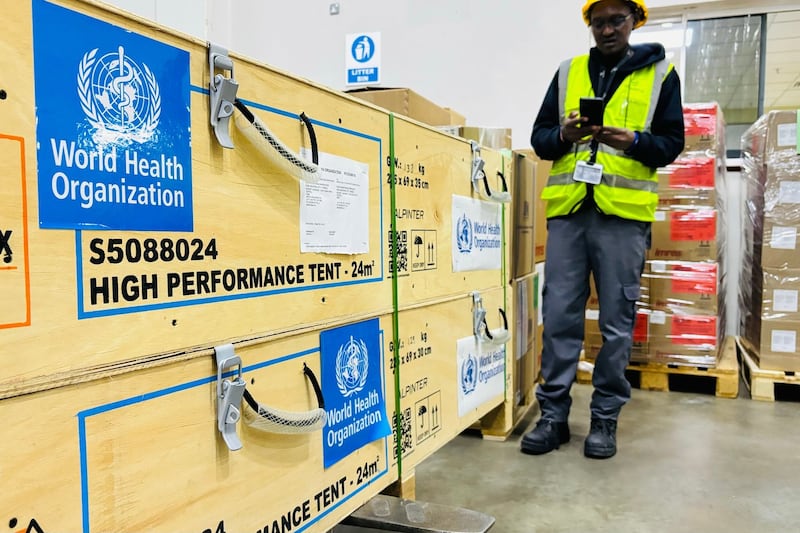
The World Health Organization’s director-general said Tuesday he is concerned about the “scale and spread of the epidemic,” which has led to more than 500 suspected cases, including 130 deaths.
Canada’s government said to avoid all travel to the eastern Ituri province, where an outbreak was declared just days ago that has since reached North Kivu and Uganda. WHO has proclaimed the epidemic a public health emergency of international concern.
The Bundibugyo virus at the heart of the spread is a species of Ebola that has no vaccines or treatments.
The Public Health Agency of Canada said there are currently no travel-related health measures specific for Ebola at Canada’s borders, but it will monitor and update public health interventions as needed, including with respect to the upcoming FIFA World Cup.
With Canada set to host its first World Cup game in less than a month, the federal health agency said it is assessing the importation risk of Ebola, which was initially deemed as “very low.” However, given WHO’s emergency declaration, PHAC is conducting a rapid assessment of the overall risk to Canadians.
“Canada will continue to implement appropriate health protocols should a case be imported to Canada,” PHAC said in an updated statement leading up to tournaments in Toronto and Vancouver.
“If a traveller feels sick or experiences any symptoms of Ebola disease during their flight or on arrival to Canada, they should tell the flight attendant before they land,” said Mark Johnson, a PHAC spokesperson, on Tuesday.
Johnson said there has never been an imported case of Ebola in Canada and there are currently no cases in North America.
The U.S. Centers for Disease Control and Prevention said Monday an American doctor working in Congo tested positive for Ebola and has been transferred to Germany.
Contrary to Canada’s border measures, which are in line with WHO guidance, the CDC said it was suspending the entry of travellers who have been in Congo, Uganda, and South Sudan over the past 21 days, apart from a group of U.S. citizens and nationals.
Global Affairs Canada did not immediately respond to a request for information about whether any Canadians have been impacted by the outbreak.
Symptoms of Ebola include fever, headache, muscle pain, weakness, diarrhea, vomiting, stomach pain, and unexplained bleeding or bruising in the late stage of illness.
The disease is spread by contact with blood or bodily fluids of an infected person or their contaminated objects, such as clothing or medical equipment. It can also spread through contact with infected animals, including bats.
In addition to the risk posed by a disease that has no cure, WHO’s director-general said several other factors warrant “serious concern” about the potential for further spread and more deaths.
Dr. Tedros Adhanom Ghebreyesus said in opening remarks at an emergency committee gathering on the outbreak that cases have been reported in urban areas, including Kampala, Goma and Bunia.
He also said deaths have been reported among health workers, indicating healthcare-associated transmission.
“The province of Ituri is highly insecure, as you may know. Conflict has intensified since late 2025, and fighting has escalated significantly over the past two months, resulting in civilian deaths. Over 100,000 people have been newly displaced, and in Ebola outbreaks, you know what displacement means.”
Hannah Alberga, The Canadian Press
This report by The Canadian Press was first published May 19, 2026.
Canadian Press health coverage receives support through a partnership with the Canadian Medical Association. CP is solely responsible for this content.

