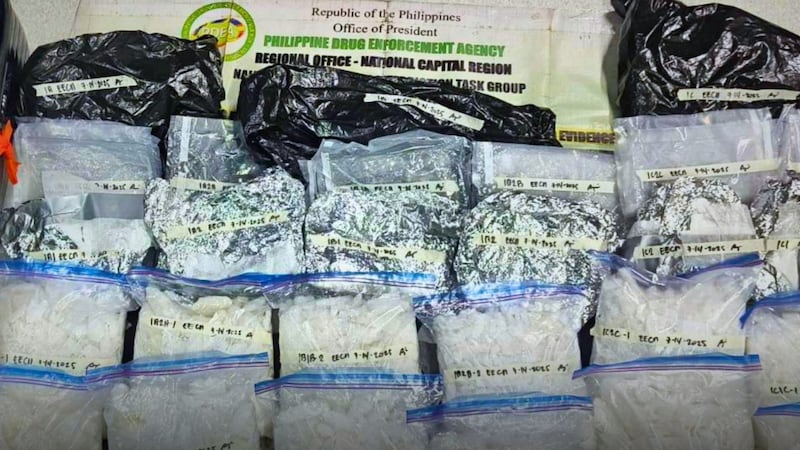
TORONTO – A Toronto woman is demanding that Cathay Pacific Airways compensate her after a baggage-tag switching incident left her jailed for weeks in the Philippines, accused of smuggling 24 kilograms of methamphetamine.
The 66-year-old woman, whom W5 is identifying by her first name, Grace, is one of several innocent Canadian passengers who have come forward after a W5 investigation revealed at least 17 Canadian cases of baggage-tag switching in the past year.
In each case, passengers say they checked in their luggage, only to later be accused of smuggling drugs after their baggage tags were allegedly switched onto suitcases filled with narcotics.
Now, the victims are asking the same question: who is responsible for your luggage after check-in?
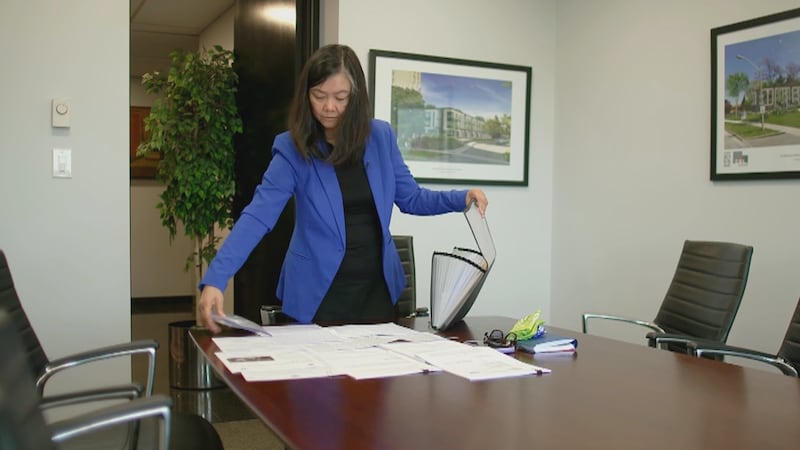
‘They already ruined me’
Grace’s ordeal began last summer when she flew from Toronto to Manila, the capital of the Philippines, on Cathay Pacific, with a connection in Hong Kong.
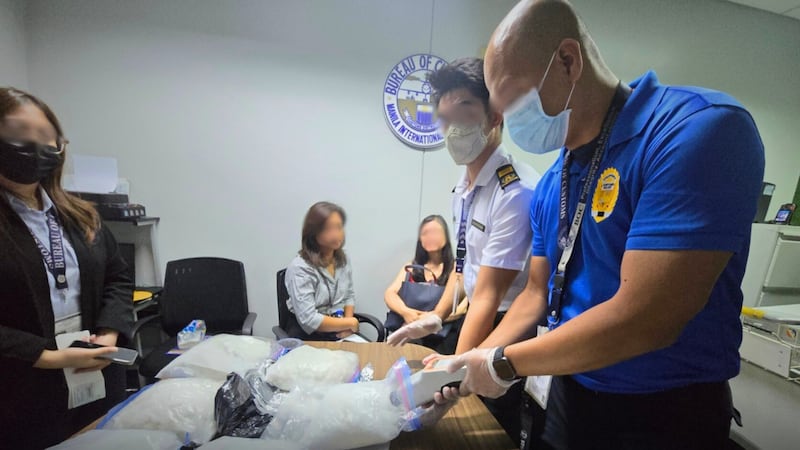
When she arrived at Manila International Airport, authorities arrested her on drug smuggling charges, despite her insistence that the bag full of drugs was not hers. The story made headlines across the Philippines.
“Why do they have to put me in jail? Do these mug shots, fingerprints. They broadcast it nationwide. They already ruined me. They already humiliated me. Like, why?” she told W5.
W5 EXCLUSIVES
- Luggage-tag switching scheme involves flights from Canada to countries where drug smuggling can carry death penalty
- Investigation reveals security gaps and organized crime at Toronto airport: ‘You could walk out carrying a cruise missile’
- Air Canada employee accused in Canada’s largest gold heist had been on police radar for years
- Whistleblowers say organized crime has infiltrated Canada’s largest airport
Grace spent a harrowing 24 days in jail.
“We had to sleep on the floor. You can see cockroaches crawling all over the place. All I can do is just pray,” she said.
Grace estimates the financial cost at tens of thousands of dollars in legal fees and expenses.
‘They keep on denying liability’
Grace says Cathay Pacific has not taken financial responsibility for what happened, including the cost of a return flight to Toronto that she missed because she was in jail.
“They keep on denying liability,” she said. “They are the one responsible for my luggage, from the time I checked it in, until it comes to where I’m going, to the final destination.”
Cathay Pacific did not respond to W5’s repeated requests for comment.
“I suffered mentally, emotionally, physically, and even financially. Who will pay for that?” Grace said.
The RCMP confirmed to W5 that no arrests have been made in connection with her case.
Accused in Japan
Since W5’s investigation aired, other innocent Canadians have reached out with similar stories.
One woman in her 70s says she was detained at Narita Airport in Japan last summer after arriving on a direct Air Canada flight from Toronto’s Pearson Airport, accused of smuggling 21 kilograms of methamphetamine.
The Toronto businesswoman says she was surrounded by seven officers from police and customs, served with search warrants, and had her cellphone and passport seized.
“They showed me my suitcase. But it was not mine,” she wrote to W5.
She says police searched her history, phone and personal records before concluding she was not the culprit.
“The trauma and the fright I experienced was huge,” she wrote. “The fear was extraordinary.”
She says she now goes to therapy and still suffers recurring stomach pain from the stress.
“I believe that the whole baggage handling system needs to improve to prevent such crimes from happening in the future,” she wrote. “If I had flown to other countries, my fate could have been severely worse.”
Family vacation turns into drug-smuggling accusations
Another Toronto family told W5 they were returning home from a vacation in Mexico earlier this year when they became victims of a baggage-tag switching scheme.
The man was travelling with his wife and 11-year-old son when he says he was accused of smuggling 28 kilograms of cocaine through Cancun. He says the vacuum-sealed bricks had cartel logos on them and were destined for Pearson Airport.
He says he was detained by Mexican authorities for 48 hours, released with no criminal record, and returned to Toronto days later.
The family says the ordeal cost about $10,000 in legal fees, hotels, replacement flights, food and replacement luggage, because their bags were kept as evidence.
They say the incident traumatized their family and that the airline, Air Transat, has not taken financial responsibility for the thousands of dollars in legal and travel expenses.
In a statement to W5, Air Transat says they regret the distress the man experienced and would be reaching out to him directly.
Other airlines accused of refusing compensation
Every baggage-tag switching victim interviewed by W5 has criticized the way airlines have handled their cases.
Nicole, who is from Toronto, was arrested after Canadian border officers removed her from a WestJet flight bound for New Zealand. Authorities alleged her baggage tag was attached to a suitcase containing more than 20 kilograms of methamphetamine.
“WestJet basically said, ‘it’s not our responsibility. Sorry, you’re out of luck. Unless your bag was damaged or missing, it’s not our problem,’” Nicole said.
Jan and Charlene, from Winnipeg, were detained on an Air Canada flight to Germany after their baggage tags were switched onto luggage containing 33 kilograms of marijuana.
“Customers are the ones buying tickets to fly, right? So, I mean, I would have hoped that they would have shown a little bit of concern for us,” Charlene said.
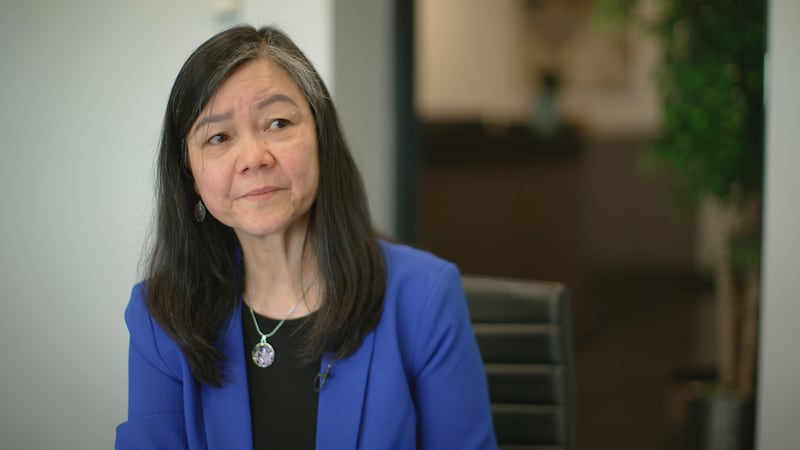
Who is responsible after check-in?
In a statement to W5, Air Canada said checked bags move through a network that includes multiple parties.
“Air Canada receives checked baggage under its care and custody. It then moves it through a complex network of infrastructure operated and overseen by various third parties, from check-in to delivery. In those rare cases where a bag is unaccounted for, as opposed to delayed, or in the even much rarer event of tampering, liability will be determined based on the circumstances, including an assessment of the role of each party.”
Air Transat told W5 that the airline applies “rigorous standards in baggage handling and works closely with airport partners and relevant authorities to facilitate a secure environment at every stage of the passenger journey.”
For passengers who have been detained, fingerprinted, publicly accused and forced to spend thousands of dollars defending themselves, that answer has not been enough.
Grace says she checked in her luggage, trusting it would be safely delivered to her final destination by Cathay Pacific.
Instead, she says, someone else’s drug-filled suitcase carried her name.
And she is still waiting for someone to take responsibility.
Six ramp and baggage workers employed by Air Canada and Swissport have been arrested in the past year in connection with bag-tag switching incidents at Pearson Airport.
The Greater Toronto Airport Authority, which operates Pearson Airport, has not responded to repeated requests for comment.

