WINNIPEG – $840 million.
It’s the sum of losses caused by the two-day storm that hit Manitoba and Saskatchewan in June, according to Toronto-based extreme weather analytical organization Catastrophe Indices and Quantification Inc. (CatIQ).
“The losses that you saw in Manitoba and Saskatchewan were from wind, water, hail, right over a very short period of time,” said Liam McGuinty, vice president of federal affairs for the Insurance Bureau of Canada (IBC).
“That is fairly typical of what you would see in a large storm in Canada now. And by the way, we’ve seen insured losses go from a few hundred million a year to multi-billions of dollars every year.”
According to IBC, insured losses in Manitoba and Saskatchewan totalled approximately $760 million in 2025, with the majority – roughly $430 million – due to wildfires.
Since 2021, the IBC says the two Prairie provinces have experienced 30 catastrophic weather events, resulting in more than $2.5 billion in insured losses.
That amounts to roughly $1,000 in insured losses per person across Manitoba and Saskatchewan over the past five years – an increase of 140 per cent compared with the previous five-year period.
“Natural disasters are sadly the new normal in Canada. So, the question is no longer if severe weather is getting worse. The data tells a very clear story: billion-dollar losses used to be extraordinary, but today they’re becoming routine,” said McGuinty.
“The next question is, have we done enough to adapt to this new normal?”
McGuinty says the provincial and federal governments need to start investing in better infrastructure to protect Canadians from these extreme weather events.
“That means building in the right places and in the right ways and keeping development out of high-risk areas; It means investing in climate resilient infrastructure,” he said.
“It also means giving Canadians the kinds of information that’s going to allow them to make informed decisions about where they live and how they can best protect themselves.”
“The reality is, we’ve not done nearly enough of that in Canada, and we need a mindset shift from all levels of government and from Canadians to make sure that we’re protecting ourselves from this new reality,” he said.
Manitobans ‘trapped in their homes’
Most of southern Manitoba was battered with storms throughout June, including the town of Stonewall, Man., about 36 kilometres north of Winnipeg, which saw 255 millimetres of rain in a matter of a few hours.

The southwestern part of the province also saw major floods following extreme weather.
In the Swan River Valley region, well over 300 different sites, including roads, bridges and culverts were damaged. This doesn’t include the number of properties that were also impacted.
Bill Gade says in terms of overall damage, this is one of the most destructive years the region has ever seen.
“We had people trapped in their homes,” said Gade, who is the Reeve of the Rural Municipality (RM) of Swan Valley West.
“Lots of damages to those homes. Lots of people had water in their basements. We even had some people we had to rescue off the second floor of their building, so certainly there were huge amounts of damage in those cases.”
John Hanesiak says it’s been an extreme summer in terms of weather, which has been felt across the province.
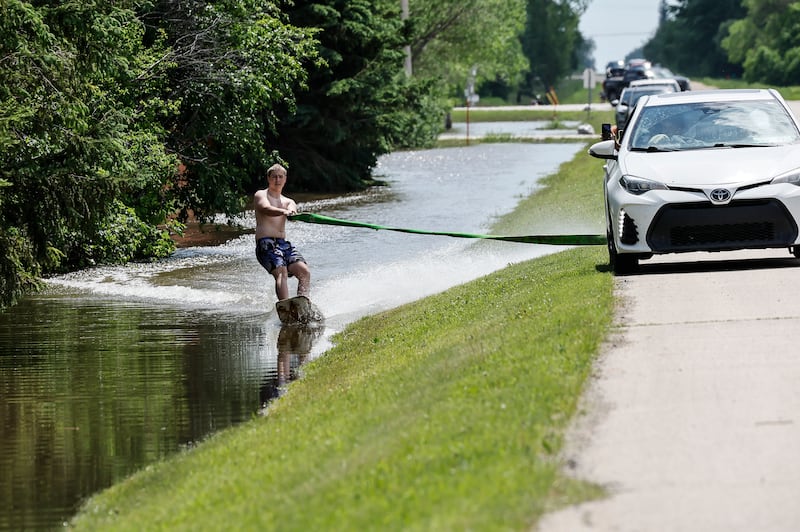
“We’re on track to potentially break records, at least for the Canadian prairies, for severe weather, reports and events,” said Hanesiak, who is a professor of atmospheric science at the University of Manitoba.
Cooler temperatures and milder weather so far in August are giving Manitobans a bit of relief but Hanesiak says there is a chance more active weather throughout the end of the summer and fall months.
“We’re starting to see more events happen in September, for example, so we had a big hail event that actually happened very close to Winnipeg and parts of Steinbach last year in the fall,” he said.
“We’re starting to see more of these events happen even into the fall period, too.”

