OTTAWA -- A veteran is taking the Canadian Armed Forces to court, challenging the constitutionality of exclusionary military policies that still prohibit applicants who are living with HIV, despite recruitment challenges and advancements in treatment.
“I brought this case because healthy, capable people living with HIV who want to serve Canada should be considered for what they can actually do,” he told CTV News in a broadcast exclusive interview.
J.B., whose full name is protected in the filing, served as an active-duty member in the regular force for 13 years, between 2007 and 2020.
He was diagnosed with HIV in 2012 by a military medical officer, meaning from that point on his status was known to the Canadian Armed Forces (CAF).
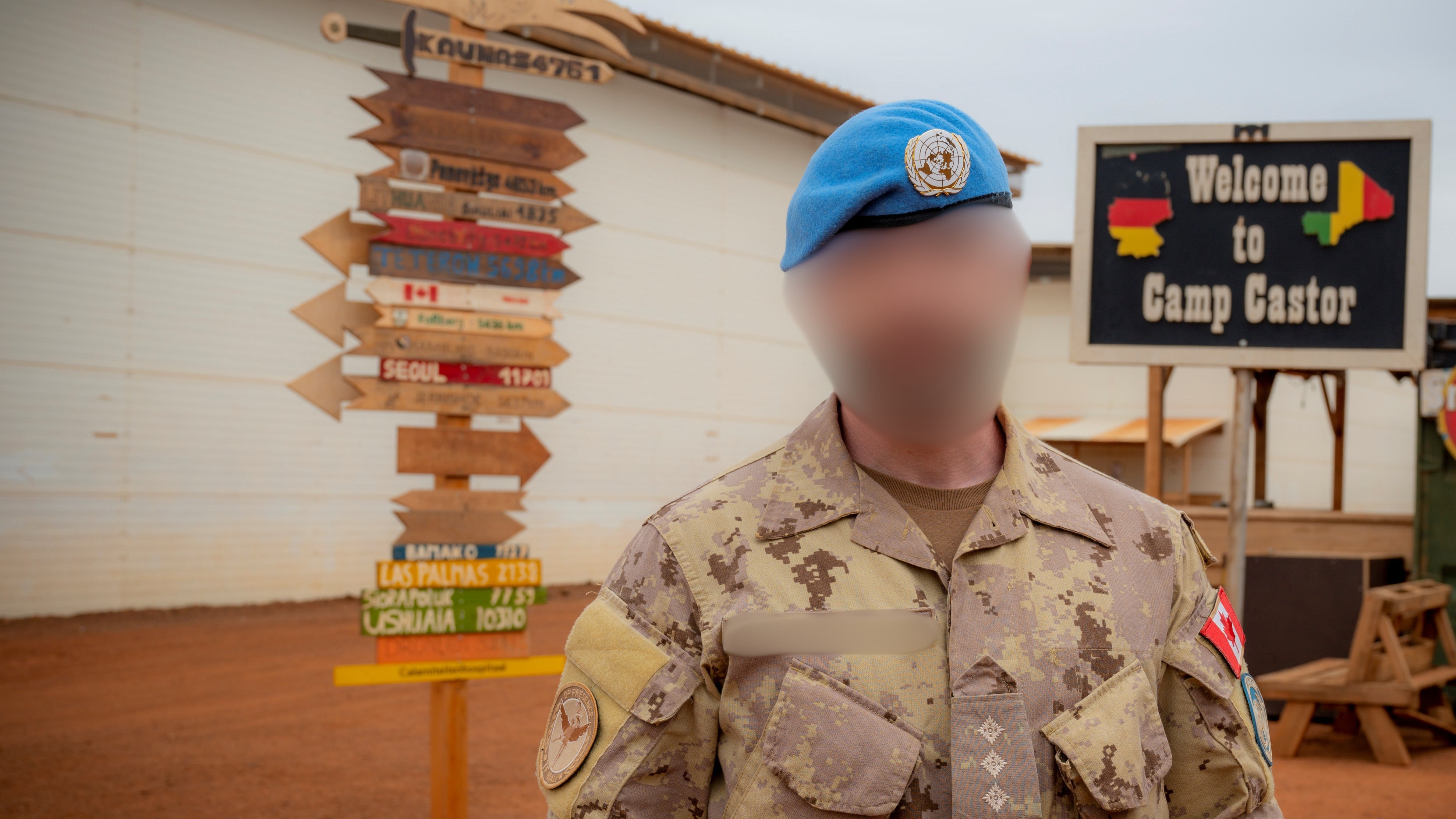
The Forces allowed him to continue serving – while taking antiretroviral medication – including working the office of the Chief of Defence Staff, and taking a nine-month high-risk peacekeeping deployment to Mali, an active combat zone in 2019.
After a voluntary release he took to pursue other career opportunities, J.B. tried to rejoin as a reservist in 2024.
“I wanted to reclaim my military identity … I missed my military community,” he said in his affidavit, which notes his family’s extensive military service dating back to the Second World War, and his lifelong connection to the CAF.
“It felt particularly meaningful to re-enrol as an out gay man who is living with HIV, as people with this profile have not always been welcome in the CAF,” he said.
But J.B. was rejected, to his shock. An October 2024 letter from the recruiting medical office presented in the court documents explicitly cited his HIV status as the reason he did not meet the Forces’ enrolment medical standards, despite his health not changing from when he was in uniform.
“I was deeply hurt by the CAF’s decision to reject my application due solely to my HIV status, particularly when I was fully capable of serving my country with my diagnosis for over 8 years,” J.B. said in a statement issued by his legal team confirming the court challenge.
The 38-year-old now living in Montreal said what motivated him to pursue this case was the disconnect between what the CAF already knew about him, and the decision that it made when he tried to come back.
“I think my deployment was probably the clearest example. In Mali, HIV didn’t change what I was able to contribute… I didn’t require any special care or biomedical monitoring. And like other members, I had very routine health needs that could be managed through the medical support already on site for the operation,” he told CTV News.
“Also, when the mission was unexpectedly extended, additional medication arrived on a routine resupply flight, just as others received the same medications and other supplies that they needed.”
As he is seeking a court-imposed publication ban on his full name, due to concerns about the nature of the case, CTV News has agreed to protect J.B.’s identity.
His challenge, filed alongside the HIV & AIDS Legal Clinic Ontario (HALCO) by lawyers Melanie Anderson, Gregory Ko, and Olivia Evans argues that these policies are discriminatory, a violation of the Charter’s equality protection, and are premised on “outdated stereotypes about people living with HIV.”
“We are certainly hopeful that the CAF will reflect on this litigation and its current position and re-examine, in light of the science and the massive advancements in HIV treatment, their current position,” Ko told CTV News.
J.B. – who has had an undetectable viral load for 13 years, meaning he cannot transmit the virus to others – is also seeking $200,000 in damages “as an appropriate and just remedy for the infringement of his Charter rights.”
Though, his lawyers say he is not the only one affected, and that’s why with HALCO on board, they’re hoping to advocate on behalf of all who are impacted by the military’s policies.
CAF changed other health restrictions recently
The case takes direct aim at barriers to entry that J.B.’s lawyers argue have no rational basis in the current context and are at odds with approaches other militaries – including the British Armed Forces – have recently taken.
“From our perspective, … the science, the logistics, and the operational concerns have been addressed by other NATO countries … And so, there really shouldn’t be a continuing application of these policies,” Ko said.
“To deny carte blanche folks who are living with HIV just because they’re living with HIV, it’s discrimination on the basis of that health condition,” Anderson told CTV News.
Specifically, the filing points to an explicit policy that disqualifies potential pilots from being selected for aircrew training in the Royal Canadian Air Force, under AMA Directive 100-01. It lists potential causes for medial disqualification and among them cites HIV, while offering the caveat that “in trained aircrew HIV infection is considered on a case-by-case basis.”
The broader Common Enrolment Medical Standards (CEMS) that were cited by the military in J.B.’s case are also mentioned in the filing, arguing the CAF “interprets and applies” them in a manner that is discriminatory to those seeking entry to the regular force, primary reserve, and other branches.
After struggling to meet its own recruitment targets, in recent years the CAF has taken steps to expand the applicant pool to attract and train more troops, including in early 2025 when it stopped disqualifying applicants with certain medical conditions by default.
This policy change allowed prospective recruits with anxiety, allergies, asthma or attention deficit hyperactivity disorder to be deemed fit to serve on a case-by-case basis.
At the time, CAF Surgeon General Maj.-Gen. Scott Malcolm told reporters: “Any and all conditions are on the table for consideration for enrolment.”
Though, that offer of individualized assessment has not been extended to applicants with HIV, despite internal documentation indicating servicemembers with the virus are able to meet operational standards and perform their duties effectively, which this constitutional challenge argues J.B. demonstrated for close to a decade.
“It’s difficult to understand why HIV was not one of those conditions,” Anderson said. “There’s no medical reason why a healthy person living with HIV can’t serve in the forces, J.B. has proven that.”
The legal team behind this case has recently served the CAF with its more than 400-page application record, which includes a notice of application, as well as affidavits from HALCO executive director Ryan Peck, and J.B. detailing his experience and the impact on him.
“Being rejected on that basis has really affected my self esteem, my sense of identity, and also my professional confidence,” he said.
While J.B. told CTV News he is doing this for the whole country, noting the military’s current personnel needs, he does have a message for other who do want to serve their country but have been, or would be told no.
“Don’t let an HIV diagnosis convince you that you have less to offer your country. You have value, and you’re capable of giving back to this wonderful country of ours,” he said. “I’d encourage anybody living with HIV who wants to serve to continue holding on to that ambition.”
CTV News has requested comment from the Department of National Defence, as well as Defence Minister David McGuinty. This story will be updated once responses are received.

