TORONTO - Surveillance video captured the terrifying moment a massive flash flood tore through the border region of Nepal and Tibet, a crushing wall of water that swept away hundreds of people and buried buildings, bridges and roads in its path.
The Nepal Tourism Board says 24 Canadians are among the missing, along with visitors from the United States, Australia and Britain.
“The flash floods along Nepal’s Bhotekoshi River are absolutely devastating,” Prime Minister Mark Carney wrote on social media. “Canadians are thinking of all those in distress right now, those who have lost a loved one, and all those who are still waiting for answers.”
Foreign Affairs Minister Anita Anand said Global Affairs Canada consular officials are in contact with local authorities and ready to assist Canadians in the region. “We are monitoring the situation and stand ready to provide assistance as appropriate,” she said.
‘I’m still in shock’: Nepalese-Canadians
For Nepalese-Canadians and those with close ties to the region, watching the videos and seeing the images have been heartbreaking.
“Devastation and shock. I’m still in shock,” said Lesley Mapstone, a resident of Parry Sound, Ont., who has visited Nepal many times.
“I believe that I’ve already lost friends and people I consider family who are very close to me, who’ve welcomed me into their homes, in their lives,” she said.
Mapstone says the area where the floods occurred is popular with tourists as three popular treks begin from nearby villages.
“Tourists who are going on any of those three treks all end up staying… there’s no other place to go to access those particular trekking routes.”
Garab Sardok’s family is originally from Tibet and while they fled to Nepal before he was born, he has many friends who still live in the area.
Sardok now lives in Toronto where he owns several Tibetan restaurants. He describes the area as remote and says it can be a challenge for emergency crews to get there quickly.
“It’s a six-or-seven hour drive from Kathmandu and all the roads are from the mountains,” he said.
Sardok says he has been in touch with some loved ones and says it is “so, so sad” to see what his home country is going through. He is organizing a fundraiser at his restaurant Tibet Kitchen on Sept. 5 to help raise funds for those impacted by the flooding.
“What I can do right now is I can collect as much as I can and give the donations back to them,” he said.
Himalayas glacier suspected of causing floods
Thousands of people live downstream from the flooding along a river that is fast-moving to begin with. Officials say 19 bridges and roughly 40 kilometres of road have been swept away.
Scientists who have analyzed satellite imagery believe the flooding was caused, at least in part, by part of a glacier breaking off high in the Himalayas.
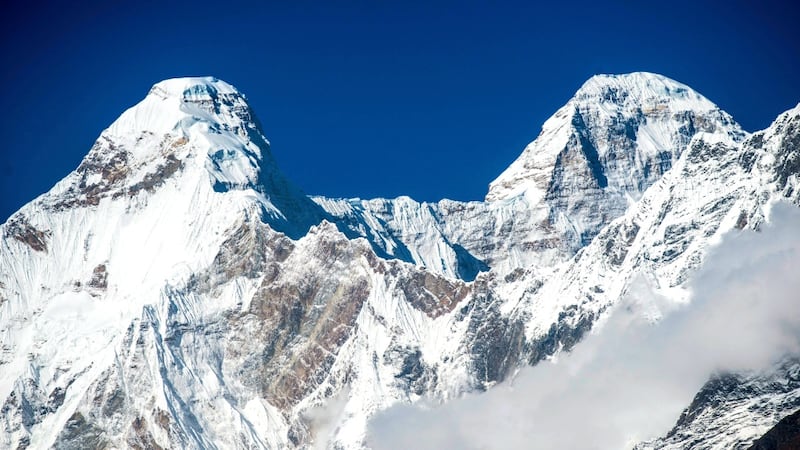
“It looks like that chunk of ice has cascaded downwards into the valley bottom, about 1,300 metres,” said Simon Cook, a glaciologist at the University of Dundee in Scotland. “What we think is that that ice then just gets pulverized, so broken up into smaller chunks and ultimately water, and that seems to be one of the main sources of water for this flood.”
Cook says that while scientists do monitor glaciers in this area, he doubts anyone was looking closely at this one in particular.
“It was a small part of a much bigger glacier,” Cook said. “So to know that tiny amount of ice that’s broken off has created what’s ultimately a devastating flood is ultimately unknowable.”
There was no early warning system in place for this flash flood, but Cook says because the initial flood happened so close to the devastated villages it likely would not have helped.
“It would have given them a few minutes at best,” he said.
Experts say extreme weather events have become more frequent in the region, with glaciers melting at an accelerating rate. Ice loss rates have doubled since 2000, primarily due to climate change.
“It just adds to the destabilization of these landscapes. You are going to get more avalanches, you are going to get more landslides, you are going to get more catastrophic floods, unfortunately,” he said.

