Amid an ongoing trade war with the United States, many across Canada are doing their best to buy local.
But with a variety of different labels and symbols indicating just how Canadian a product is, that can prove to be challenging.
CTV Your Morning spoke to Bonnie Simpson, a professor of marketing at Western University, on Monday, to help break down what makes a product truly Canadian.
‘Product of Canada’ vs ‘100% Canadian’
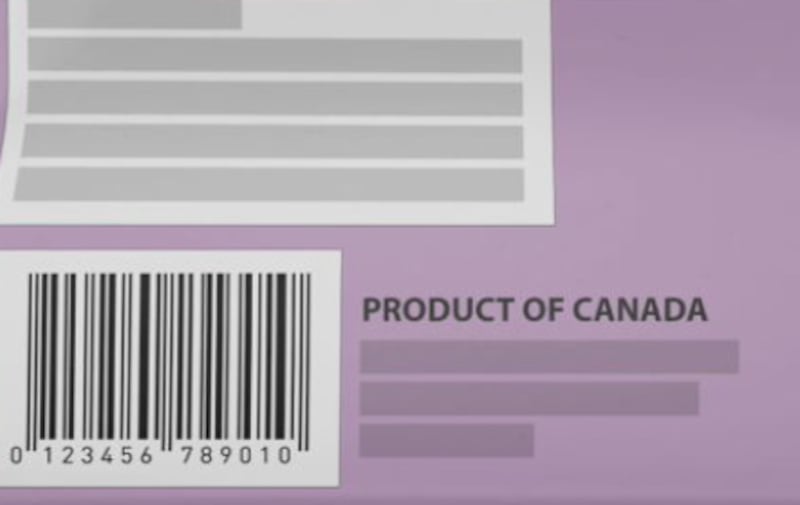
Simpson says “100% Canadian” is considered the “gold standard.”
“This is where everything was Canadian,” she said. “The product, the labour, the processing, everything is Canadian. It’s really straightforward, it’s 100 per cent.”
When something is labelled “Product of Canada,” it’s not as straightforward, since not all the ingredients are available in Canada, but many are.

Simpson uses the example of Ontario apple cider. While the apples are from Canada, and it’s produced in Canada, the spice added to the drink to give it flavour might not be grown in Canada.
“So, it’s 98 per cent Canadian, leaving room for the fact that maybe some really specific little part of the product wasn’t grown or wasn’t available here,” she said.
‘Made in Canada’ vs. ‘Prepared in Canada’
Simpson explains that when something is labelled “Made in Canada,” the product has to go through its “last substantial transformation here.”
While it leaves a lot of grey area, the product has to be 51 per cent directly from here, whether that’s through the ingredients or labour.
A “Made in Canada” product leaves a lot of space for imported ingredients.
But the key thing about the label is that it has to change to a new product in Canada.
“Things like frozen pizza that came here as dough, sauce and cheese and got created here into a new product,” Simpson said.
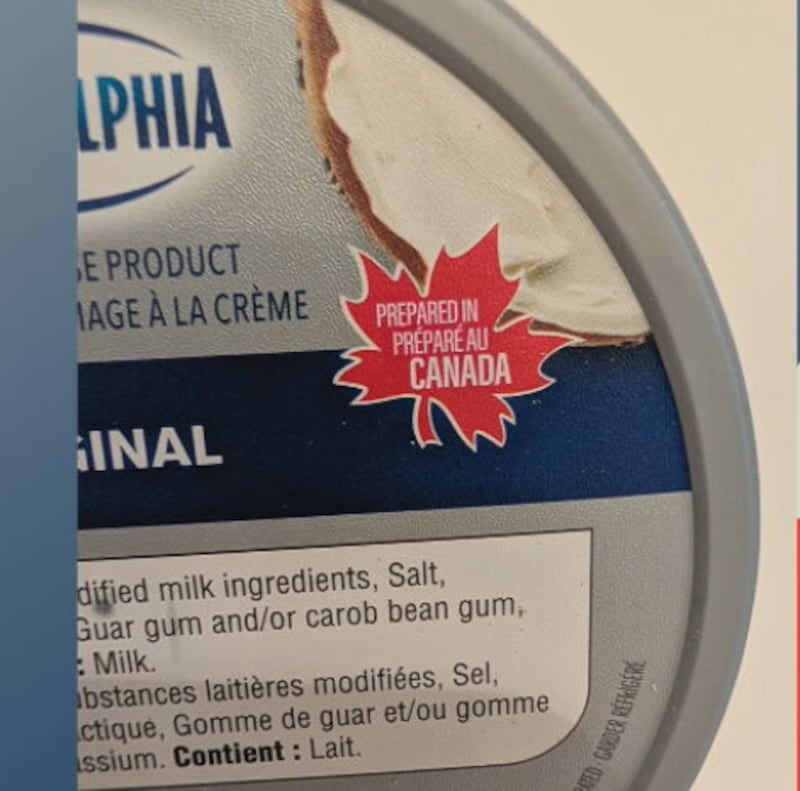
When a label says a product is “Prepared in Canada,” it’s more likely that the product wasn’t made in Canada or with Canadian ingredients – it was simply prepared here.
Simpson uses the example of imported coffee beans, which don’t grow in Canada but are packaged and roasted here.
“These are not necessarily Canadian products to begin with,” she said.
A maple leaf symbol
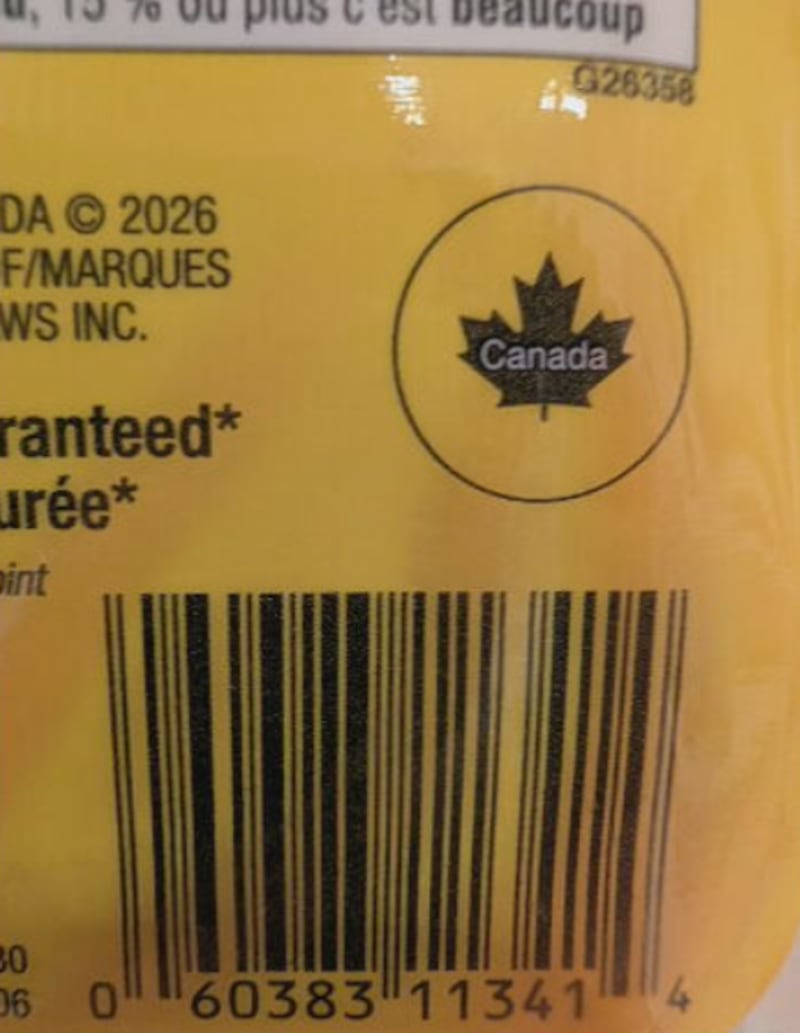
A black maple leaf with the word “Canada” is often found on meat and fish products. Simpson explains that it’s a food inspection label meant to tell us that the product meets federal food safety standards and was processed in a place where there is inspection.
“This is simply a safety label,” she said.
As for a product with a maple leaf symbol on it, Simpson says it could mean a lot of things but has “no official meaning beyond a representation or association with Canada.”
“There are no rules about using it,” she said. “It doesn’t necessarily mean it meets a Canadian standard or that it was made somewhere else.”
Some companies use it to showcase that it’s a top-selling product in Canada, regardless of if the product was made elsewhere.
Simpson urges consumers to pay attention to the words used on a product, rather than the symbols.

