WINNIPEG – Between 1857 and 1996, the National Centre for Truth and Reconciliation (NCTR) at the University of Manitoba says more than 150,000 children attended Indian Residential Schools, with many of them never returning home. Geraldine Shingoose was one of them.
First Nations, Inuit, and Metis Nation children were taken from their families and communities and forcibly sent to church-run and government-funded schools, which were often located far from their homes.
Shingoose was just five years old when she was taken to a residential school. She says her time spent there was not a good one.
Known to many as “Gramma Shingoose,” she attended Muscowequan Indian Residential School in southeastern Saskatchewan for nine years, from 1962 to 1971.
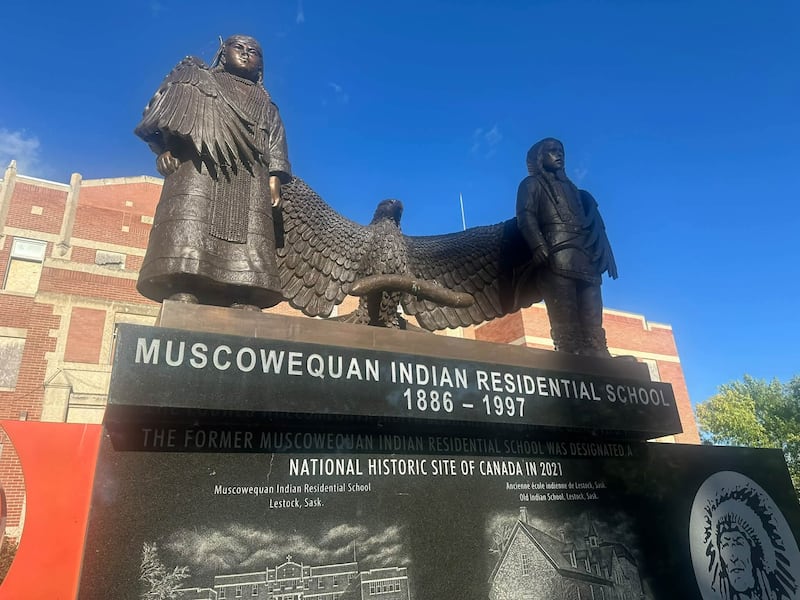
“I got punished for speaking my language,” she said. “That was the first time I ever experienced anything like that as a child, and it was very traumatic for me as a little girl.”
Shingoose spoke Saulteaux growing up, which is a distinct dialect of Ojibwa. She didn’t know English when she was forced to attend residential school.
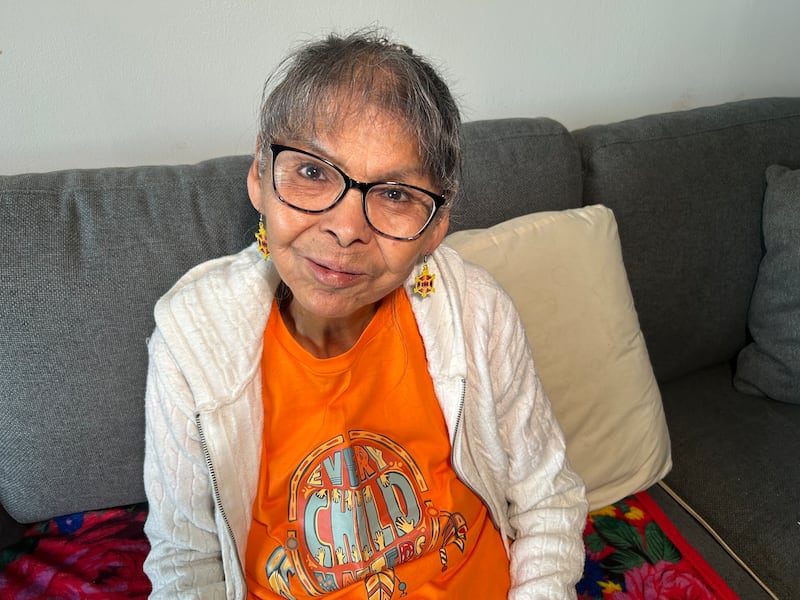
In addition to the emotional, mental, and physical abuse she sustained there, she said the biggest impact on her life was losing her original language.
“I don’t speak my language today,” she said. “I understand some of the words, but I don’t speak it.”
“The schools were often underfunded and overcrowded. The quality of education was substandard,” it reads on the NCTR’s website, which explains the history of residential schools.
“Children were harshly punished for speaking their own languages. Staff were not held accountable for how they treated the children,” it reads.
On the NCTR’s website, which explains the history of residential schools, it explains that “children were harshly punished for speaking their own languages,” and that “staff were not held accountable for how they treated the children.”
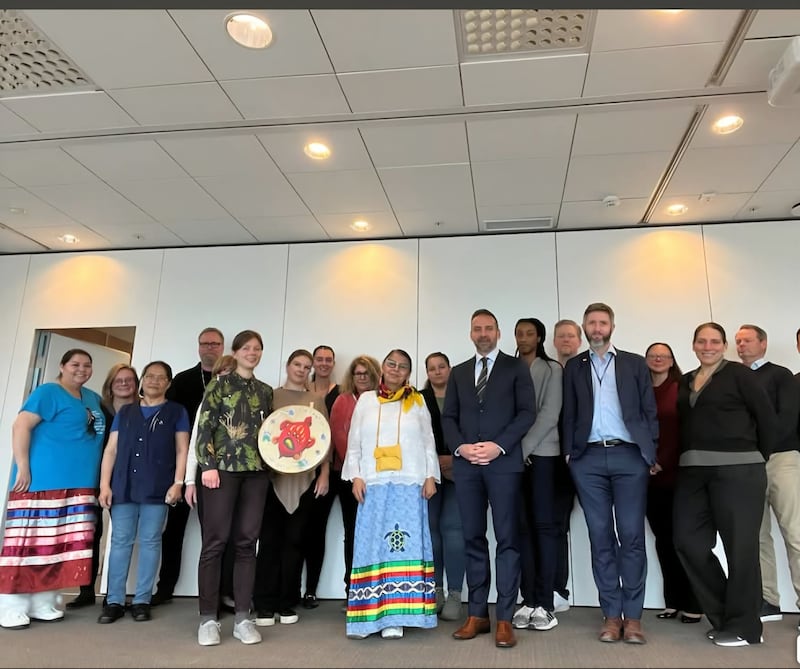
For the last decade, Shingoose has been sharing her story with Manitoba students — holding speaking events with elementary, junior high, high school and university classrooms. She says it’s important work that helps the next generation understand what residential school students lived through.
“Sharing my story brings healing for me,” she said. “A lot of people come to me and say they never heard about residential school until they heard my story, and I am still meeting people like that.”
‘I left there kind of empty’
Belinda Vandenbroeck went to MacKay Residential School near Dauphin, Man., for a decade, from 1957 to 1967.
“The whole time we were there, we were controlled by what we did, and how we thought,” said Vandenbroeck, who is now 78.
“It was a system that we’d never been in before.”
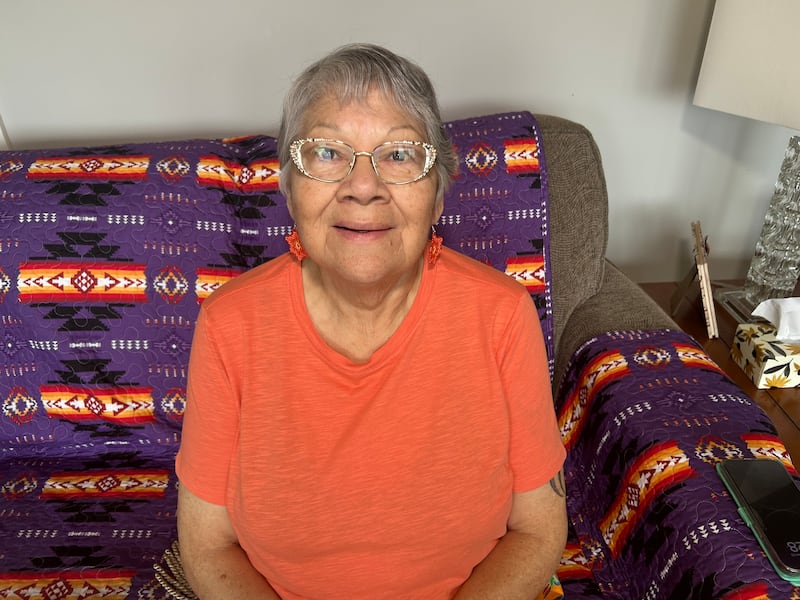
“I was brought up by my grandparents, so sleeping with my grandmother was just the safest place on earth and then all of a sudden, I’m taken from that and (forced) into a place with probably 30 other little girls, and we didn’t know each other,” she said.
Vandenbroeck recently went back to the school with a handful of other Survivors. She said the experience was emotional.
“I was sitting in my Grade 1 classroom, just trying to remember things, and all I could remember was the Grade 1 teacher’s face,” she said.
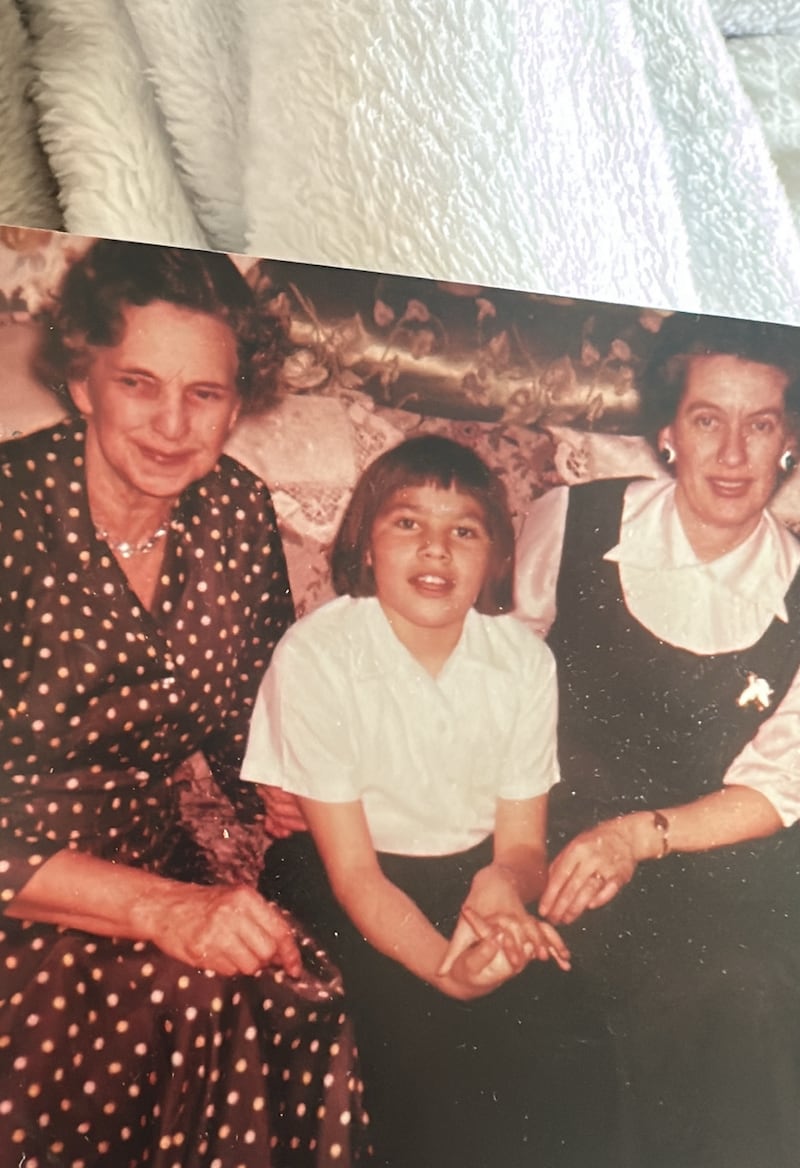
“I didn’t feel good about myself when I left there. It (felt like) not being recognized for who you are, (and) not being aware of your culture,” she added.
“I left there kind of empty in a sense, because you had no sense of connecting with your culture at the time.”
Orange Shirt Day marked in Canada
Sept. 30 marks National Day for Truth and Reconciliation (NDTR), which is also known as Orange Shirt Day.
The federal government implemented this day in June 2021, following the discovery of 215 unmarked graves on the grounds of a former residential school in Kamloops, B.C.
Indigenous historian and academic Sean Carleton says NDTR is important for the Survivors.
“It’s recognition for many Survivors, who experienced the harm and trauma of the residential school system, to feel like Canadians hear them, that they understand their experiences, and that those experiences can help put the country on a better path,” said Carleton, who works at the University of Manitoba.
“It brings Indigenous and non-Indigenous people together, stronger, with awareness of the past, but of a clear vision of a better future.”
He says Sept. 30 is a day for Canadians to learn and hear from the Survivors themselves.
“It’s important to make sure that while Survivors are still with us, that we commit their experience to common knowledge, so that we can continue to carry those lessons forward to make sure that we continue to work towards progress on truth and reconciliation for the betterment of everybody,” he said.
For Shingoose, speaking about her past has not been easy, but she says she is doing it so Canadians don’t forget.
“It’s important people know our true history of what happened,” she added.

