Warning: Graphic content
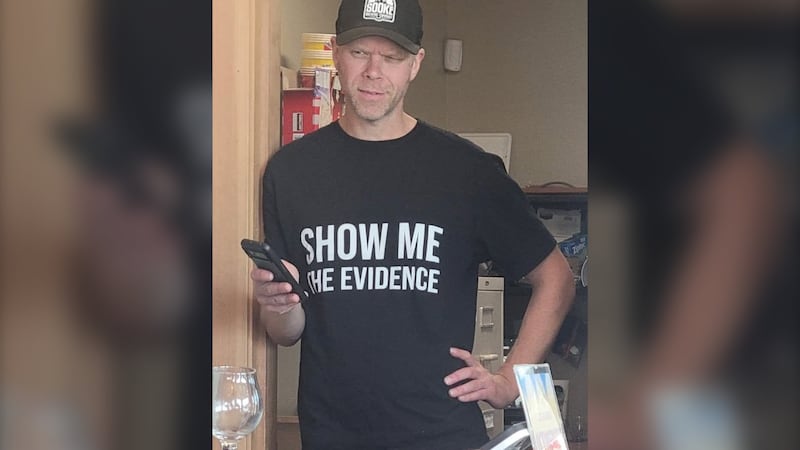
A Sooke brewery has closed temporarily and fired one of its owners after a photograph appearing to show him wearing a “Show Me the Evidence” T-shirt on the National Day for Truth and Reconciliation sparked widespread backlash online.
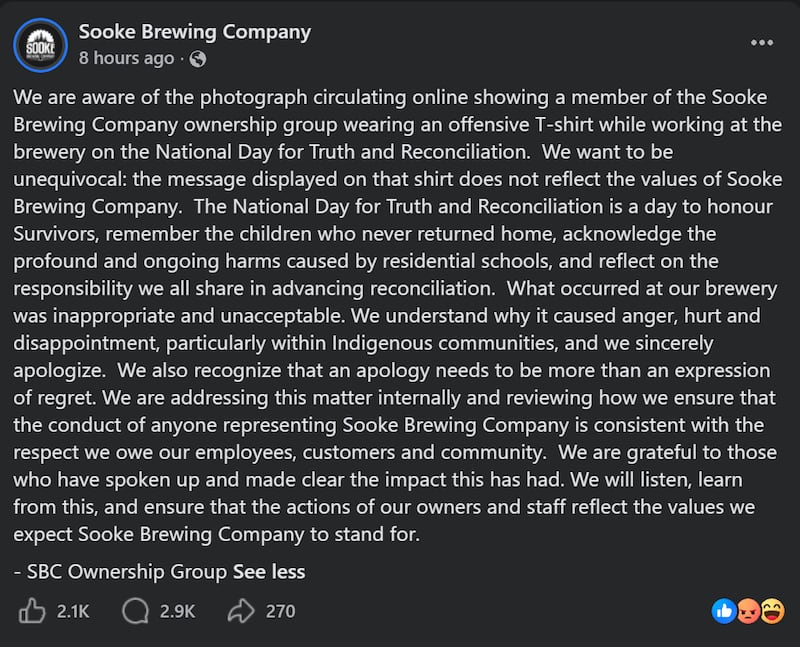
Sooke Brewing Company initially acknowledged the photograph in a social media statement, saying the shirt’s message was inconsistent with what the business stands for.
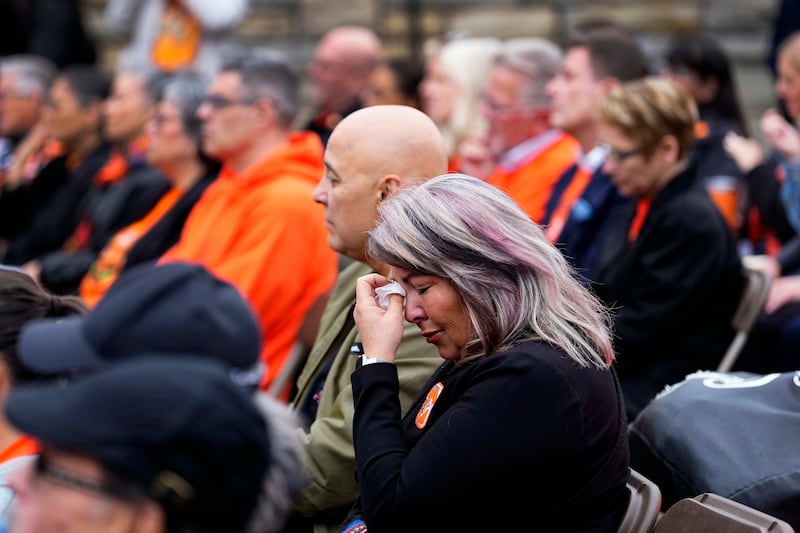
The company said Sept. 30 should be a day to honour residential school survivors, remember the children who never returned home and acknowledge the ongoing harms caused by the residential school system.
“What occurred at our brewery was inappropriate and unacceptable,” the company said.
The statement came as the photograph spread online and drew strong criticism from people in the Sooke community and beyond.
The brewery’s response changed shortly afterward.
Sooke Brewing Company announced that John Adair had been terminated, effective immediately, and that the brewery would close for the day.
“We are devastated by his actions and sincerely apologize for the hurt they have caused,” the company said.
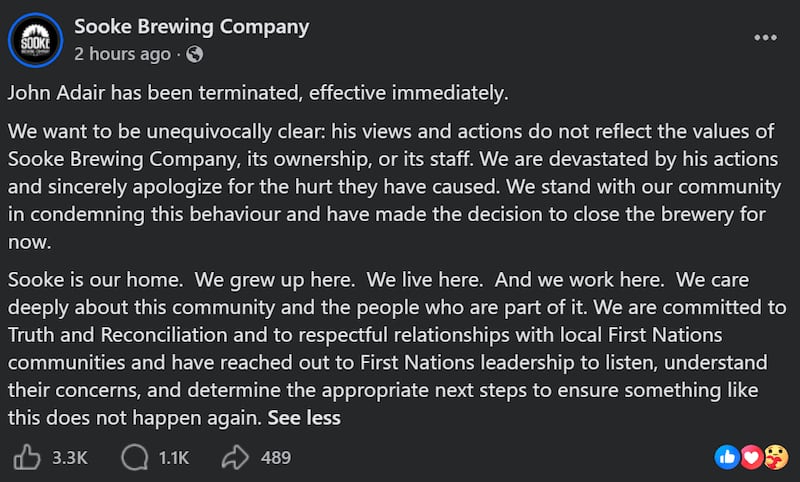
The brewery also said it had reached out to First Nations leadership to listen to concerns and determine what should happen next.
CTV News reached out to Sooke Brewing Company for an interview but did not receive a response by the time of publication.
The fallout has since moved beyond social media, prompting a deeper conversation in Sooke about residential schools, the historical record and what meaningful accountability should look like.
‘It was really hurtful’
For Debra Lazzar, an elected councillor with T’Sou-ke First Nation, the photograph was particularly difficult to see after a full day of community events marking Sept. 30.
Lazzar said the community had gathered at an Orange Shirt Day celebration in Sooke to hear from speakers and elders and share Indigenous teachings and knowledge.
Her own family has a direct connection to the residential school system. Her father attended a day school, while her uncle attended Kuper Island Residential School.
She said the effects of that history continue to reach across generations, including for survivors who were unable to attend the Sept. 30 gathering because of trauma.
“I am the first generation that has not attended residential school in my family,” Lazzar said.
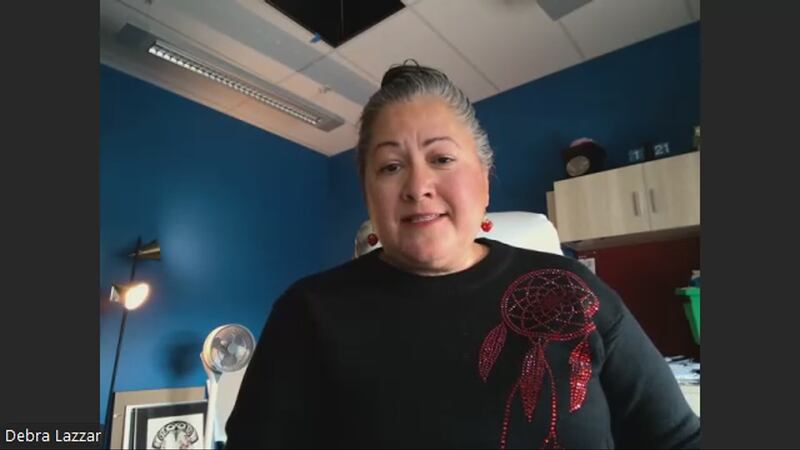
Lazzar said that history made the timing of the photograph particularly painful.
She said some people in the community may view the incident differently, but that does not diminish the impact on survivors, their families or Indigenous people who marked the day.
“It was really hurtful,” she said.
Lazzar said she reached out to the brewery because she wanted to have a conversation about what could happen next.
She suggested the business could support future Orange Shirt Day events, establish a scholarship for T’Sou-ke students pursuing post-secondary education or contribute to programs supporting Indigenous women.
She also offered to help arrange a meeting between the brewery and members of the community, describing a face-to-face gathering as a culturally appropriate way of addressing the harm.
“I think action is needed,” Lazzar said. “An apology is not good enough.”
A record built on survivor testimony
Ry Moran, an associate university librarian at the University of Victoria whose work focuses on Indigenous affairs and reconciliation, said the historical record surrounding residential schools is extensive.
Moran worked directly for the Truth and Reconciliation Commission as its director of statement gathering.
He said he was involved in collecting approximately 7,000 statements from residential school survivors and their families, along with about five million documents.
Moran said the survivor accounts he heard showed remarkable consistency across the country, even when people had never spoken to one another.
“There is absolutely no question in my mind whatsoever that what survivors have been saying happened in residential schools did, in fact, occur,” Moran said.
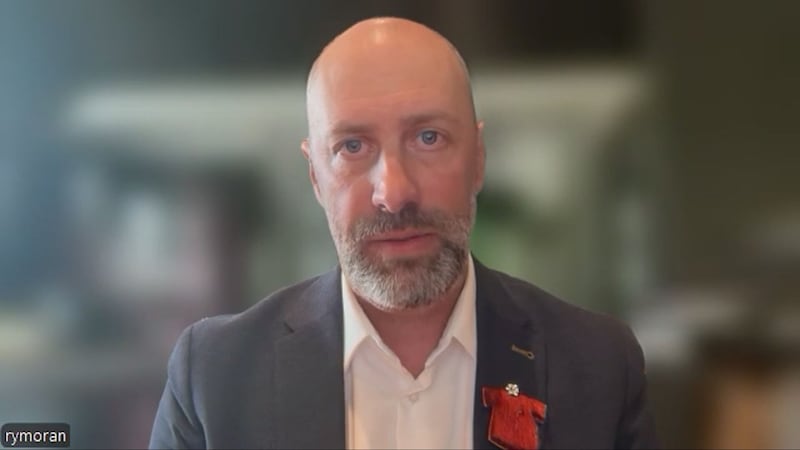
Moran said there is an important distinction between asking questions about history and dismissing evidence that has already been extensively documented.
“It’s good that people have questions,” Moran said. “The real concern is about where do you turn to get the answers for those questions.”
‘It’s not a day for a fight’
Rebecca Johnson, a University of Victoria law professor whose areas of expertise include Indigenous legal research, said Sept. 30 carries a particular significance that sets it apart from an ordinary political argument about residential schools.
She said the National Day for Truth and Reconciliation is intended to create space for remembrance, acknowledgment and reflection.
“It’s not a day for a fight,” Johnson said. “It’s a day for us to have the breath in, to acknowledge where we’ve been and where we want to go.”
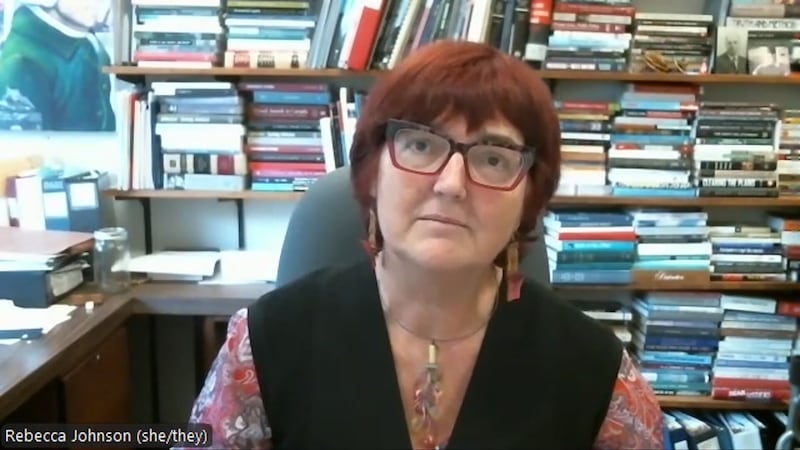
Johnson said Canadians who have questions about residential schools should engage with the historical material already available.
She pointed to the Truth and Reconciliation Commission’s published work as an important resource for understanding the history and the experiences of survivors.
Johnson said the challenge is not simply finding information but being willing to engage with it honestly.
“Do your homework, read what’s available, talk to each other,” she said.
She also cautioned against turning the conversation into a battle between opposing camps.
Johnson said a more productive approach is to listen to the evidence, reflect on it and then enter the conversation with an understanding of what has already been established.
What comes after an apology?
The brewery’s public statements have now shifted the focus from the initial photograph to what meaningful accountability could look like.
Moran said an apology needs to go further than expressing regret.
He said meaningful apologies involve accepting responsibility, being sincere and making a commitment to ensure the same harm is not repeated.
For Johnson, accountability can include consequences while still leaving room for people to learn.
Following the brewery’s decision to terminate Adair, Johnson said she hopes the response does not become solely about removing someone from the conversation.
“In the long run, we’re going to have to think about how we bring people into our conversations,” Johnson said.
She acknowledged that penalties can be difficult, but said lasting change requires people to find ways to work through disagreement rather than becoming permanently divided.
Lazzar said she hopes people in Sooke will use the incident as an opportunity to learn more about the history of residential schools and the experiences of Indigenous families.
“It’s just something as simple as that,” Lazzar said. “And let’s just be kind to each other.”