OTTAWA — Canada’s democratic institutions need protection in the face of unrelenting pressures, Chief Justice Richard Wagner said Monday as the Supreme Court of Canada opened a new judicial year.
Wagner said the world feels increasingly uncertain due to deepening polarization, the non-stop pace of events and the rapid emergence of artificial intelligence.
When seas grow rough an anchor keeps a vessel from drifting, and democratic institutions play the same role in society, Wagner said.
“The strength of an anchor is not measured in calm waters,” he added. “It is measured in a storm. The same is true for the rule of law.”
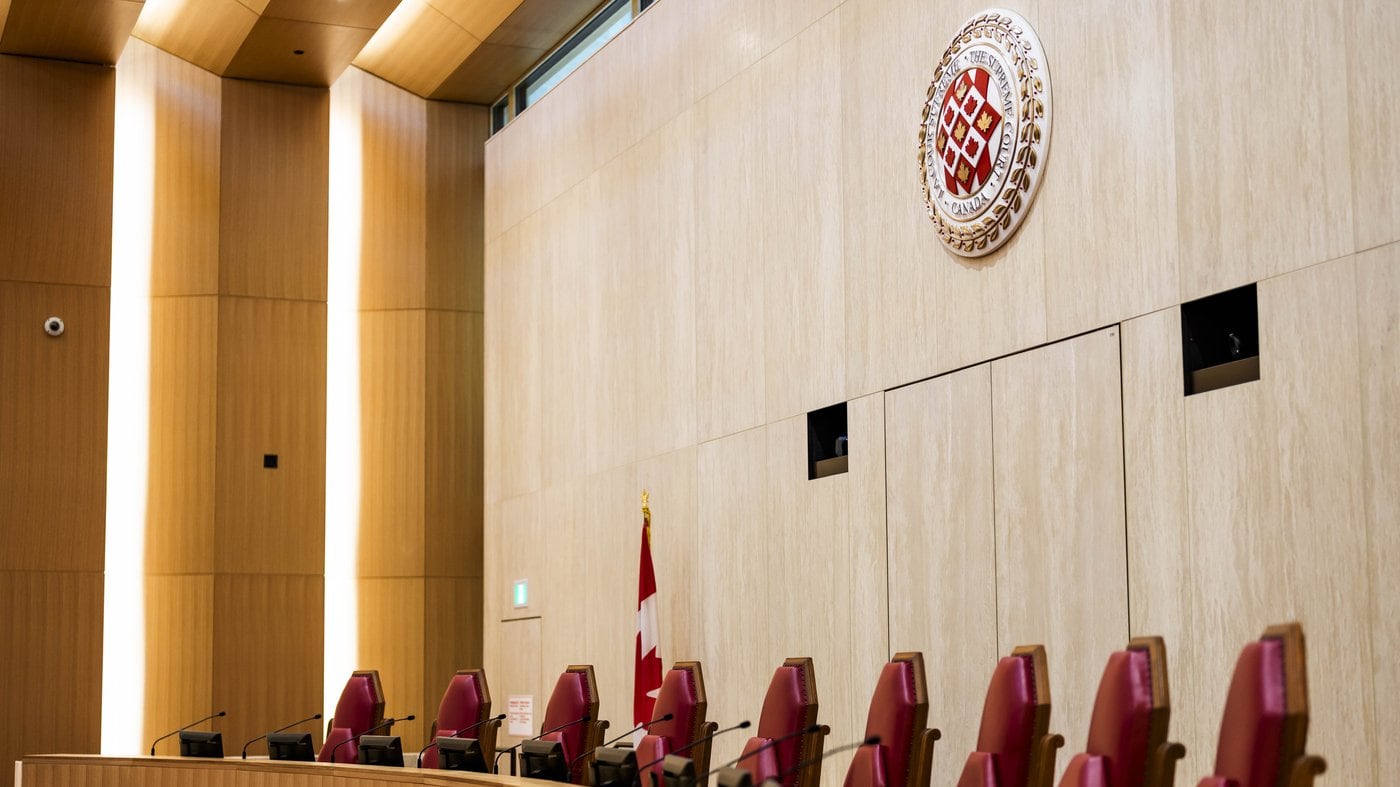
Wagner, flanked by the other members of the Supreme Court, spoke at a ceremony in the court’s temporary new building.
The top court is settling in at the West Memorial Building, not far from Parliament Hill, while the court’s permanent home across the street undergoes extensive renovations.
Refurbishing the stately Supreme Court building is expected to take at least 10 years.
A formal welcome for the court’s newest member, Glenn Joyal, is set to take place next month.
Kristen Boon, president of the Council of Canadian Law Deans, said during the ceremony Monday that, like many judges, those who lead law schools have been watching with concern the threats to the rule of law around the world.
“We believe that future generations of lawyers will understand their duties as citizens to be central to their professional identity,” Boon said.
“Our classrooms and our campuses should model what reasoned debate and evidence-based decision making looks like. Law faculties protect academic freedom and give professors the space to teach, to research and to debate difficult ideas openly.”
Justice Minister Sean Fraser told the courtroom full of dignitaries that provinces, communities and groups of people are asking questions about their roles within the Canadian federation.
“If we expect to preserve national unity, we must constantly improve the public’s belief that the systems that we enjoy serve their interests over time,” Fraser said. “The law has an important role to play in this regard.”
Fraser said that at a time “when it’s difficult to discern between truth and fiction, particularly with the rise and deployment of artificial intelligence, the truth-seeking function of this court and courts across Canada could never be more important.”
Fraser said that, as a Nova Scotian, he appreciated Wagner’s seafaring analogy about the strength of an anchor being tested in choppy waters.
But the justice minister reflected on one even more familiar to the court.
“It’s been nearly a century since Canadian law was first referred to as a living tree. If we’re to accept that doctrine as part of the laws of this nation, we must similarly accept the obligation placed upon us as caretakers of that tree,” he said.
“And as the branches grow, sometimes in unruly ways to address the changing nature of modern reality, I know and take great comfort in the fact that the court will be here to ensure that its roots remain strong for a generation to come.”
This report by The Canadian Press was first published Oct. 5, 2026.
Jim Bronskill, The Canadian Press

