Calgary police say they have identified all three deceased as the investigation continues into an eight-vehicle collision Thursday afternoon that left three dead and 16 injured in northeast Calgary.
Calgary police said in a Friday statement that around 1:10 p.m., a transit bus travelling north in the 800 block of Saddletown Circle N.E. driving into the intersection of 80 Avenue N.E. collided with a truck driving in the same direction.
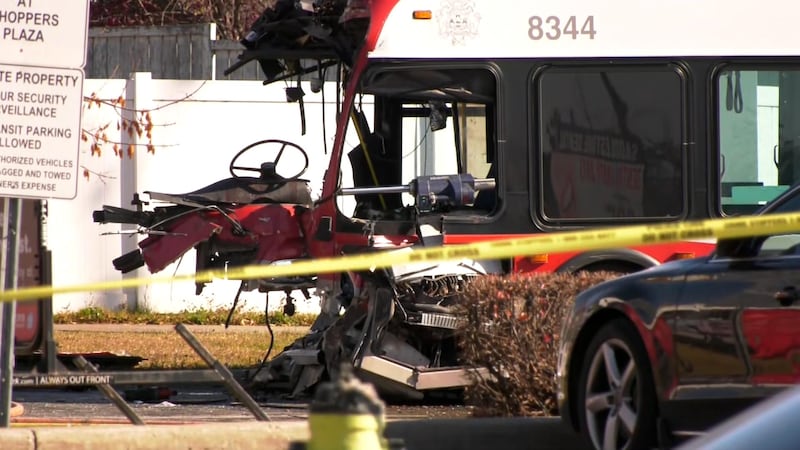
The truck was knocked into an adjacent lane, where it sideswiped an SUV, then hit a cube truck. The bus, meanwhile, drove into the back of a sedan, knocking it through the intersection, where it hit a truck.
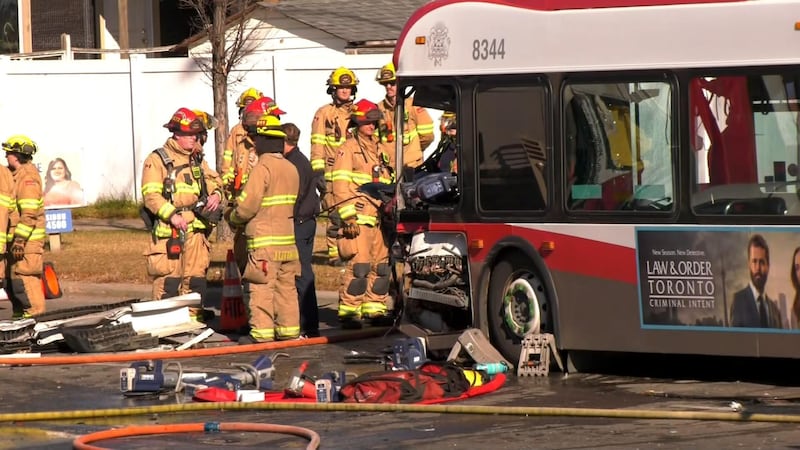
The city bus then hit the back of a second city transit bus, causing the natural gas tanks in the second bus to catch fire as it rolled forward and hit another sedan.
The fire then detonated into an explosion that caused a fire inside the bus, killing three passengers.
Police said they have notified next of kin of all three deceased.
The driver of the second bus was able to exit the vehicle, while the driver of the first bus was transported to hospital with life-altering injuries.
The other drivers of the various vehicles were either not injured or sustained minor injuries, including a police officer who is recovering at home.
Calgary Mayor Jeromy Farkas has said the officer ran onto the burning bus to save a child.
Overall, police say 16 people sustained minor injuries.
Police have not determined whether impairment, speed or distraction contributed to the collision.
Friday, Calgary Transit sent CTV News the following statement:
“Most importantly, Calgary Transit’s sympathies are with those people, their families and Calgary Transit operators who were involved in this critical incident. Safety remains our highest priority.
“All Calgary Transit buses, including the 347 CNG buses, are subject to regular maintenance inspections and safety checks before entering service.
“Moving forward, we will be working closely with the investigators to understand the circumstances surrounding the incident and will conduct a review of our CNG operations to ensure any additional safety measures required are put in place.”
Those who witnessed the incident and were affected by it are encouraged to connect with the Victim Assistance Support Team (VAST) by calling 403-428-8398 or 1-888-327-7828.
VAST is a free service offered to victims of crime and tragedy. For more information, go here.
Anyone with information is asked to contact police at 403-266-1234. Those wishing tor remain anonymous can contact Crime Stoppers at 1-800-222-8477, online or by downloading the P3 Tips app.
‘Very seasoned operators’
Mike Mahar, head of Calgary’s transit union, said both of the bus drivers involved are “very seasoned operators.”
“The operator that was able to remain at the scene and provide assistance with the police ended up being examined later—I think more as a precaution. I haven’t had a chance to talk to him today, (but) I know who that is now, and I’ll be reaching out to him,” Mahar said.
“The other operator unfortunately has very serious injuries—life-altering injuries—and so he was in the ICU. I suspect he’s probably still in ICU—he had some major surgery last night.”
Mahar said it was unusual to have a chain reaction like that occur.
“I did see when that bus first started burning, it was doing what it was supposed to do—anything pressurized like that, they vent them so that they’re going up the top, so they’re not causing additional damage or injuring people, and that fuel was venting out the top,” Mahar said.
“You could see, I think, three very large distinct streams of gas burning, and then all of a sudden there was an explosion, and I don’t know if it happened in a timeframe that it can tolerate that, but I would think that that equipment could tolerate it and be designed to until the fuel burns out, so I would suspect that something went wrong in the equipment.
“They’ve been around for a long time, and they’ve been tried and tested. We have a large portion of them in our fleet.”
Safety concerns
Investigators have not yet determined what caused the crash, which has sparked concern about the safety of CNG buses in service across Canada, including in Hamilton, Ont., Metro Vancouver, and Victoria.
Gordon McTaggart-Cowan, a professor in the School of Sustainable Energy Engineering at Simon Fraser University, does not believe the Calgary tragedy, on its own, provides a reason to reconsider CNG bus fleets across Canada.
“There’s a lot of time and effort that’s gone into trying to make them as safe as a conventional bus,” said McTaggart-Cowan. Unlike conventional gasoline and diesel buses, CNG buses store their fuel in high-pressure cylinders.
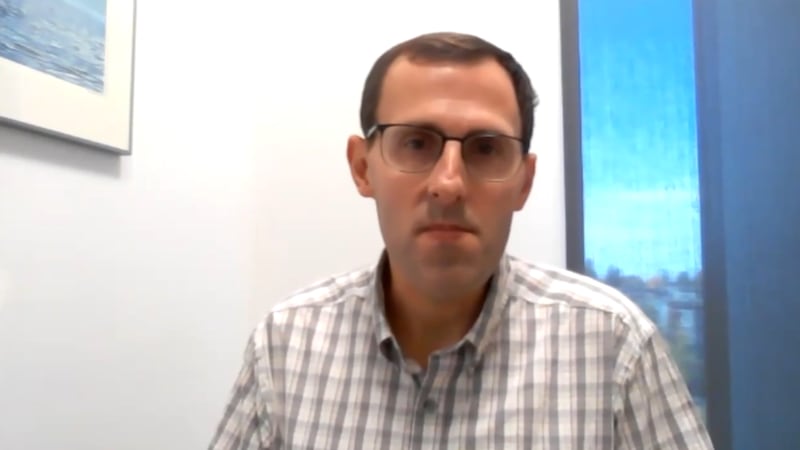
The gas must be compressed to reduce the amount of space it needs, allowing the bus to carry enough fuel to travel a useful distance, McTaggart-Cowan explained.
He noted that the storage cylinders undergo extensive testing. “They go through drop tests, they go through puncture tests, they sort of shoot things at them. They do all sorts of tests to make sure that they’re going to withstand extreme events,” McTaggart-Cowan told CTV News.
The tanks are also equipped with pressure-release safety valves designed to release gas if a cylinder becomes dangerously hot. When ignited, the venting gas can appear as a torch-like flame shooting from the vehicle.
That appears to be what is taking place in videos from the Calgary crash that show flames shooting from the roof of the bus, although McTaggart-Cowan cautioned that he had not examined the crash scene and could not confirm what was happening.
The pressure release system is intended to reduce the risk of a cylinder rupturing, which can have serious consequences, including explosions.
With files from CTV News’ Andrew Johnson and The Canadian Press

