


OTTAWA — Prime Minister Mark Carney’s government is adding tens of billions to the debt and deficit with the goal of spurring the economy, easing affordability pressures for Canadians, and eradicating homelessness.
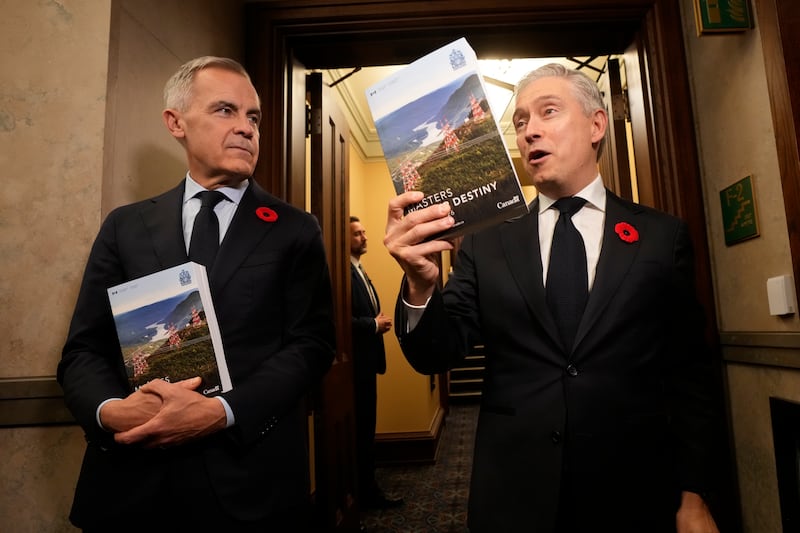
In the 2026 budget tabled in the House of Commons on Thursday, Finance Minister Francois Philippe Champagne revealed $142.1 billion in new tax incentives, spending and other measures over the next five years.
The budget also details a further $9.4-billion in new spending that was announced between the spring economic update and the new budget. For example, Carney’s July pledge to help fund the George Massey Tunnel Replacement Project in B.C. will cost $1.5 billion over five years.
In all, for the current budget year, the federal government is projecting a $62.3-billion deficit. That is $3 billion lower than projected in the spring. However, the budget shows no path to balance, with deficits projected over $50 billion in each of the next four years.
According to the budget document, government revenues are much higher than previously expected but the prime minister has chosen to spend the windfall rather than save it.
The government is directing that money primarily to tax incentives to spur economic growth, measures for affordability such as a grocery rebate top-up, and infrastructure for Indigenous communities.
“With this budget, we will build the strongest economy in the G7. We will make life more affordable for Canadians,” Champagne said in a speech to the House of Commons. “And we will defend our sovereignty while celebrating who we are.”
Canada will spend more on debt charges than health care next year
The Carney government is emphasizing spending restraint in operating expenses and says by next year the operating budget will be in balance. But tens of billions more is being spent under capital investments that are driving up the deficit and debt charges.
Starting this year, the budget shows that Canada will spend more to service the debt each year than it will spend on health transfers to the provinces. The budget projects that it will cost $60.2 billion to service Canada’s debt, about 10 cents of every tax dollar. In comparison, the Carney government has budgeted $57.4 billion this year for health care.
By 2030 the budget shows that about 12 cents of every tax dollar will go to debt servicing charges.
Asked about those increasing costs, Champagne argued that it remains manageable.
“Our public debt charge still remain low by historical standards,” he said.
“The house is in order. We have a strong fiscal position, and that gives us the strength to build.”
However, economist Don Drummond with Queen’s University said the growing debt burden will limit the government’s options down the road. He noted the help being provided now to Canadians is being debt financed, meaning it will eventually have to be paid back.
“The government, on behalf of Canadians, is highly indebted, and this budget doesn’t do anything to reduce that,” Drummond said.
Tax incentives, affordability measures, Indigenous reconciliation drive new spending
The most expensive new measure over the next five years is the previously announced $36.1-billion productivity mega deduction. The deduction is aimed at encouraging business investment at home by allowing them to write-off some new capital investments like equipment and buildings.
The finance minister described the budget as the “most comprehensive revamp of business incentives in generations.”
On affordability the government plans to spend an extra $4.6 billion on the grocery rebate and $11.2 billion over the next five years to put Canada on the path to end homelessness within a decade.
The Carney government is also proposing to spend $26.6 billion in new money for Indigenous reconciliation. The budget says much of that will go towards water infrastructure and housing, education and children and families.

The budget’s biggest line item
The federal government’s Old Age Security program is the single most expensive line item in the budget – far outpacing other programs like the Canada Health Transfer and Canada Child Benefit.
This year, the budget projects the income supplement for seniors will cost $89.4 billion and will increase to $109.5 billion in 2030-31.
The sizeable spending limits the government’s ability to deliver big-ticket affordability measures for others, said Paul Kershaw, a University of British Columbia professor and founder of the Generation Squeeze think tank.
The “affordability investments actually are quite striking for the older loved ones in our lives, but markedly more modest for their kids and grandchildren,” he said Thursday.
“Whether it’s child care, whether it’s housing, whether it’s post-secondary spending, whether it’s youth employment supports, those things are often flat, if not very modest, compared to what we’re doing for old age security.”
Opposition question spending priorities, debt levels, lack of climate targets
Champagne’s budget was criticized by both the official Opposition Conservatives and New Democrats.
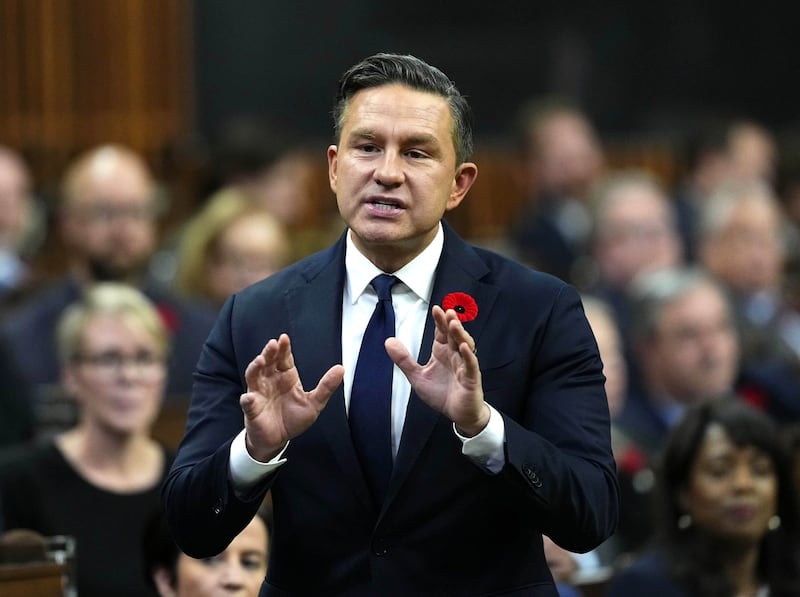
“The minister would have more aptly named this budget ‘mastered by debt,’” Conservative Leader Pierre Poilievre charged in the House of Commons, riffing off the official name of the budget: “Masters of Our Destiny.”
“This is a costly credit card budget that Canadians can’t afford, and Conservatives will vote no,” he said.
NDP Leader Avi Lewis said the budget gave too much help to large corporations and not enough for everyday Canadians.
“Where is the mega deduction for my grocery bill? Where is the mega deduction on my cell phone bill, on my rent, or mortgage? It’s missing in action,” Lewis said.
The budget also de-emphasizes emissions reduction targets and climate regulations, focusing instead on incentives to help grow the clean economy. The shift was heavily criticized by Green Party Leader Elizabeth May.
“It almost completely ignores the need for climate preparedness, and quite explicitly says we’re not interested in targets anymore,” May said.

