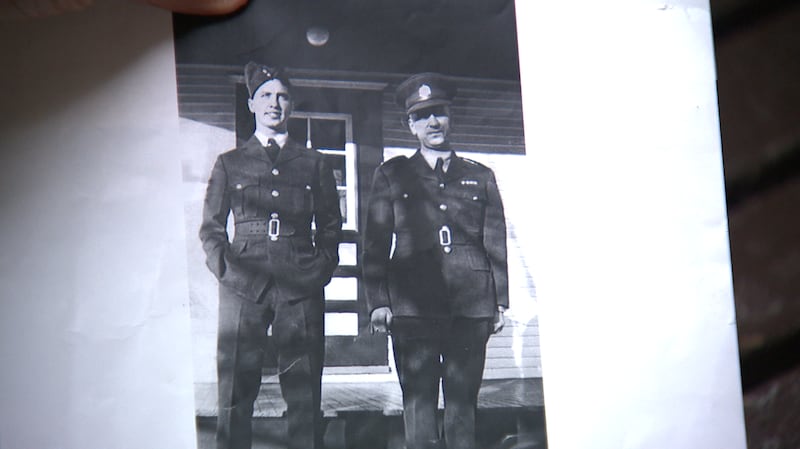
TORONTO – Looking through photographs of his father and grandfather, Alan Roy traces a family history of military service through faded images and medals that predate his own time in uniform.
His father served in the Second World War. His grandfather, Roy says, served in both world wars.
“Third generation in the military,” Roy, 64, said, describing his own place in that family tradition.
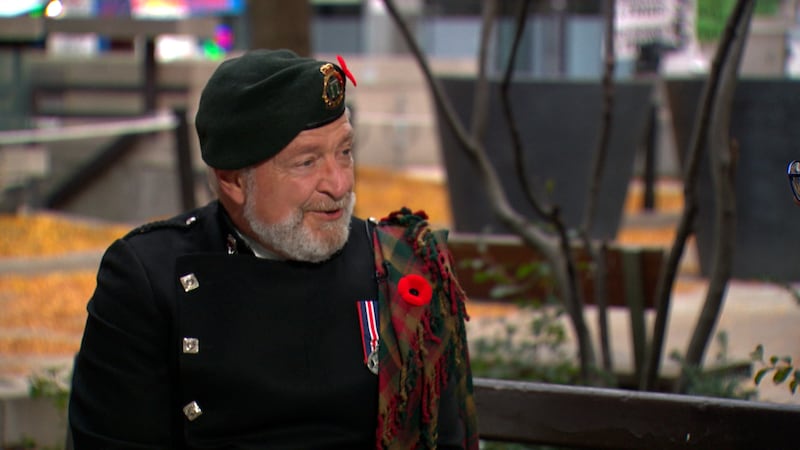
For the Canadian Armed Forces veteran and Royal Canadian Legion Branch 101 president, remembering that service is also an opportunity to honour his Métis heritage.
“My pride in being Canadian is only increased by the fact that we can say we have Métis heritage,” Roy said, who describes his own military experience as one of belonging. “I never felt that I was being ostracized because of whatever my background was at that time.”
But he also acknowledges a broader history of discrimination against Indigenous veterans — one that recognition today cannot erase.
“It’ll never go away. It’s part of our history now,” he said. “Many of them have suffered for their heritage. I know from personal experience, many of these people are upset over the way things happened. There are a lot of horror stories out there.”
Service abroad, barriers at home
Veterans Affairs Canada acknowledges that many Indigenous veterans did not receive equal treatment when they returned from military service.
First Nations veterans faced unequal access to land and benefits. After the First World War, reserve land was transferred to non-Indigenous veterans, while most First Nations veterans applying for equivalent land grants received permission to use land already belonging to their communities rather than ownership.
Métis veterans faced different barriers. In a 2019 apology, Ottawa acknowledged that postwar benefits were poorly designed to meet their needs. Many lacked the prerequisites to access education and training programs, against a backdrop of prejudice, poverty and limited educational opportunities.
Veterans Affairs estimates that more than 12,000 First Nations, Métis and Inuit people served in the major conflicts of the 20th century. At least 500 lost their lives.
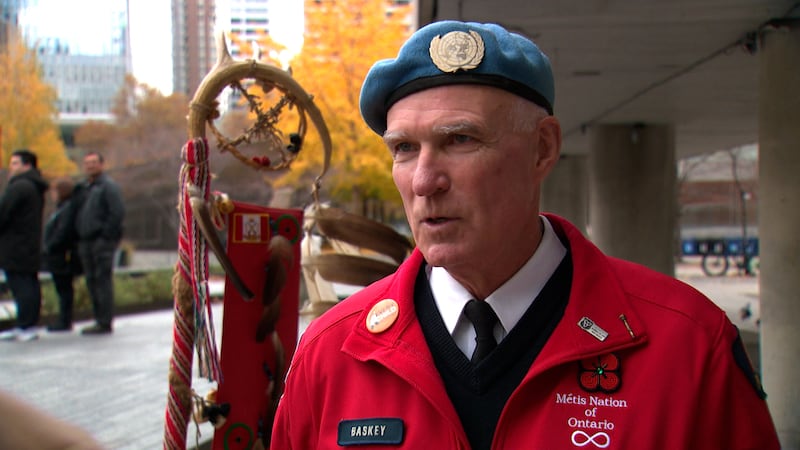
Rob Baskey, a senator with the Métis Nation of Ontario Veterans’ Council and an Eagle Staff carrier, says ensuring veterans receive the benefits they deserve is part of reconciliation.
“I think we can always be better,” he said. “If Indigenous Veterans are finally receiving those benefits that they should have been receiving... I think that’s a positive step forward towards reconciliation. But we can always do better.”
Making remembrance more visible
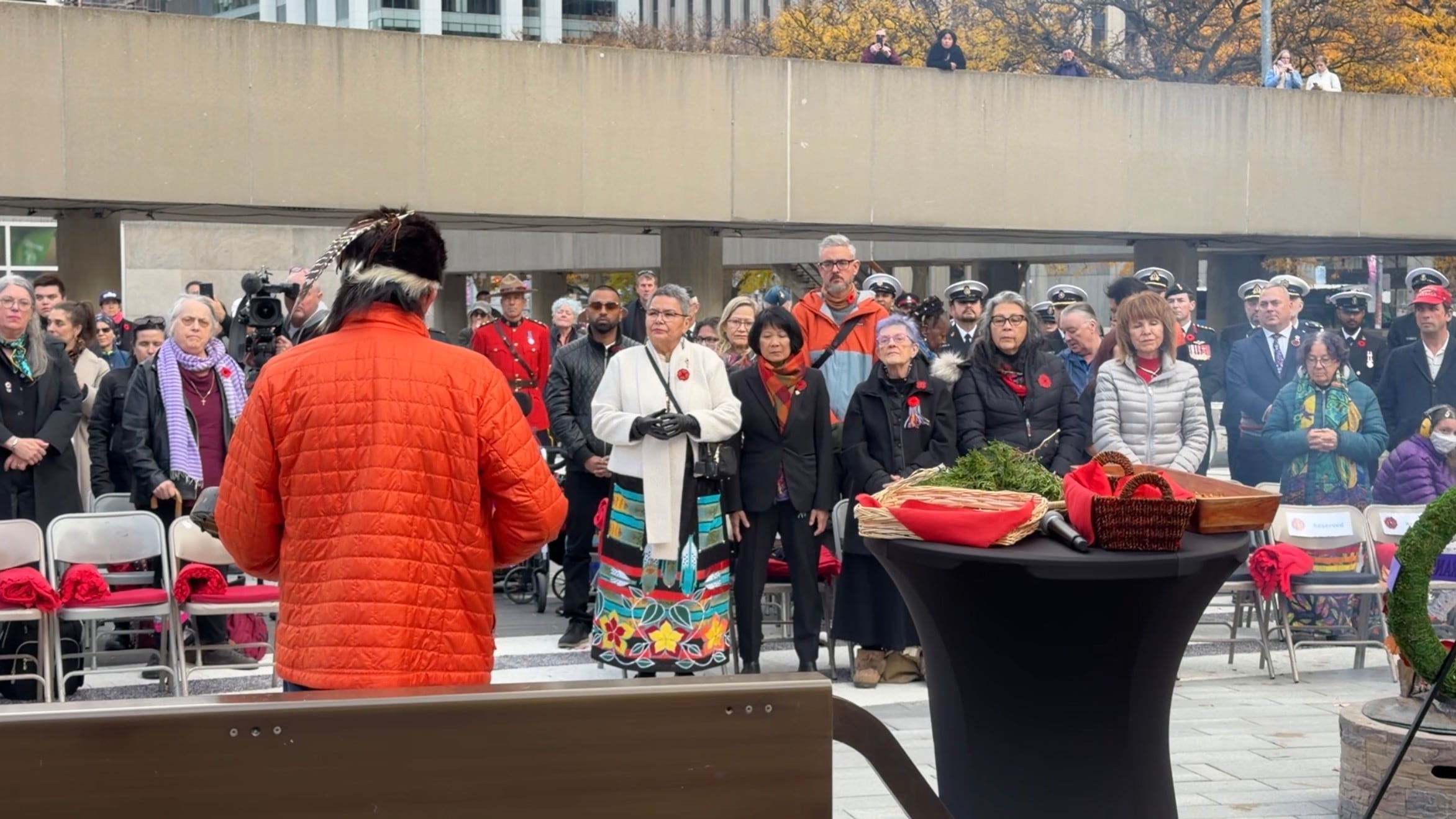
Dozens of people gathered Sunday at the Spirit Garden outside Toronto City Hall to mark Indigenous Veterans Day.
For Baskey, the public ceremony is one part of a year-round responsibility to remember those who served – saying that Indigenous Veterans Day needs to attract greater awareness and attendance.
“There’s a crowd here but it’s not on the scale that it should be. If people knew about this ceremony, it’s going to happen today... it would be more people,” he said.
In a joint statement Sunday, federal ministers said: “The Government of Canada remains committed to ensuring that all Indigenous Veterans receive the recognition and support they deserve.”
Roy sees progress in the recognition of Indigenous service and identity within the military, pointing to visible expressions of that heritage on uniforms.
“Every step is a good one,” he said.
As he looks through his family’s photographs, that history remains close at hand: three generations of service, preserved for another generation to remember.

