OTTAWA – As Prime Minister Mark Carney prepares for a trip to China and a bilateral meeting with Chinese President Xi Jinping next week, new trade data suggests Canadian exports to China are reaching record levels, particularly in Western Canada.
Third-quarter figures compiled by the China Institute at the University of Alberta show strong growth in exports, led by food and energy shipments.
“Our exports are going to hit record highs this year, and the numbers are accelerating,” said Philippe Rheault, director of the China Institute.
The trade surge marks a sharp turnaround from the low point in Canada-China relations that followed the detention of Canadians Michael Kovrig and Michael Spavor in China after the 2018 arrest of Huawei executive Meng Wanzhou in Vancouver.
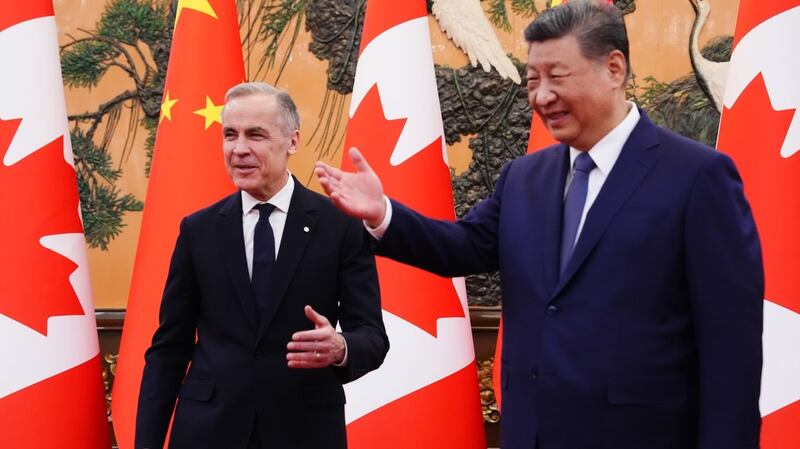
Trade between the two countries increased after an agreement last January that saw Ottawa secure lower Chinese tariffs on Canadian goods in exchange for allowing Chinese electric vehicles into the Canadian market.
Total two-way trade reached $36.78 billion in the third quarter, the highest quarterly level on record, driven largely by energy exports.
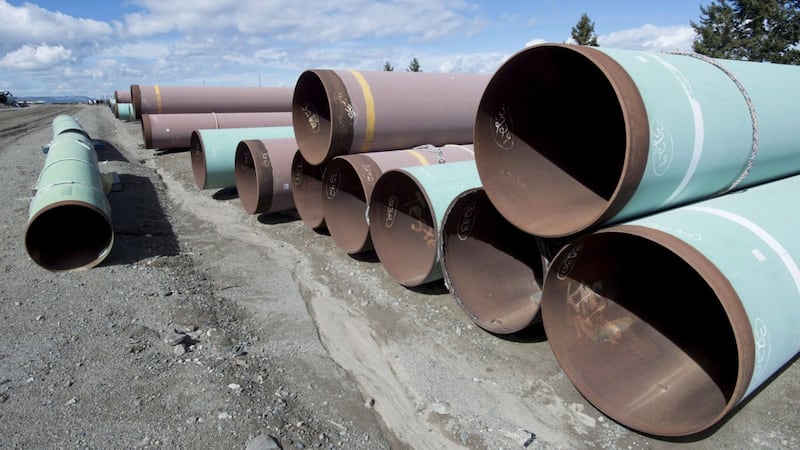
Crude oil exports to China jumped 159 per cent, averaging 327,000 barrels per day. Much of the increase is attributed to additional capacity provided by the Trans Mountain pipeline.
“I think a lot of experts were predicting that most of the Canadian crude that made it to tidewater would actually end up going to California and not going to Asia. That’s been disproved emphatically, and it’s almost all going to East Asia, and the majority of that is going to China,” said Rheault.
Supply disruptions in the Middle East also contributed to higher oil prices for exports to both China and the United States.
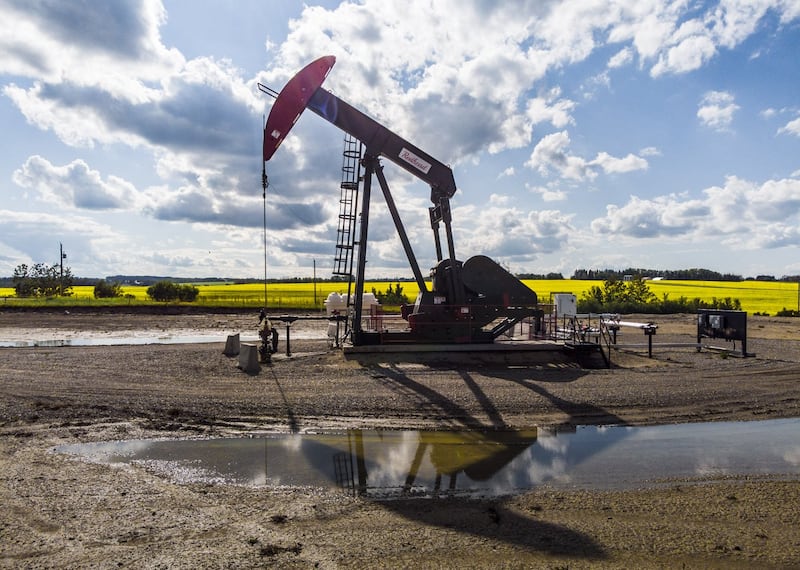
Agriculture exports see increase
The figures also point to an easing of Chinese tariffs on Canadian agricultural products.
Canola meal exports rose to $360.3 million from $12.9 million a year earlier. Pea exports increased to $147.6 million from $9.2 million, while beef exports reached $181.4 million after being virtually non-existent a year ago.
While most provinces recorded higher exports to China during the quarter, Alberta and Saskatchewan accounted for nearly 78 per cent of the overall increase.
The report says national domestic exports to China increased by roughly $4.32 billion year-over-year, with Alberta’s surge driven mainly by crude oil exports and Saskatchewan’s by canola meal, canola seed, potash and peas.

Some China experts cautioned that boosting trade with China comes with risks Canadian producers know well.
“In 2024, nearly 70 per cent of our canola seed exports went to China, giving Beijing significant leverage that it has used during political disputes,” said Vina Nadjibulla, CEO of the Centre for Strategic Statecraft.
“We should expand trade with China while continuing to develop other markets. The goal should be to reduce strategic dependence, not simply shift it from one major power to another.”
Rheault said the numbers demonstrate the impact of Canada’s renewed engagement with China and a shift in federal policy.
“I think some observers are still going to be surprised at how forward leaning the prime minister and his government are when it comes to engaging with China at a time when the United States may be reconsidering its approach to Canada,” said Rheault.
When asked about the risks involved with Canada’s deeper relationship with China, Prime Minister Mark Carney said Tuesday that Canada’s exposure is still limited.
“In terms of the security risks of our partnership, they are much, much, much, much less than the security risks, for example, of the United States,” he said.
Carney also said he intends to directly raise security issues with Chinese President Xi Jinping.
“The advantage of these meetings is you can raise issues directly and frankly, and I will be raising the importance with which we attach to the non-interference in our affairs by China and other countries.”
Even with higher exports to China, Canada still exports about ten times as much product to the United States.
Carney’s goal is to double exports of Canadian goods and services to non-U.S. markets by 2035. Clearly China will play a large role in that.
Carney leaves Wednesday for a whirlwind tour of Asia that includes stops at the ASEAN summit in the Philippines, the APEC summit in China – where he is expected to meet Xi – and the Francophonie summit in Cambodia.
The trip will mark Carney’s second visit to China as prime minister and comes as trade between the two countries reaches unprecedented levels.

