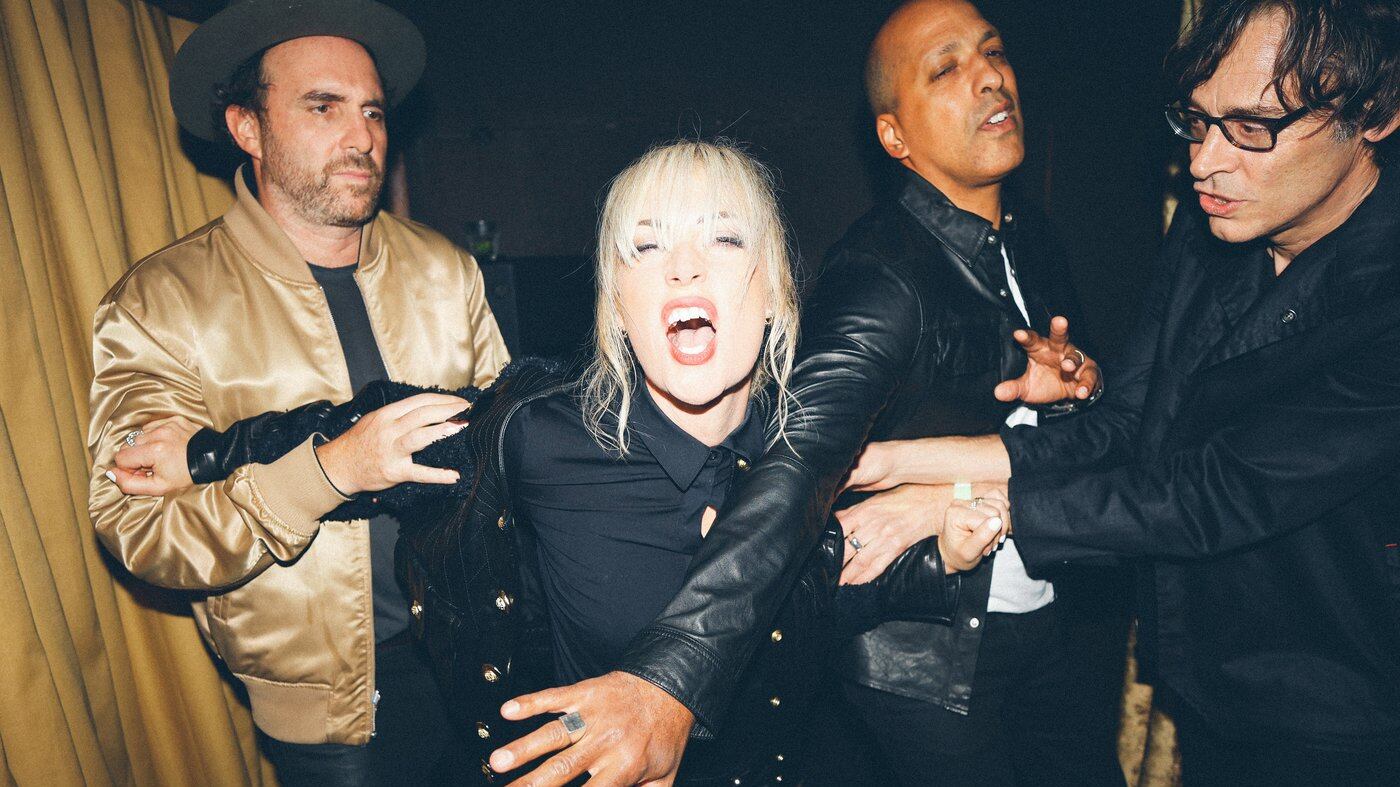
Emily Haines thinks young people’s fascination with the so-called “indie sleaze” era is less about fashion than freedom.
As Gen Z rediscovers and posts about the messy party scene of the early to mid-2000s — think sticky dance floors, hooky blog-rock bands, snagged tights and side-part hair — the Metric frontwoman believes many are yearning for something simpler: a time before influencers, algorithms and the pressure to turn every moment into content.
“I think it’s really perplexing to be young and inspired and wanting to figure out how to become yourself when you can’t make any mistakes and you feel like everything you do is captured,” Haines says on a virtual call.
“How do you develop with everyone watching?”
As Metric gears up for seven Canadian dates on its All the Feelings tour, including a stop in Calgary with Broken Social Scene and Stars this weekend, Haines says she’s noticed growing curiosity among younger fans about what life was like “pre-iPhone, pre-self-surveillance.”
The tour also serves as a celebration of the friendships that helped define Canada’s indie-rock boom. The three Toronto-born acts have long shared creative ties, with members collaborating through the sprawling Broken Social Scene collective.
“I would way rather see a 13-year-old girl romanticize this than romanticize a solo artist with an empire,” says Haines.
“You can have a different kind of life where friendship is actually the goal. Other people seem so lonely — everything is just your own brand and your own thing. I think it makes sense that the indie sleaze love would blossom right now, because it was fun.”
The renewed interest in that period has been building over the past few years. Grungy animal prints and smeared makeup have cycled back into fashion, while films like this year’s “Mile End Kicks,” by Toronto’s Chandler Levack, attempt to recreate the messy energy of youth culture at the time.
Meanwhile, the music of the era is finding new traction online, with Broken Social Scene’s fragile 2002 ballad “Anthems For A Seventeen Year-Old Girl,” featuring Haines on vocals, and Metric’s jittery 2010 anthem “Help I’m Alive” both blowing up on TikTok over the past year.
Metric’s new album, “Romanticize the Dive,” partly attempts to reclaim the spirit of those early days.
Haines describes the record as a love letter to Metric’s scrappy beginnings, playing tiny rooms before smartphones turned every concert into a potential viral clip.
“We had the benefit of the dive. You could figure out your relationship with the audience, figure out what you’re saying, what you stand for and who you are,” she says.
“It’s very hard to do that when you’re supposed to look perfect the whole time.”
Haines recalls shows where their 2003 hit “Dead Disco” stretched into a 40-minute freeform jam, with onstage conversations and improvisation turning performances into something like a “town hall” with the audience, including debates over the Iraq War.
“But now it’s just, ‘Oh man, I don’t need to deal with that being on YouTube,’” she says.
The album marks Metric’s 10th studio release and finds the band looking inward. They reunited with producer Gavin Brown, who also worked on 2009’s “Fantasies” and 2012’s “Synthetica.”
Instead of drawing inspiration from films or other artists, Haines says Metric spent time listening to its own catalogue and reflecting on the path that brought the band here.
“It was like, ‘What would Metric do?’” she laughs.
The result is a collection of familiar synth-rockers that grapple with aging, regret and the passage of time, while also celebrating what remains.
On the pulsing, meditative “Tremolo,” Haines tries to steer listeners’ thoughts away from “what could have been.” But on the swaggering lead single “Victim of Luck,” she’s drawn back to the audacity of her younger years: “I was a starving artist, but I was fearless.”
“I was really like, ‘Yeah, what happened to me? Like, when did I get so scared and so afraid of appearances?” Haines says, reflecting on the songwriting process.
“I’m really hoping that this works and I can actually get that free again. It’s sort of like a manifest destiny thing where I’m like, ‘If I write it, hopefully it’ll come true.’”
Broken Social Scene’s new album, “Remember the Humans,” also finds the band in a reflective mood, looking back on where they’ve been. Haines says she and Stars singer Amy Millan reunited with the group to record a song for the project, though it didn’t make the cut.
“It’s not that good. That’s why it’s not on the record.”
Then again, maybe imperfection is the point.
“I think a lot of the culture that we live in is just like, everything’s filtered to hell,” says Haines.
“And so, you never can really see just how crappy it was — and that the crappy is the good stuff.”
This report by The Canadian Press was first published June 23, 2026.
Alex Nino Gheciu

