


Yes, the 2026 midterms will be remembered for the astonishing number of losses that Democrats handed to U.S. President Donald Trump. But in the background, something perhaps equally seismic unfolded: a wave of firsts that elevated into high office members of groups that had, until now, been kept largely at the margins.
There were cheers and happy tears at election parties from New Mexico to Georgia late Tuesday once it became clear voters had elected the country’s first Black female governor, the first Indigenous female governor, the first Native female senator and the first openly gay male U.S. senator. By early Wednesday, the first Muslim U.S. senator was also added to the list of barrier-breaking milestones. The astonishing blue wave also means the United States will likely have its first-ever Black speaker of the House.
Most of these firsts are Democrats, but the GOP has also broken some new ground.
While some of these candidates have avoided focusing on the inherent historic value of their race, gender, religion or sexual orientation, some voters’ rights advocates are celebrating how the electorate has expanded.
“These firsts show how our country is changing,” Alexis Anderson-Reed, president and CEO of State Voices, a network of advocates for civic engagement and equity in democracy, said via e-mail.
“For years, people of colour and LGBTQ+ communities have organized, knocked on doors, talked to voters, held conversations, and done the hard work of saving our democracy,” Anderson-Reed said. “These wins are because of them.”
Here are some of the races where history was and could be made.
First Indigenous female governor
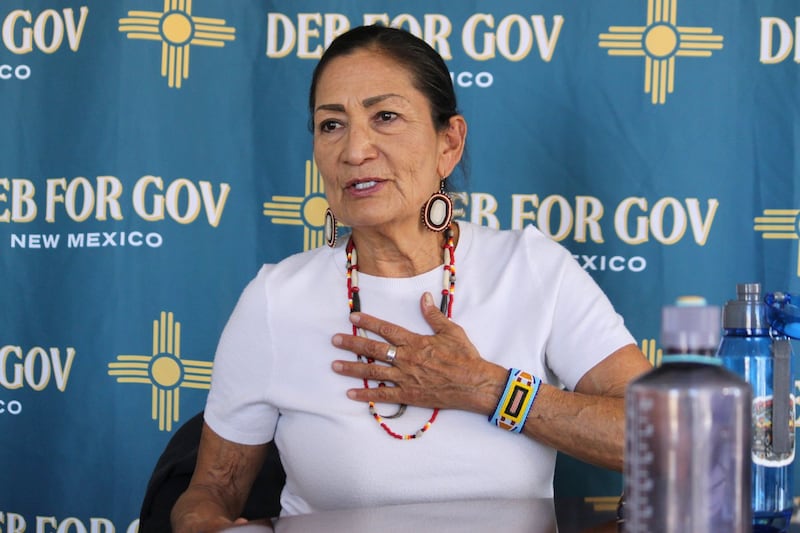
Democrat Deb Haaland revelled in her history-making moment of becoming the first Indigenous female governor in U.S. history. Haaland was declared the winner over Republican Gregg Hull, a former mayor, to lead New Mexico.
The Laguna Pueblo citizen noted that Indigenous people are still here despite past efforts by the federal government to strip them of their languages and culture.
“Tonight, in our nation’s 250th year, I stand before you as the first Indigenous woman elected governor in U.S. history,” Haaland told ecstatic supporters at a victory celebration.
In 2018, Haaland was one of the first two Indigenous women elected to Congress. Then she became the first Indigenous Cabinet secretary, running President Joe Biden’s Department of the Interior. Charles Curtis, from the Kaw Nation, was the first Native Cabinet member as President Herbert Hoover’s vice president.
Oklahoma was the only state to elect a tribal citizen for governor -- Democrat Johnston Murray in the 1950s and current Republican Gov. Kevin Stitt.
“I want every child watching to know that your dreams matter and that New Mexico is a place where you can build the life you want,” Haaland said, adding that she is living proof.
First Indigenous woman senators
Minnesota Lt. Gov. Peggy Flanagan has become the first Indigenous female U.S. senator, helping Democrats win back the Senate. A citizen of the White Earth Band of Ojibwe, Flanagan defeated Republican Michele Tafoya, a former NFL sideline reporter.
Tafoya would have been the first Republican of Latina heritage to sit in the U.S. Senate.
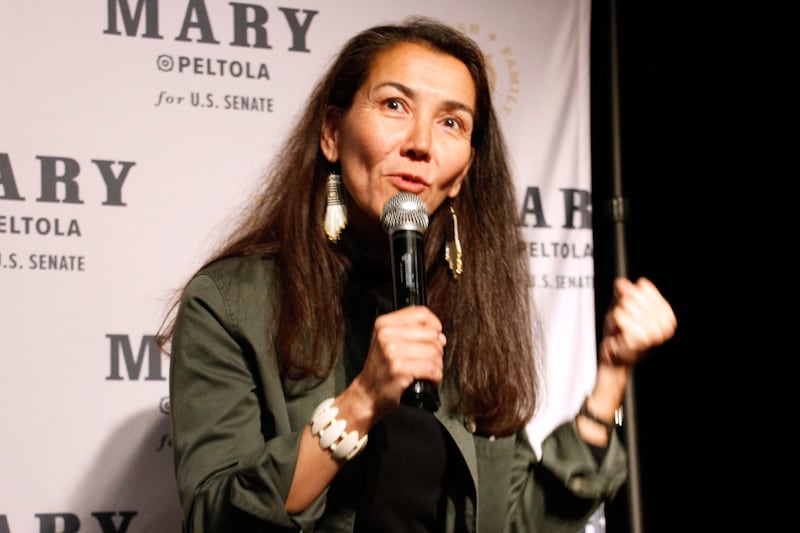
Mary Peltola, who is Yup’ik and a Democrat, could also become the first Alaska Native U.S. senator. Votes in her race to unseat Republican incumbent Sen. Dan Sullivan are still being tabulated.
Peltola was considered a trailblazer in 2022 when she became the first Alaska Native elected to the U.S. House of Representatives.
First Black female governor
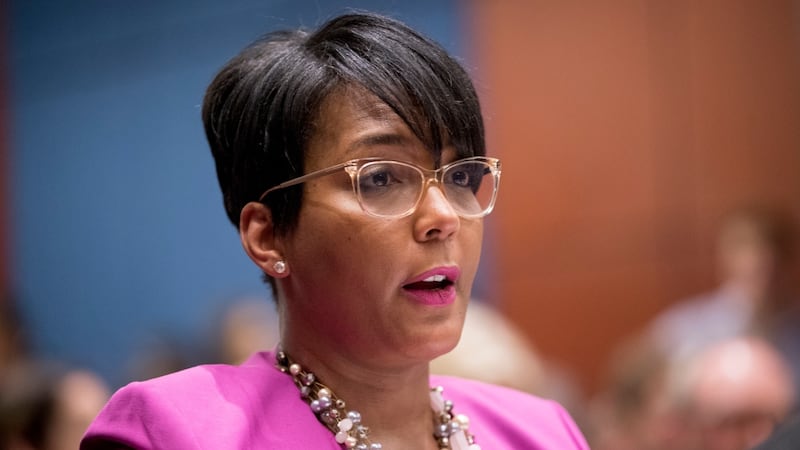
Democrat Keisha Lance Bottoms was declared the winner Tuesday night in the Georgia governor’s race, ending 250 years of U.S. history without a Black woman elected as a state’s governor. The former Atlanta mayor was running against Republican Rick Jackson, a billionaire businessman.
“Tonight should remind us all that no matter what community we come from, Georgia is not defined by one moment in time or by one person,” Bottoms told euphoric supporters. “It’s been defined by all of us, and I will be a governor for everyone in this state.”
She will also be Georgia’s first governor of colour. All 83 of Georgia’s previous governors have been white men.
Lisa Demuth, however, lost an opportunity to be the first Black female governor. The former Minnesota House speaker was overtaken by longtime Minnesota U.S. Sen. Amy Klobuchar.
Stacey Abrams had been the only Black woman to come close to winning a governor’s race when she got the Georgia Democratic Party’s nomination in 2018 and 2022.
First Muslim U.S. senator
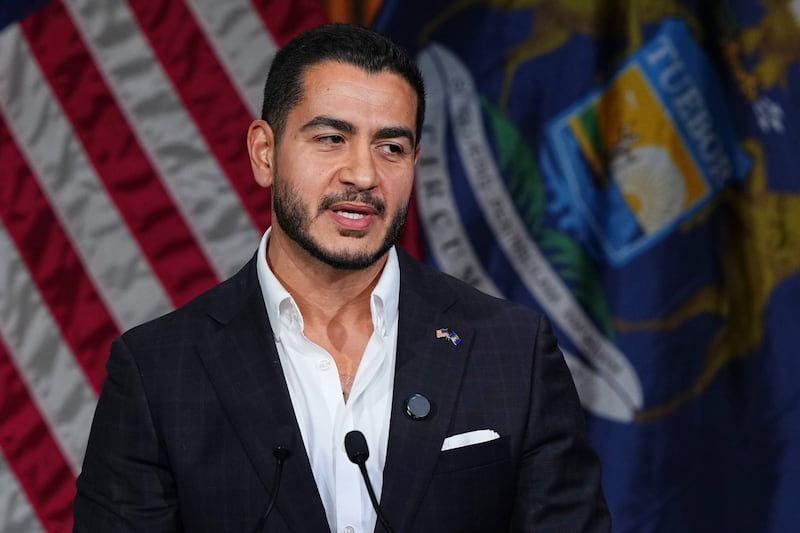
Abdul El-Sayed will become the first Muslim American to serve in the U.S. Senate.
The contentious race to be Michigan’s next senator was called for him early Wednesday morning. The race between the progressive Michigan Democrat and Republican Mike Rogers has grabbed attention nationally, especially after El-Sayed’s primary opponent endorsed Rogers.
“You took a chance on the unlikeliest of candidates,” El-Sayed told a Detroit crowd. “Thank you. This is all yours.”
El-Sayed has had to contend with Republicans all the way up to Trump implying or overtly stating that the Michigan-born epidemiologist is not American and supports terrorism. Trump has called him “dangerously radical” and “too extreme” and referred to him as “Mohammed.” El-Sayed and his supporters have denounced the attacks as Islamophobic or racist affronts to religious freedom.
First openly gay U.S. senator
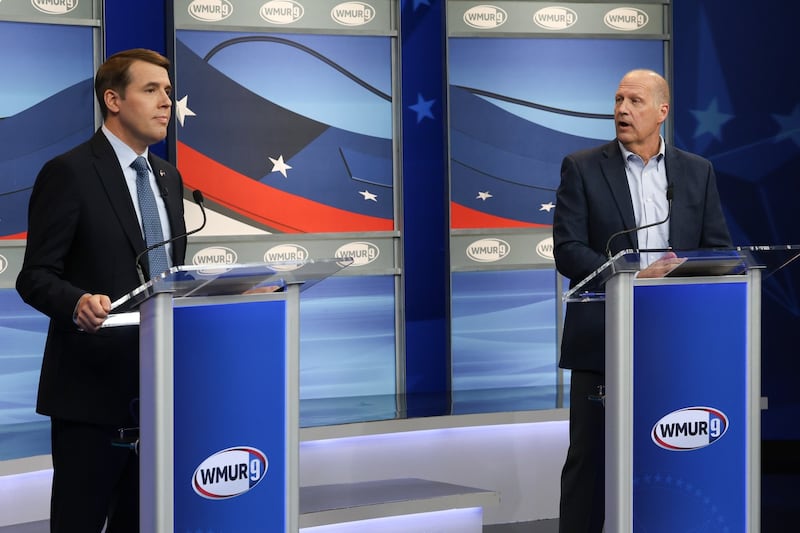
Democratic Rep. Chris Pappas won his U.S. Senate race in New Hampshire and will become the country’s first openly gay male senator. He defeated former U.S. Sen. John E. Sununu, a Republican who previously served in both chambers of Congress.
This new benchmark is not something Pappas has dwelled on while campaigning, saying, “I’m not running to make history.” But he also applauded the fact that his sexual orientation was not a huge source of discussion among potential voters.
First Black governors
The U.S. went from having only three elected Black governors in its 250-year history to gaining several more overnight.
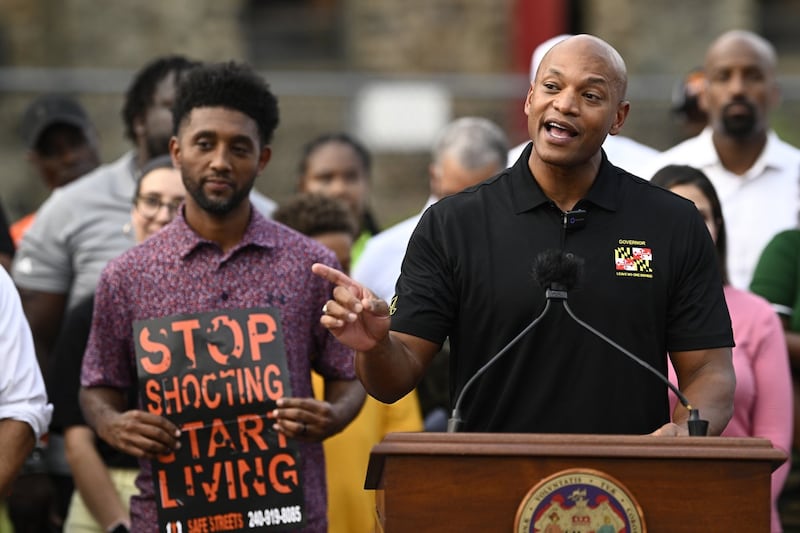
On Tuesday, Maryland Gov. Wes Moore, the third one in the U.S. and the only current Black governor, won reelection, while Republican Byron Donalds and Democrat David Crowley were elected as the first Black governor in Florida and Wisconsin, respectively. With Bottoms’ victory in Georgia, two Deep South states will be governed by a Black leader for the first time.
Moore, chair of the National Governors Association, has called the presence of so many Black gubernatorial contenders “a unique moment.” It’s not “an applause line” but a challenge to make diverse gubernatorial nominees more common, he said.
Latinos, both Democrats, will take on the highest state office in two of the biggest states. Texas voters rejected Gov. Greg Abbott in favor of Gina Hinojosa, who will be the state’s first Latina governor. Xavier Becerra, former California attorney general, outpaced Republican Steve Hilton. He will be California’s first Latino governor since Romualdo Pacheco in 1875.
Record year of women running for governor and Congress
This midterm has been a record-breaker for women vying for state and federal offices. Democrats increased their 2022 number of female candidates to 19 running for governor, according to the Center for American Women and Politics at Rutgers University. The Republican Party had seven women setting their sights on governor.
Like Minnesota, Tennessee elected its first female governor. Republican U.S. Sen. Marsha Blackburn beat Democrat Jerri Green, a Memphis city councilwoman.
Nearly 300 women, including incumbents, were running for the U.S. Senate and House, as documented by Rutgers’ Center for American Women and Politics.
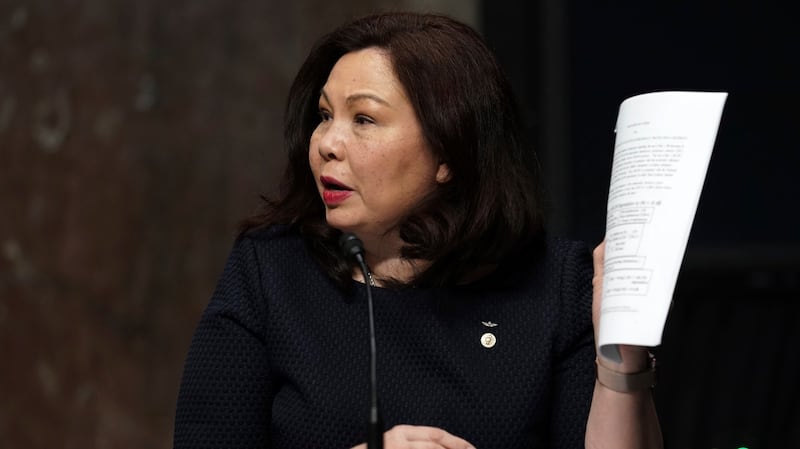
Among them was Democrat Juliana Stratton in Illinois, who defeated Republican Don Tracy on Tuesday. Stratton, the current lieutenant governor, will succeed retiring Democratic Sen. Dick Durbin. With fellow Democrat Sen. Tammy Duckworth, who is of Thai heritage, the pair will make Illinois the first state to be represented by two female senators of colour. Stratton’s win also means there will be three Black women serving in the Senate.
____
Terry Tang, The Associated Press
Associated Press writers Becky Bohrer in Juneau, Alaska, and Savannah Peters in Albuquerque, New Mexico, contributed to this report.

