
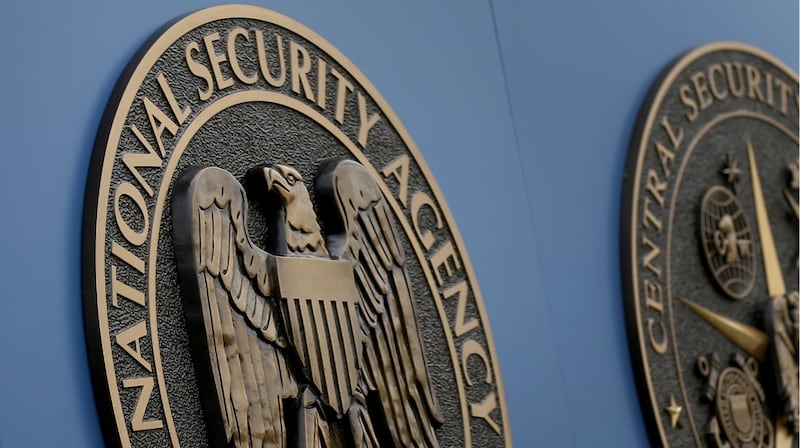
The highly classified network that the U.S. National Security Agency uses for its internal communications is down, according to six people familiar with the matter.
The network, called NSA Net, allows employees to communicate classified information internally. At this point there is no evidence of a cyberattack, sources said.
As the agency works to understand the scope of the problem, it has enacted staggered arrivals for personnel, the sources said.
“The National Security Agency experienced temporary degradation during scheduled routine maintenance,” the agency said in a statement on Tuesday afternoon. “While some internal systems were affected, mission-critical capabilities remain fully operational and our ability to defend national security continues. NSA’s infrastructure is designed with multiple layers of redundancy to maintain operations during planned maintenance or unexpected events.”
A source familiar with the matter told CNN that restoration of the network was ongoing but not yet complete.
Earlier in the day, White House spokesperson Lauren Bis said on Newsmax. “We see no evidence that this was a cyberattack. There is no crisis, or anything like that, for Americans to be worried about.”
A current and a former U.S. official said an outage at NSA Net would not impact the agency’s ability to communicate urgent intelligence to U.S. President Donald Trump while he is travelling in Asia on Air Force One.
Both sources described multiple redundancies and backup networks that the government could use to communicate securely with the president who is currently in the Philippines before heading to China tomorrow for talks with Chinese leader Xi Jinping and Russian President Vladimir Putin.
NSANet is “more of a network of networks, and it’s unlikely that a full outage exists given the many redundancies in place,” a former senior NSA official told CNN. “It could impact analysis and reporting, but for highest priority requirements they would find a way to work those. So it is alarming, but likely not crippling.”
A voicemail inbox recording for NSA employees on Tuesday described the situation as a “code yellow,” the second-highest in a three-level system that governs whether NSA employees report for work at the agency’s Fort Meade, Maryland, headquarters or not. The recording told non-emergency personnel to arrive for work in a staggered manner and for emergency personnel to arrive as usual. The New York Times first reported that detail.
The outage at America’s most powerful intelligence agency comes on the heels of multiple major tech glitches affecting airlines and other corporations around the country.
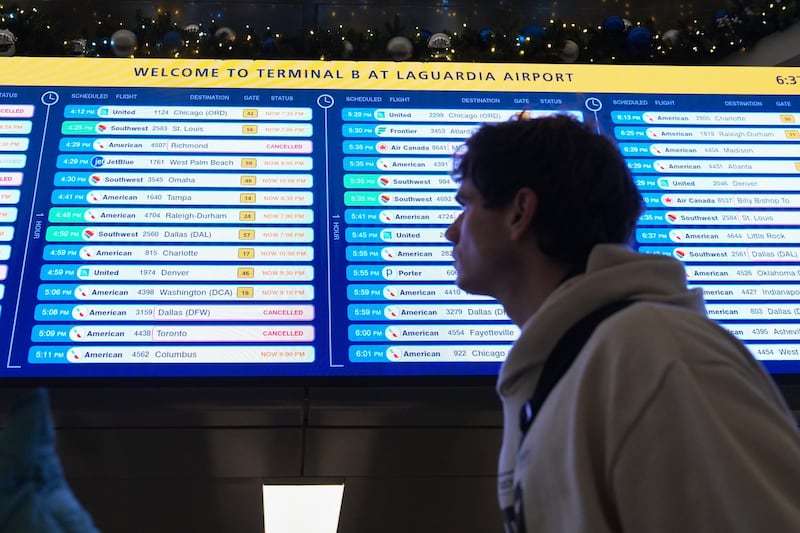
All flights nationwide were grounded for hours on Friday after a massive systems failure, leading to thousands of flights being delayed or cancelled. The U.S. Federal Aviation Administration traced the problem to a single router in Arkansas.
Meanwhile, a massive outage last week affecting Microsoft products left people around the world unable to access Outlook email and Team meetings.
And in recent weeks banks and other services have experienced outages, on Monday thousands of Chase Bank customers reported they had trouble using their online accounts.
There is no indication that the NSA, FAA or Microsoft outages were caused by a cyberattack. But they are stark examples of how tech failures can roil markets and potentially threaten national security.
The U.S. shares intelligence with a group of countries in what is known as the Five Eyes intelligence-sharing alliance, which includes the U.S., UK, New Zealand, Australia and Canada. That intelligence sharing system has not been impacted as a result of the NSANet outage, according to a source from one of the countries and a former U.S. intelligence official.
Tuesday’s outage was not the first time the NSA’s internal computer networks have suffered significant disruption. In 2000, a tech failure at the agency downed computers for nearly three days and interrupted the processing of intelligence at Fort Meade, an agency spokesperson said at the time.
By Natasha Bertrand, Katie Bo Lillis, Sean Lyngaas, Davis Winkie, Zachary Cohen, CNN

