One of the most recognizable names in Canadian politics — who served as the prime minister’s top deputy for nearly a decade before playing a pivotal role in his political downfall — is telling all in a new book.
Chrystia Freeland’s 416-page book, titled “Unreliable Boyfriend,” describes itself as “part memoir, part polemic, and part blueprint for Globalization 2.0,” giving behind-the-scenes insight into the stories that made global headlines.
“I hate talking about my childhood, and even thinking about it,” Freeland writes in the book. “I find looking at old family photo albums almost physically painful.”
Still, the former deputy prime minister and longtime cabinet minister delves into her upbringing in Alberta, her time at Harvard and Oxford universities, and then as a journalist “witnessing the collapse of the Soviet Union,” before getting into politics, describing herself as simultaneously an outsider and insider.
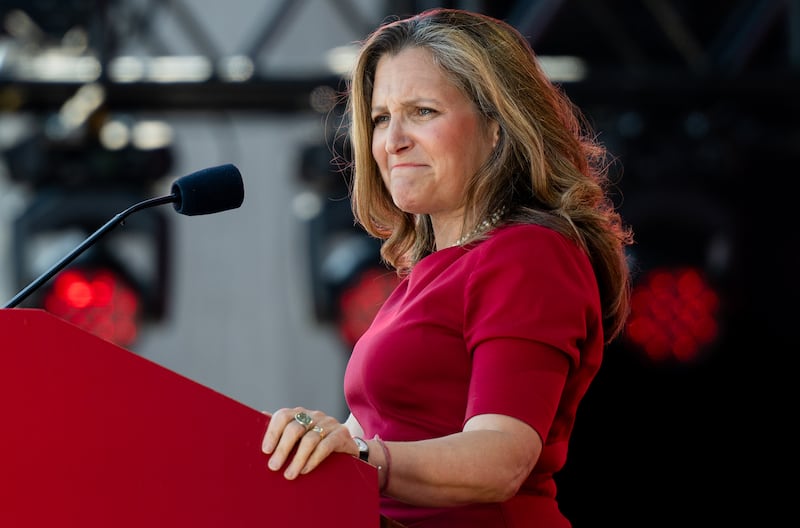
And, she’s no-holds-barred in her opinions on former prime minister Justin Trudeau and U.S. President Donald Trump, accusing the former of “profound aloofness” in person and calling the latter a “textbook bully.”
In less than two years, Freeland resigned from Trudeau’s cabinet in a scathing public letter, ran for the Liberal party leadership, served in Prime Minister Mark Carney’s cabinet, and resigned again to now work as the warden and CEO of the Rhodes Trust.
CTV News sifted through the book and pulled out some notable anecdotes — such as Russian President Vladimir Putin touching Freeland’s pregnant belly — as well as insights about how she made the decision to resign, and her relationship with Trudeau.
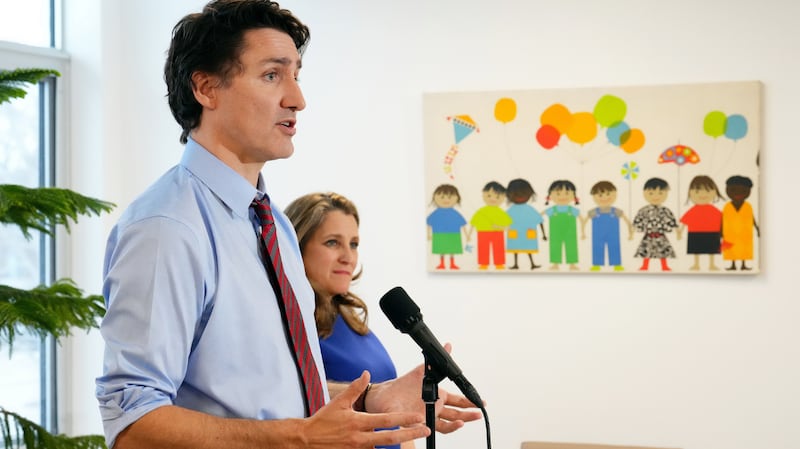
Trudeau’s ‘self-righteous exhibitionism’
Freeland in her book insists that “history will be kind to Justin Trudeau,” crediting him several times with standing up to Trump, inking deals with European and Asian countries, implementing domestic policies such as the Canada Child Benefit and affordable child care, and navigating the COVID-19 pandemic.
She also thanks him in the acknowledgements for “the privilege of serving in (his) cabinet.”
But, the overall read in the more-than 200 references to Trudeau in the book includes as much, if not more, criticism of the former prime minister than it does praise.
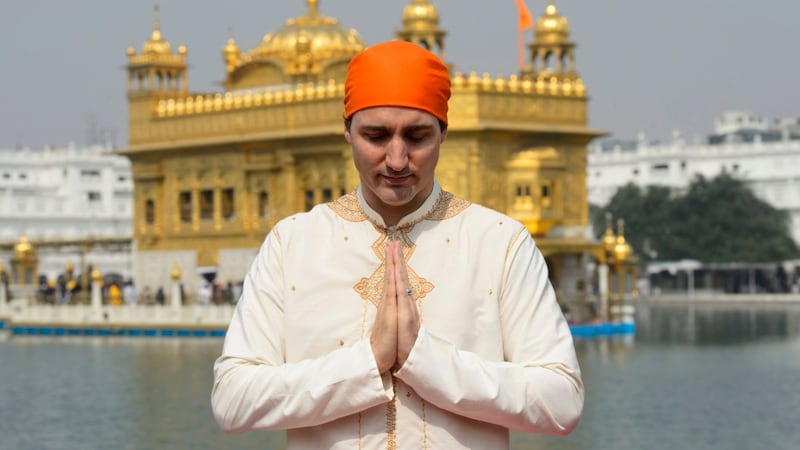
For example, in detailing the infamous and highly viral 2018 trip to India, in which Trudeau and his family became the butt of international jokes for wearing traditional Indian clothing, Freeland said: “The Canadians who started to sour on him because of his self-righteous exhibitionism glimpsed something that was even more apparent up close.”
Throughout the book, Freeland points to several instances in which Trudeau seemingly prioritized appearances over substance.
Calling him “a hard worker, with tremendous stamina,” and “extremely involved in the fine print of his own public appearances,” Freeland writes that during the NAFTA negotiations, for example, Trudeau “didn’t dive into the details of our negotiating position or of the negotiations themselves.”
She also gives insight — from her perspective — into what it was like being in a government led by Trudeau for nearly a decade, saying “crying was routine at cabinet meetings,” and there was “always Kleenex on hand,” with sad colleagues sometimes receiving a hug from the prime minister.
“We had to mind our language,” Freeland recounted. “In one meeting, a very progressive female colleague casually referred to something as ‘crazy.’ That earned her a long, harsh public scolding from Trudeau, who informed her that using ‘crazy’ as a derogatory adjective was insulting to people with mental health issues.”
“Henceforth, we should all use the word ‘bananas’ to describe people or policies that were, well, bananas,” she added.
The former deputy prime minister also praises Trudeau for his skill at canvassing and campaigning, calling him “handsome,” “famous,” and “charismatic.” But, she added, “that talent for intimacy with strangers co-existed with a profound aloofness from anyone who might come close to being a peer.”
She adds that very few cabinet ministers ever spent one-on-one time with Trudeau, and that she can “count on one hand” the number of times she met with him alone.
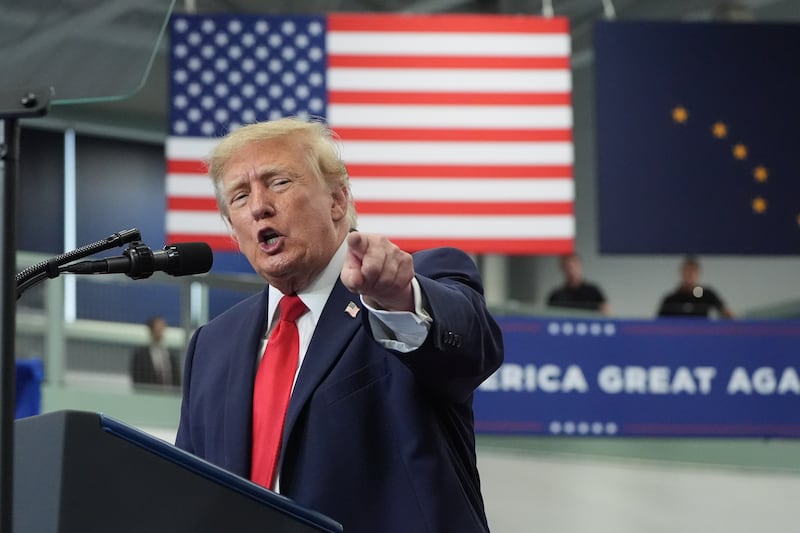
Trump, U.S. place in the world
The U.S. president, who famously referred to Freeland as “a whack,” and has made no secret of his disdain for her, is mentioned nearly double the number of times Trudeau is. The word “Trump” appears in the book nearly 450 times.
Writing that the United States under Trump is the titular “unreliable boyfriend” of her book, much of Freeland’s wordcount includes her plan for dealing with the U.S. president.
“Uncle Sam wants to be loved — and feared,” she writes in the prologue. “And, sometimes, he’s just not that into you.”
“Trump was thrilled when the NATO secretary-general called him ‘Daddy,’” she adds. “He craves the approval of what he sees as the world’s other daddies—Xi Jinping, Putin, and sometimes Kim Jong-un.”
“The rest of us are his harem—or maybe the better, genuinely American metaphor is sister wives,” she continued. “He wants our adoration—and our abject capitulation.”
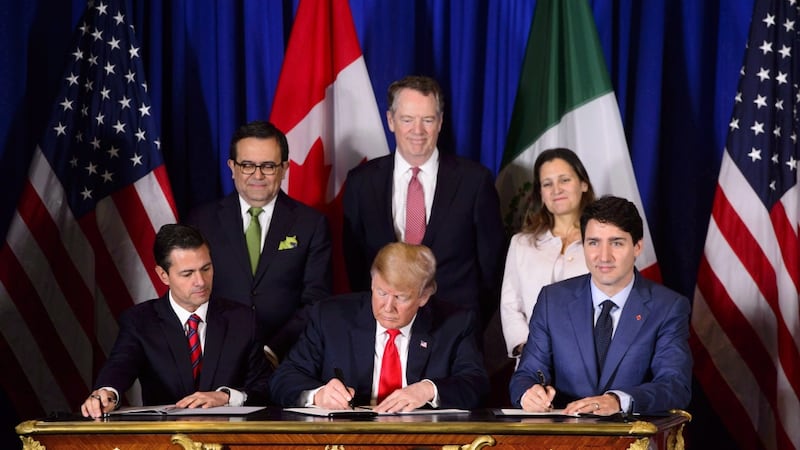
Delving into the process of dealing with the Trump administration, at one point she shares an anecdote about being told at a dinner with a friend about a consulting firm that could guarantee a good deal with the U.S. officials.
“In Trump’s Washington, the opportunities for corruption are vast, blatant, and evergreen,” she writes.
She also later states: “The Trump team is swaggeringly, rudely aggressive, even behind closed doors.”
Freeland’s book, however, concludes with the idea that “hope is a strategy,” promoting her concept of “friendshoring” with like-minded allies, arguing now is the time to fight for liberal democracy, and not the time to give up on the United States — “at least not yet.”
“Now is the time for tough love,” she wrote. “America—and American democracy—needs tough love.”
“President Trump is a textbook bully,” Freeland also wrote. “For him, weakness is a provocation. But when he is met with strength, he finds a way to do a deal.”
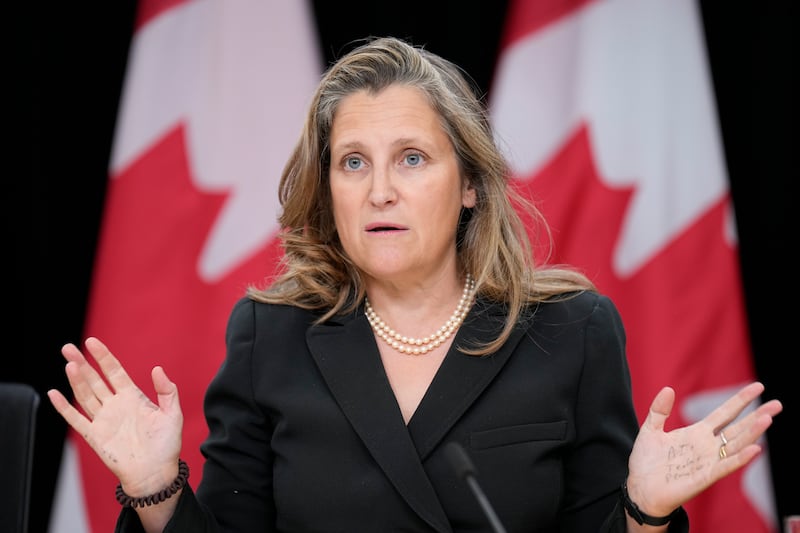
Dating, boyfriend metaphor is consistent
Freeland’s “unreliable boyfriend” metaphor — and the resulting relationship references and advice — is consistent throughout the book, including chapter titles such as “breaking up is hard to do,” and “let’s be friends.”
Several times in writing about Canada’s relationship with the U.S., Freeland compares it to a romance.
“We need to play hard to get and be hard to get,” she writes. “No one likes a needy girlfriend — or a needy ally.”
Freeland uses a similar metaphor when she discusses Trudeau, writing about Canada souring on the former prime minister and comparing it to long-term relationships in which “even the way he eats his breakfast cereal is a provocation.”
“By the time he stepped down, PM Trudeau had been so thoroughly caricatured as a woke poser that it was easy to forget that one of the things that had captivated Canadians when he first burst onto the scene was his macho charisma,” Freeland wrote.
Referencing the tension between herself and Trudeau in the days and weeks leading up to her very public resignation, Freeland seemingly compares it to a toxic relationship nearing the point of a breakup.
“In politics, as in love, it is very tempting to hear what you want to hear,” Freeland wrote. “So I wanted to believe these assurances were true. As you read this, you are probably astonished at my naivety. I know, as I type these words a couple of years later, that I am.”

Breaking down the breakup
Freeland in the book also gives new insight into the tense months leading up to her eventual resignation.
For weeks, rumours swirled in Ottawa about rising acrimony between the Prime Minister’s Office and Freeland’s office, sparked by reporting from The Globe and Mail at the time, citing unnamed sources, that senior officials in Trudeau’s office were concerned about Freeland’s economic communications chops.
While Trudeau insisted he had “full confidence” in Freeland, he also confirmed he’d been speaking with Carney — a former Bank of Canada and Bank of England governor — about entering federal politics.
“It was humiliating to repeat, day after day, that I still supported a PM who was openly auditioning my replacement, and who had stopped giving a straight answer when asked if he planned to keep me in my job,” Freeland said.
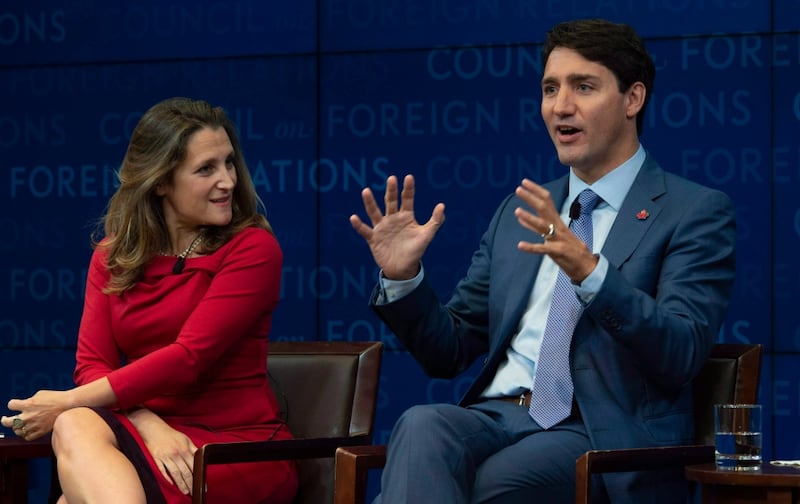
“My divorced friends say you always leave a marriage six months too late,” she also wrote. “As I reflect on it today, I think I probably left the Trudeau cabinet a year, or maybe two years, too late.”
She calls the day she was essentially fired by Trudeau over Zoom the “third worst” day of her life. Less than a week later, she published her resignation letter online.
Now, Freeland writes, she continues to receive regular thanks from strangers for having set in motion Trudeau’s own resignation.
“Mark Carney is an excellent prime minister,” she wrote. “I am proud my decision helped him get the top job, even though I ended up paying a pretty steep political price.”
Sought advice from Chretien
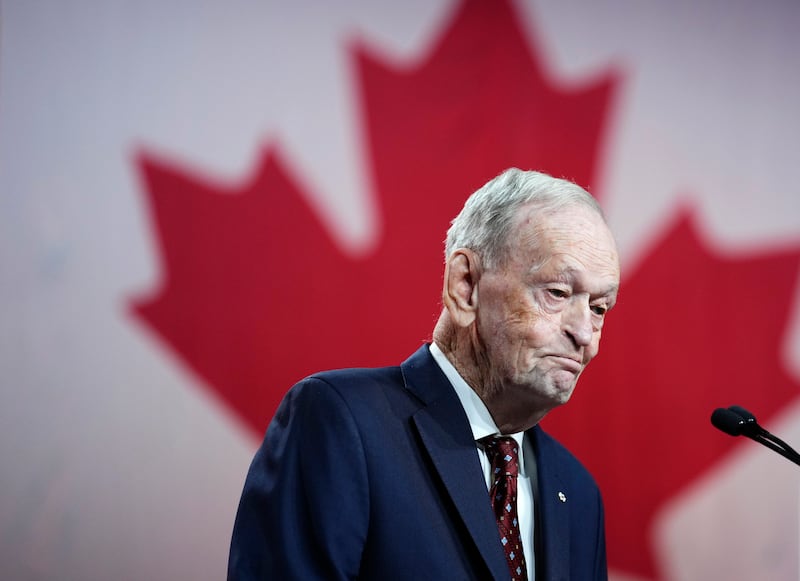
Further delving into the time leading up to her resignation, Freeland credits former prime minister Jean Chretien with giving her the push she needed to call it quits.
After reaching out to Chretien for advice, Freeland said the former prime minister praised her for being “unfailingly loyal” to Trudeau and cautioned her that she needed to do what was best for the party and the country.
“As long as you support him, he will stay on as PM,” Chretien allegedly told Freeland. “And he will lose the next election.”
“Conservative leader Pierre Poilievre will become PM, and the Liberal Party will be devastated,” she added. “And, if that happens, it will be partly your fault, because your continued support is what is making it possible for Justin Trudeau to stay in office.”
Quotes from KGB file, Trump
To promote the book, Freeland’s publisher included quotes from prominent names on the back cover of the book, under the heading “What people have said about Chrystia Freeland.”
They include praise from people like Carney, who said Freeland’s “versatility, raw intelligence, and principled leadership have served Canadians with distinction.”
They also include a quote from Trump, who called Freeland “totally toxic,” and said when she resigned that she “will not be missed!” From U.S. Commerce Secretary Howard Lutnick, there is a very straight-to-the-point: “The worst.”
The publisher also quotes from a Soviet KGB file on Freeland from when she was a student activist in the late 1980s, which calls her a “remarkable individual,” with an “analytical mindset,” not to mention “erudite, sociable, persistent, and inventive.”
The KGB allegedly concluded Freeland herself would have made an excellent spy. Freeland, however, refutes that in the book, writing that she thinks she would make “a terrible spy.”
“I have the opposite of a poker face, which makes me bad at deception, though I haven’t fully learned my lesson and still sometimes try,” she wrote. “And I lack what I think of as a spy’s essential quality—a worldly cynicism that lets you convincingly pretend to hold views that are the opposite of your true beliefs.”
Pregnancy, Putin, and other personal tidbits
While Freeland’s book includes her in-depth examination of present-day geopolitics, it is also largely written colloquially and stacked with pop culture references.
In the prologue alone, Freeland makes reference to the hugely popular author Colleen Hoover and her novel “It Ends With Us,” jokingly refers to Trump as “Daddy Don,” and points to dating advice by “Cosmo Girls.”
She also shares several very personal anecdotes, writing paragraphs about delivering her son without pain medication and linking the experience to negotiating the Canada-U.S.-Mexico Agreement during Trump’s first term in office.
“Whenever I am doing something hard, with an indefinite ending, I like to encourage myself by reminding myself of two things: first, it doesn’t hurt nearly as much as giving birth to a nine-and-a-half-pound baby, and second, that each tough moment is one moment closer to the end,” she wrote.
In another story about being pregnant, Freeland says she has “at least one claim to fame,” in that she is likely the only G7 finance minister to have previously had Russian President Vladimir Putin “stroke” her stomach.
“I do not get pregnant in an elegant, discreet, willowy way,” Freeland writes, setting the scene as late 2000 when she was seven months pregnant with her first child, and having just interviewed Putin for The Globe and Mail, where she was deputy editor at the time.
“I am just over five feet tall, and my three babies have weighed nearly nine pounds or more at birth,” she added. “From about the sixth month, when I walk into a room, some people get nervous that they may have a medical emergency on their hands.”
“Congratulations on your upcoming birth, Putin said as we were wrapping up,” Freeland continued. “We Russians know that Canadians are great hockey players. So I hope that you will have a son, and that he will be an outstanding hockey player. And, with a smile, he patted my belly.”

