


A senior adviser to U.S. President Donald Trump is once again hurling insults and threats at the federal government as trade negotiations between Canada and the U.S. continue.
In a post on social media, Peter Navarro called out the “arrogance and dishonesty of Ottawa on trade,” saying Canadian negotiators’ “misreading of their position is really something else.”
Navarro used a basketball metaphor to highlight what he sees as Canada’s disadvantage in trade talks with the U.S.
“They are like a high school team taking on the New York Knicks. That doesn’t end well for Canada,” Navarro wrote in a post on X.
Thursday’s insults follow Navarro’s memo to Prime Minister Mark Carney on Tuesday, in response to him suggesting that Canada could seek greater Chinese involvement in the domestic auto sector.
The U.S. trade adviser also posted a short interview clip to his X account on Thursday reiterating longstanding trade grievances with Canada.
“Canada cheats us,” he said, highlighting several trade issues the U.S. has with Canada, including lumber, dairy, steel and aluminum.
He added that Canada has historically cheated the U.S. by “out-negotiating” the country in the North American Free Trade Agreement (NAFTA) and by adding clauses that “really hurt” the U.S.
During his first term in office, Trump sought to terminate NAFTA due to irritants over Canadian softwood lumber exports and access to Canada’s dairy supply management system.
In 2020, Canada, the U.S. and Mexico replaced NAFTA with the Canada-United States-Mexico Agreement (CUSMA). However, when it came time for the parties to review the agreement, Trump’s administration chose not to renew CUSMA in July.
A month later, trade talks between Canada and the U.S. came to a halt after Carney rejected a deal he said threatened Canada’s sovereignty and responded with counter-tariffs on U.S. goods.
However, following the U.S. midterm elections, which saw Republicans lose control of both the House of Representatives and the Senate amid voter concerns about affordability and the impact of tariffs, the Trump administration has softened its tone on trade with Canada.
In recent weeks, Trump’s advisers have suggested a trade deal could be reached before the end of 2026.
Canada-U.S. Trade Minister Dominic LeBlanc also told MPs in Ottawa on Tuesday that a trade deal remained possible, but cautioned there is no guarantee Canada can restore the terms of CUSMA.
LeBlanc provided an update on recent progress in the trade talks to an advisory committee on Thursday. The committee has held 10 meetings to develop responses to Trump’s tariffs and discuss the future of CUSMA.
Carney and Trump talk trade in China
During Prime Minister Mark Carney’s whirlwind trip, which included summits in Ireland, the Philippines, Cambodia and China, Carney spoke with Trump about trade on the sidelines of the Asia-Pacific Economic Cooperation summit.
According to a post-meeting readout, the two leaders discussed “the work underway to reach a mutually beneficial trade agreement that would create good jobs, boost affordability, and fully respect Canada’s languages, culture, and sovereignty.”
The leaders also “agreed to continue the work and to stay in close contact,” the readout said.
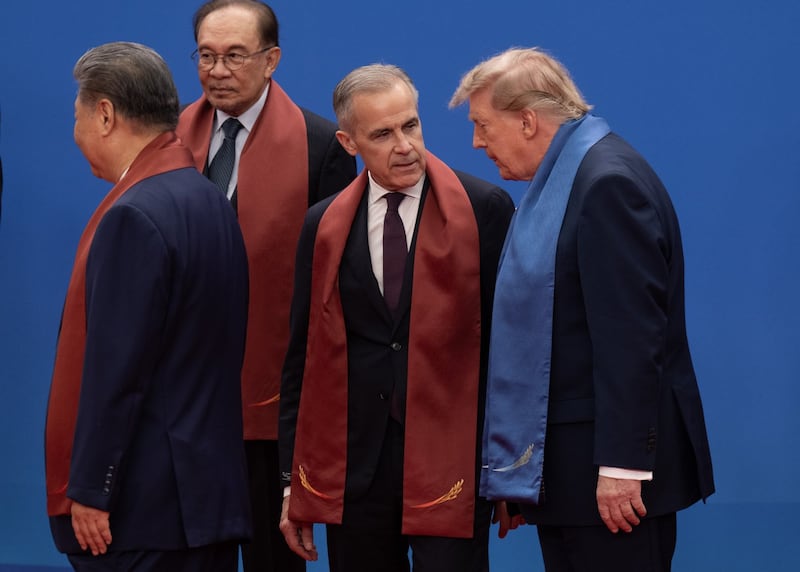
Other key takeaways from Carney’s trip included talks with his Philippine counterpart on a free-trade agreement expected to be signed next year and a meeting with Chinese President Xi Jinping, where the two leaders agreed to drop trade restrictions on more goods.
The trip affirms Carney’s plans to secure new trade agreements and reduce Canada’s reliance on the U.S.
‘Welcome Back America! It’s Your Turn to Be Sorry’
On Thursday, Navarro also criticized former deputy prime minister Chrystia Freeland for an essay she published in The New York Times on Tuesday.
“That former trade minister Chrystia Freeland went off on us yesterday in the Gray Lady. It’s like, what is she thinking?” he said.
In the opinion essay, “Welcome Back America! It’s Your Turn to Be Sorry,” Freeland encouraged Canada and the world’s other democracies to embrace the U.S. midterm election results.
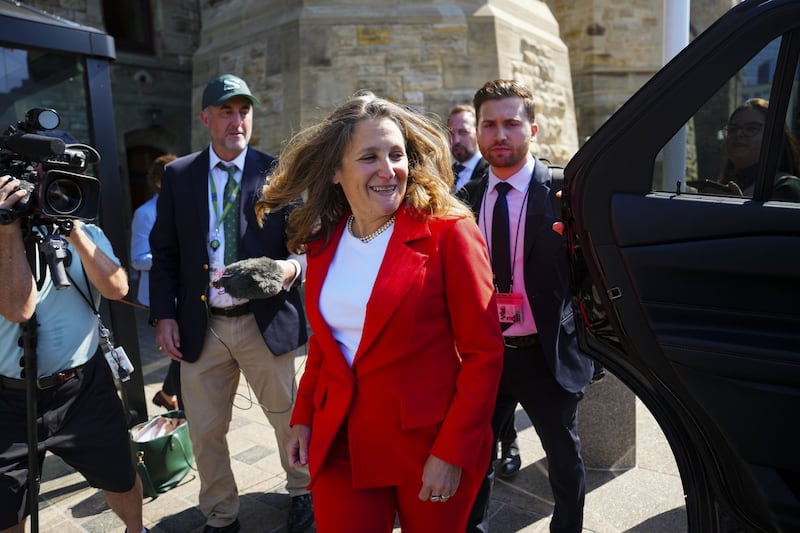
Freeland said it’s an opportunity to renew the global democratic alliance and invite Washington “to rejoin us in a new, more balanced partnership.”
With files from CTV News’ Graham Richardson, Luca Caruso-Moro and The Canadian Press.

