Celina Marsolais feels like she’s stuck between two choices: continuing with the final semester of her program and taking on even more debt, or quitting and applying for a job wherever she can to pay off what she already owes.
The 30-year-old is currently in her second term at Cambrian College, studying to become a social service worker who can eventually help others with drug rehabilitation. Marsolais says she has been relying on the Ontario Student Assistance Program (OSAP) since she started her program, as she has a disability that makes it challenging for her to work and go to school.
“It’s kind of helped pay my tuition and my books so far. That’s about what I get because I do live with my father due to my disability,” Marsolais told CTV News, adding that she suffers from post-traumatic stress disorder.
Last year, she said she received roughly $8,000 from the province. But with the upcoming changes to OSAP, her grant money will drop down to $1,000.
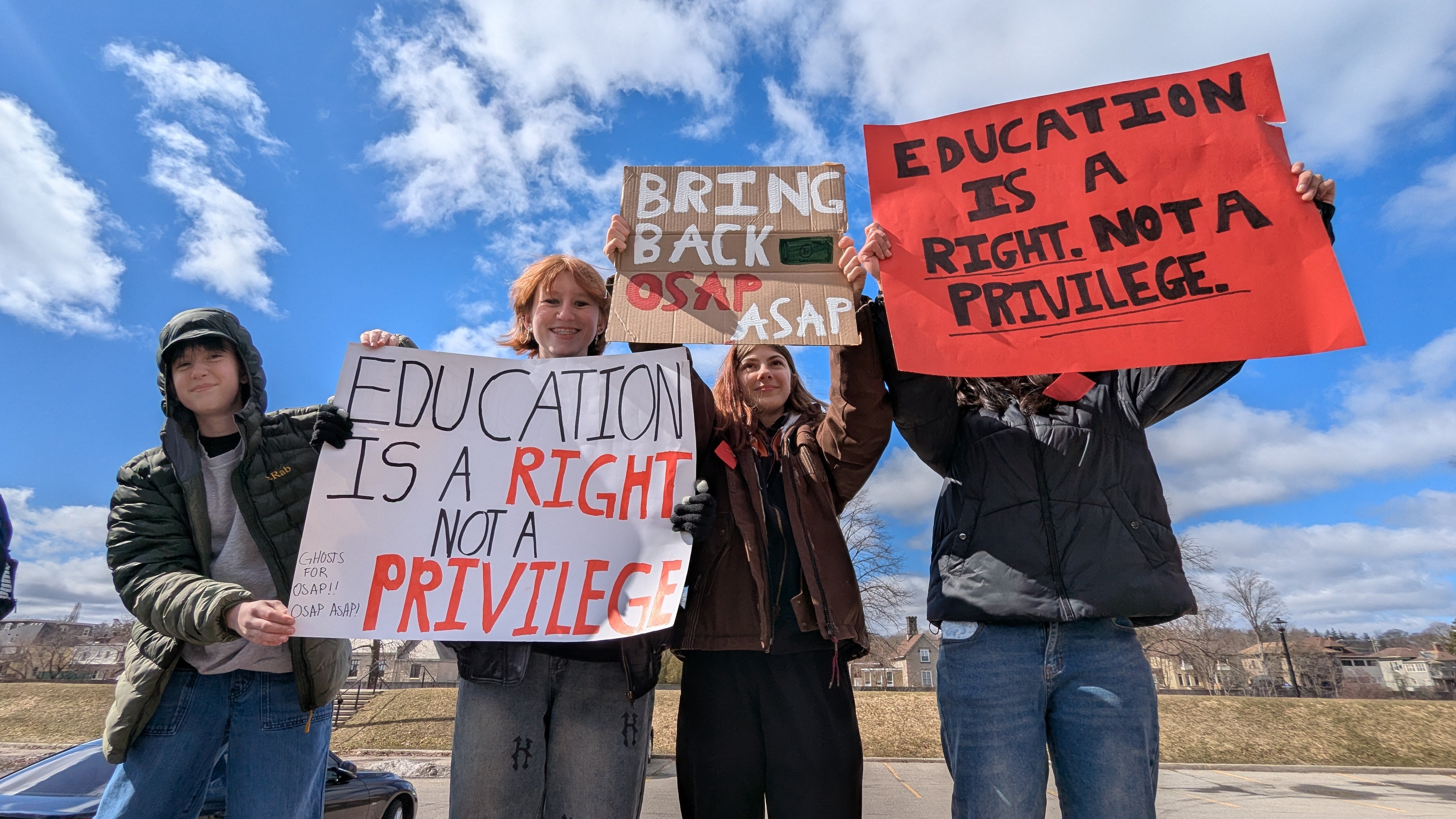
As of Aug. 1, the province slashed the proportion of grants offered through OSAP, capping it at a maximum of 25 per cent. Before Saturday, the province offered 85 per cent.
The province is also lifting a seven-year tuition fee freeze, which will allow some colleges and universities to raise their costs by up to two per cent each year over the next three years. The province spent about $1.7 billion on grants alone during the 2024-25 school year and spent an additional billion dollars for this current fiscal year.
“The OSAP framework was no longer sustainable due to the federal government’s decision to remove grant eligibility from students at private career colleges, coupled with increased program uptake in recent years,” Bianca Giacoboni, press secretary for Minister of Colleges and Universities Nolan Quinn, said in a statement.
“As we make historic investments in the post-secondary sector, including an additional $6.4 billion, our enhanced Student Access Guarantee will ensure qualified, low-income Ontario students continue to receive enough financial aid to cover tuition, books, and mandatory fees to offset the modest tuition increase. If OSAP funding does not cover these costs, the institution provides additional support.”
But the added costs concern Marsolais, who says she must complete a four-month-long placement in the fall. She says it will be about 40 hours of her time each week, and it will be completely unpaid.
The stress of juggling her studies, her upcoming placement and work weighs on Marsolais.
“As somebody that does struggle with PTSD, and attending school for me was a really hard thing to begin with, I feel like it does put a lot more stress on myself,” Marsolais said.
Majority of students rely on OSAP
Emily Edwards, an IGNITE student advocate at Humber, says she has been hearing more students talk about their financial pressures as the costs of housing, groceries and now tuition are on the rise. IGNITE is the official student union group for Humber College and the University of Guelph-Humber.
“This is already making post-secondary education less accessible,” Edwards told CTV News. “This is impacting both low-income and middle-income students, and they’re having issues either getting into their education now because of these cuts or they’re deterring their goals because of these cuts.”
The Ontario Undergraduate Student Alliance (OUSA) and College Student Alliance (CSA) recently conducted a survey to gauge the level of concern over the recent changes to OSAP.
The two groups collected 680 responses from post-secondary students attending publicly assisted institutions in Ontario over a roughly six-week period starting in April. Since they are set to conduct a more expansive survey in September, the organizations stressed that these findings should only be interpreted as preliminary—though the results reveal the stress, concern and frustrations of students heading into the new school year.
About 65 per cent of students surveyed said their main source of financial support comes from OSAP, with nearly 50 per cent expressing concerns about the burden of long-term debt after graduation for their increased reliance on student loans.
OUSA articulated concerns for the province’s post-secondary students, particularly at a time when many are feeling the pinch of rising food and housing costs. Boosting the number of loans, OUSA says, will exacerbate the financial pressures felt by students.
“Our primary concerns are surrounding the impact of this mounting financial pressure,” the OUSA said in a statement. “These OSAP changes will make (post-secondary education) increasingly unaffordable, inaccessible and stressful for students and their families.”
The student alliance urges the province to implement a no-interest student loan program to ease the stress of immediate debt, pointing to how the federal government scrapped this on the federal portion on these allowances. The OUSA also asks the ministry to extend the repayment grace period from six months to at least two years.
The Canadian Federation of Students-Ontario tells CTV News Toronto that unions across the province will continue to do what they can to support their members through emergency bursaries and grants, food centres and other essential services.
“However, these supports were never intended to replace a robust public financial assistance system” the CFSO said. “When governments reduce predictable supports like OSAP, students’ unions are increasingly expected to absorb the consequences of the intentional gaps left by the government.”
Marsolais hopes the province reconsiders these changes to the student assistance program.
“If it doesn’t happen, then I’m probably going to have no choice but to drop out,” she said.

