The City of Toronto is turning to artificial intelligence to unclog its congested streets.
After a recent test, intersections in North York are being equipped with smart traffic signals.
“We found that it was able to match or replicate the work of those traffic operations staff and, in some cases, do even a little bit better,” Roger Browne, the city’s director for congestion and network management, said on Tuesday.
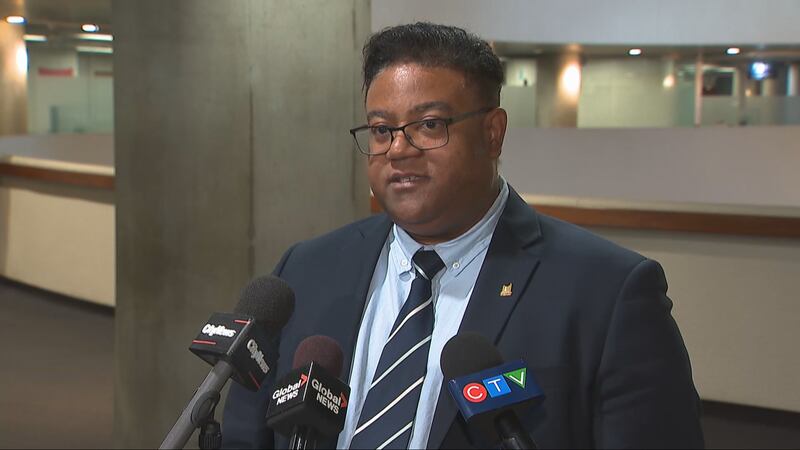
Browne explained that while the city has a staffed traffic operations centre that runs 24/7 and remotely controls traffic signals, smart traffic signals detect vehicle increases and can extend green lights and left-turning lights on their own.
He cautioned traffic signals operate in a network and it’s important to be careful about how much to adjust traffic in one direction versus another, but he also highlighted benefits.
“It’s able to look at the entire mesh of traffic signals and make adjustments to the lights to favour demands in traffic that may be random and unexpected while minimizing the impacts on opposing traffic throughout the network.”
The first installations will take place in May along Yonge Street from Mill St. near York Mills Road to Steeles Avenue.
“We’re very excited about this because gridlock is a problem in our community and our community continues to grow,” said Lily Cheng, city councillor for Willowdale, whose ward will get the new AI signals.
“We don’t always get the traffic agents in our neighbourhood; in fact, we don’t. Most of them get assigned downtown so this will help us alleviate traffic.”
Cheng added the North York Centre area is expected to welcome 100,000 more people to the area and said it’s important to lean into new technologies in order to make commutes more manageable because the city isn’t planning to add more lanes or capacity.

Mixed feelings from residents
People who live and work nearby have mixed feelings if AI will make a difference.
“It’s worth a try. Better than doing nothing,” said Connor Arnold.
“I don’t think AI will solve the problem. I think more police of a police presence, maybe more red light cameras,” said Gabe Sykes.
“You can use it as best as possible to control the systems and to control lights but without government interjection, I think it’s going to be like this for a while,” said Maurice Yu, who also works in the AI field.
“You’re kind of stuck in terms of the infrastructure that you’re building here. Can you force people not to get in their cars and take the TTC more?”
Using AI and smart technology is one of five pillars of the city’s broader congestion management plan. Other key parts include shifting how people travel, adding traffic agents on the ground, improving transit, and reducing the impact of construction.
A report on the plan says smart traffic signals work well for suburban areas because intersections tend to be standardized and traffic volumes are more predictable.
Browne said using smart traffic signals in suburban areas, like North York, Etobicoke, and Scarborough, frees up staff in the management centre to deal with more complicated intersections downtown.
In addition to Yonge Street, smart traffic signals are planned for sections of Steeles Avenue East and Steeles Avenue West.
Browne said the signals cost $55,000 per location. Fifty are expected to be installed this year and there’s a goal of eventually bringing 300 online across the city.
He said there are 2,500 traffic signals in total in Toronto.

